





Focaccia is Ligurian — Genoa specifically — with the name from Latin focus ("hearth"), referring to bread baked on the embers. The classic plain Genovese version dates well before 1500; the Tuscan tradition (schiacciata) is a thinner, plainer cousin. Adding olives and garlic is regional drift; in Puglia the same form gets cherry tomato, in Tuscany grape (the autumn schiacciata con l'uva).
Pugliese-Tuscan crossover — Taggiasca olives pressed into the dough, sliced garlic on top, finished with rosemary. The olives bleed purple-black during baking; the garlic must be raw-thin or it burns at 230°C.
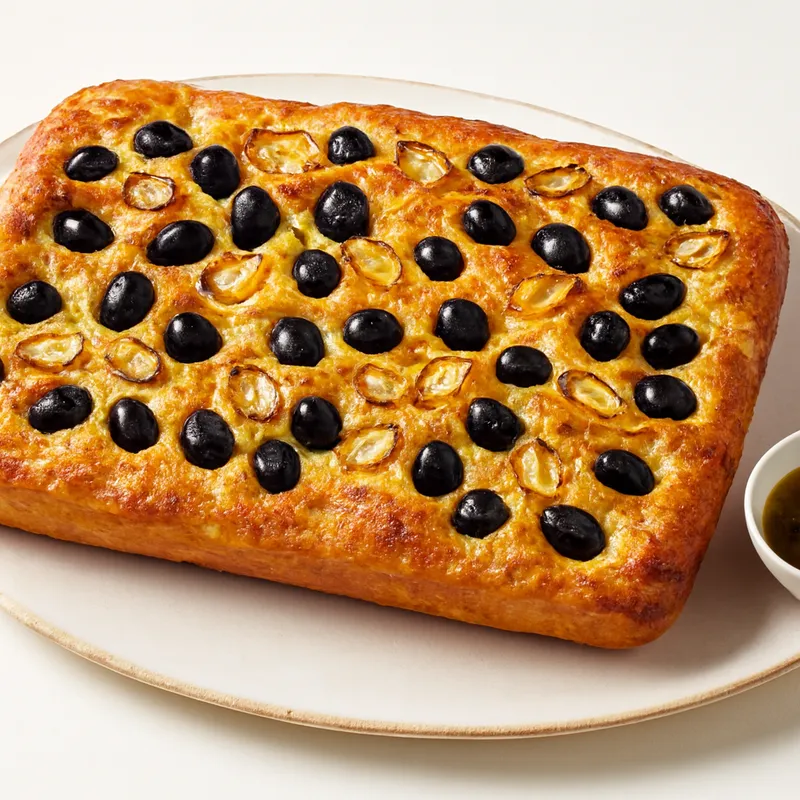
A flat slab, two fingers tall, olive-oil pooled in the dimples on top, bronzed at the edges. Crust crackles, crumb pulls in soft strands. Pitted black olives press into the surface; sliced garlic and rosemary scatter between them. Salt-flake crunch on the bite. Good focaccia smells of olive oil before bread; if it tastes of yeast, the dough was rushed.
Hydration matters more than topping: dough should be 75–80% water by flour weight, slack enough to spread itself in the pan. The dimples aren't decorative — they trap olive oil so the top fries crisp while the crumb stays soft. A long cold ferment (16+ hours) develops the open hole structure; same-day focaccia comes out cakey.
Variations
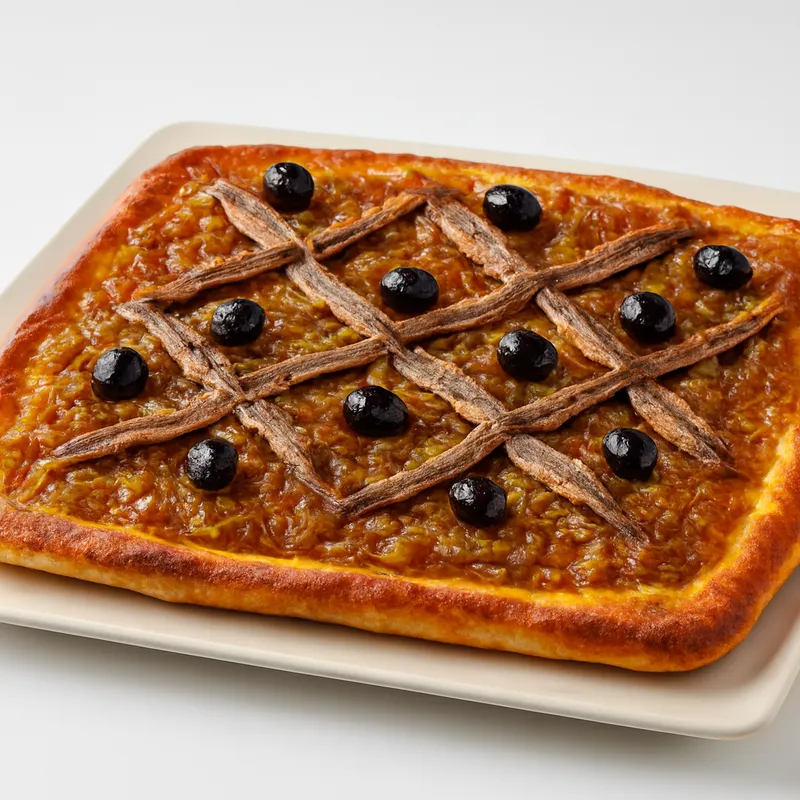
Pugliese version with cherry tomato and olive together; Genoese keeps olives whole and skips garlic; Recco-style sandwiches molten Crescenza/Stracchino cheese (not olives) between two paper-thin, unleavened sheets — a PGI-protected Ligurian specialty; Sicilian sfincione adds anchovy-onion-tuma cheese on the same dough.
- ·Topping variant: cured black olives and crushed garlic pressed into the dimples before baking.
- ·Otherwise the standard Ligurian focaccia base.
On the Palate
Where Focaccia with Black Olives and Garlic sits in the Italian flavor cloud
Run the dough wet — 75-80% hydration — and give it a long cold ferment; a slack, well-fermented dough is what makes focaccia airy and open instead of dense and cakey.
Ingredients
Serves 8
How it's made
4 steps · 40 min active + 1 hour waiting
- 110 min
In a large bowl, combine flour, yeast, and salt. Slowly add water while mixing with your hands until a shaggy dough forms. Knead on a floured surface until smooth and elastic.
Watch outKnead until the dough turns smooth and springs back — a sticky slack dough is right, but it should feel elastic, not soupy.
- 20 min
Drizzle olive oil into a clean bowl, place the dough inside, and cover. Let it rise in a warm place until doubled in size.
Watch outLet it rise until visibly doubled and jiggly — poke it and the dent should fill back slowly, not snap right back.
- 310 min
Preheat the oven to 220°C (428°F). Stretch the dough onto an oiled baking sheet, pressing it out to the edges. Dimple the surface with your fingers, then scatter sliced black olives, minced garlic, and rosemary over the top.
Watch outDimple deep enough to leave lasting craters and scatter the toppings so they press into the dough, not just sit on top.
- 420 min
Drizzle with more olive oil and sprinkle with sea salt. Bake until golden brown and crisp on the edges, about 20 minutes.
Watch outWatch for the edges turning golden brown to avoid over-baking.
Archive tool suggestions — not reviewed
These legacy suggestions have not been evidence-reviewed and are not presented as required tools.