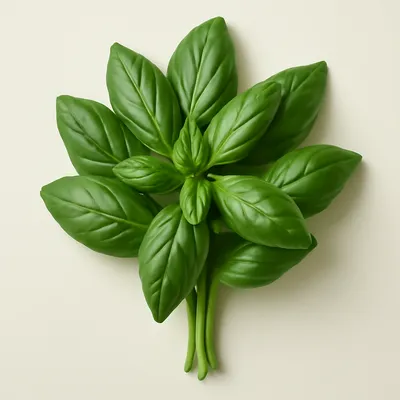



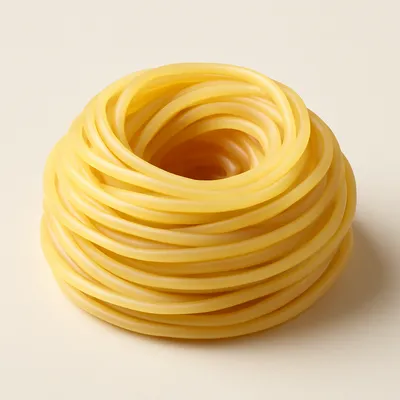
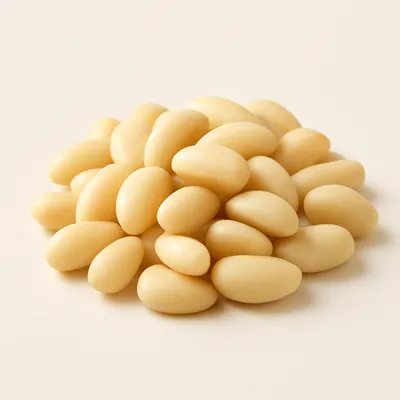
Pesto alla genovese is documented in Genoese cookbooks from 1863 (Giovanni Battista Ratto's «La Cuciniera Genovese»), but its lineage is older: the Roman moretum (a mortar-pounded herb-cheese-garlic paste, described in the Virgilian poem) is the same technique 2,000 years earlier — though it contained no basil, which is only documented in pesto from the 1850s; the nearer Genoese ancestor is medieval agliata, a garlic-and-walnut mortar paste. The Ligurian dish locks in the seven ingredients (Genovese basil, pine nuts, garlic, Pecorino Fiore Sardo, Parmigiano, olive oil, coarse salt) and the marble mortar.
Genoa 1860s — basil pounded in marble with pine nuts, Sardo, garlic, olive oil. Heat kills it; the sauce goes on warm pasta off the heat, never cooked.
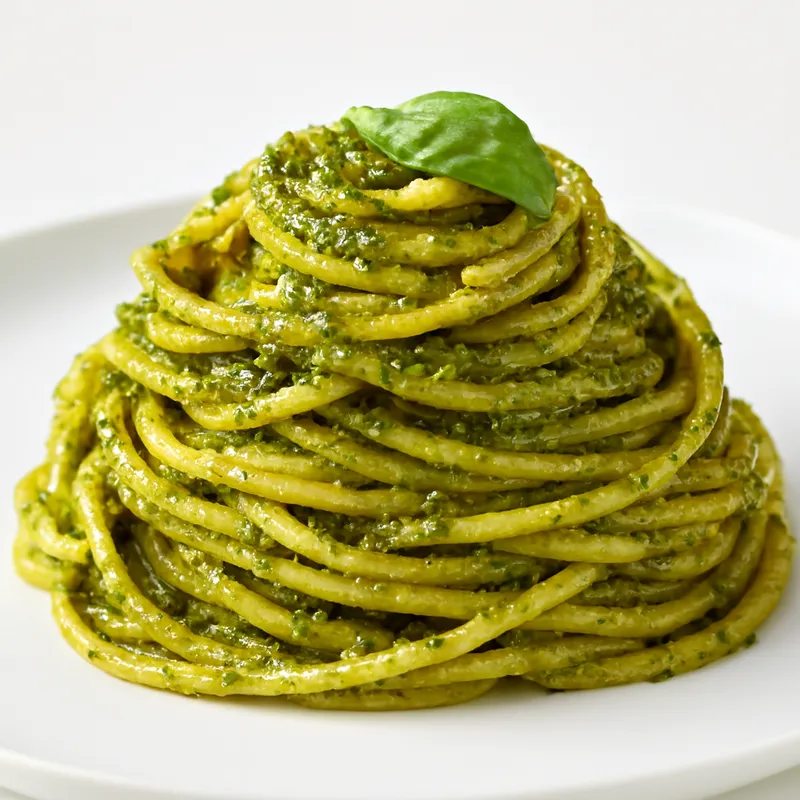
Bright green sauce coating short twisted pasta — trofie or trenette in Liguria — with diced potato and green beans tossed in the same pot. Raw garlic carries through; pine nut and Parmigiano-Pecorino blend round it; basil reads as fresh leaf, not cooked herb. The sauce is never heated. If the green has gone army-drab, the basil oxidized — too much friction or too little ice.
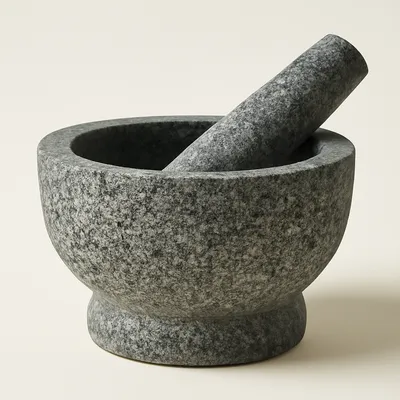
Marble mortar and wooden pestle, not blender. Steel blades bruise basil cells and release oxidase enzymes — the sauce browns in minutes. Hand-pounding crushes without shearing, so the green stays. Genovese DOP basil (small, sweet, low-anise) is non-negotiable for the canonical taste; common Italian basil tastes minty and licorice-y by comparison. The pasta water — a spoonful — loosens the sauce just before tossing.
Variations
Pesto alla Genovese (DOP basil + Sardo + Parmigiano); pesto alla Trapanese in Sicily adds tomato and almonds; pesto rosso uses sun-dried tomatoes; ligurian tradition pairs it with trofie and potato-and-green-bean.
- ·Uses basil pesto
On the Palate
Where Pesto Pasta sits in the Italian flavor cloud
Keep it green: bruise the basil, don't shear it. A blender's steel blades tear the leaf cells and set off the enzyme that browns the sauce within minutes; a mortar and pestle crush the leaves so they stay bright and grassy.
Ingredients
Serves 4
How it's made
5 steps · 27 min
- 110 min
Bring a large pot of well-salted water to a rolling boil. Add the pasta and cook until al dente, following package instructions, usually about 8-10 minutes.
Watch outStir occasionally to prevent the pasta from sticking together.
- 25 min
While the pasta cooks, combine fresh basil leaves, grated Parmesan, minced garlic, and pine nuts in a food processor. Pulse until the mixture is finely chopped.
Watch outWork the garlic, pine nuts and a pinch of salt to a paste first, then add basil — you want a coarse green paste, not a watery slurry.
- 35 min
With the processor running, slowly drizzle in olive oil until the pesto reaches a smooth, thick consistency. Taste and adjust seasoning with salt if needed.
Watch outDrizzle the oil in a thin thread while stirring so it emulsifies into a glossy, thick sauce that holds together rather than pooling into oil.
- 45 min
Drain the pasta, reserving a cup of the cooking water. Return the pasta to the pot, off the heat, and add the pesto. Stir vigorously to coat the pasta, adding reserved pasta water a little at a time to loosen the sauce if necessary.
Watch outToss off the heat and add pasta water a splash at a time — the sauce should turn creamy and coat every strand, not slick or clumpy.
- 52 min
Serve immediately, garnished with additional Parmesan and a few fresh basil leaves for a burst of color and flavor.
Archive tool suggestions — not reviewed
These legacy suggestions have not been evidence-reviewed and are not presented as required tools.