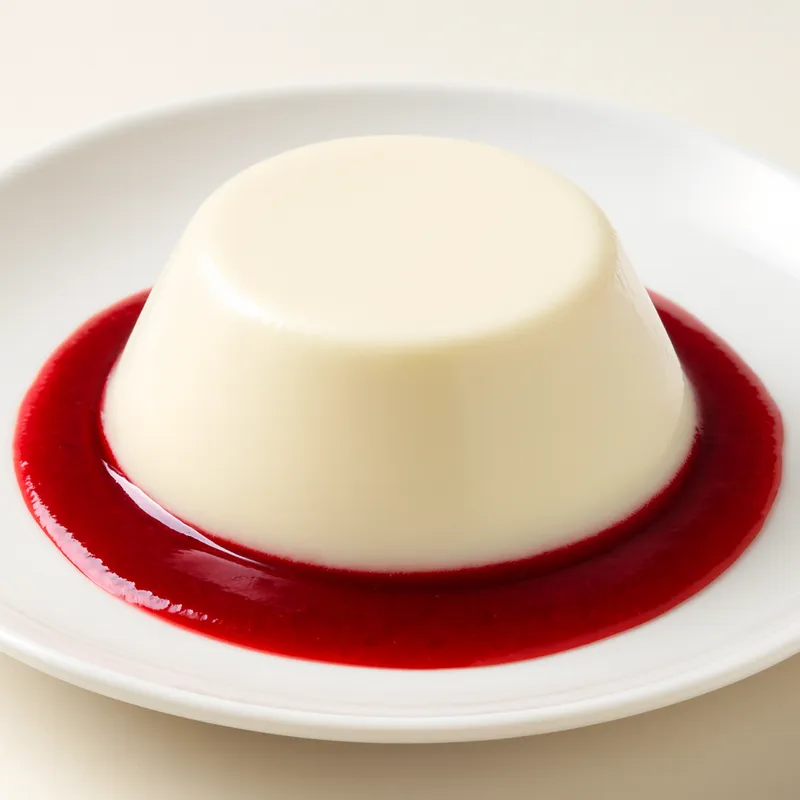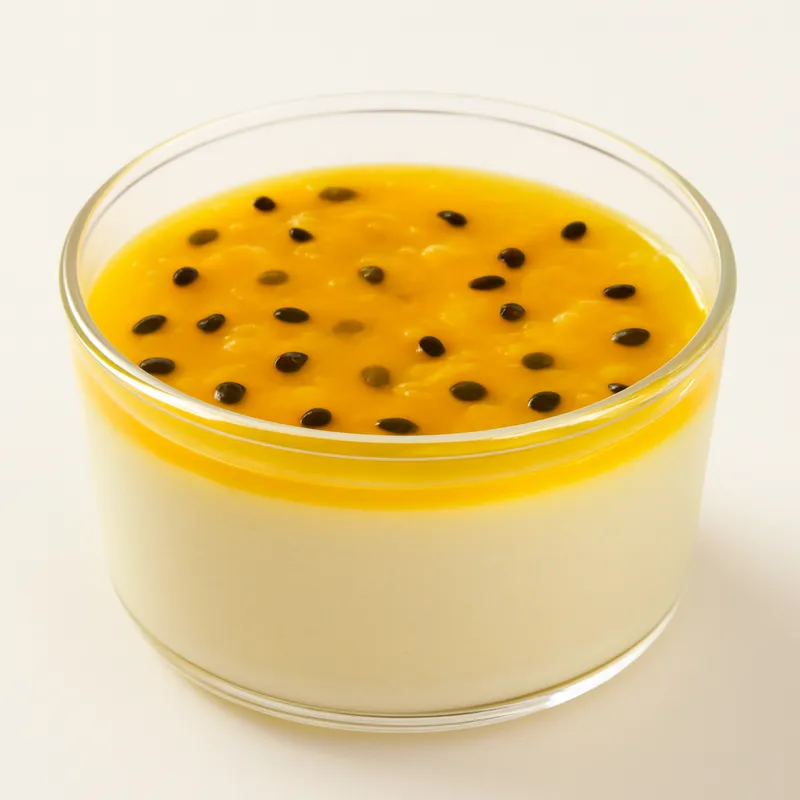
A creamy, smooth dessert flavored with tropical passion fruit and topped with a passion fruit coulis.



Panna cotta (Italian for "cooked cream") is a dessert associated with Piedmont; the name does not appear in Italian cookbooks before the 1960s (first recorded on a menu by chef Ettore Songia in Cuneo, 1966), though an unverified legend attributes it to a Hungarian woman in the Langhe in the early 1900s, originally made by simmering cream with sugar and stiffening it with fish bones for collagen. The passion fruit version is a late-20th-century restaurant adaptation — the fruit's high acidity (pH ~2.8) is the corrective for what is otherwise a very rich, very plain pudding.
A 1990s Italian-restaurant-abroad invention — Piedmontese cream set under a passion-fruit coulis. The acid cuts the dairy fat in a way the original vanilla version doesn’t need to.
A pale dome that wobbles when the plate moves, set just enough to hold its shape and no more. Spoon goes in clean. The cream tastes of milk and a vanilla pod; on top, a yellow-orange coulis with black seeds — sharp tropical acid that pulls against the dairy. The seeds crunch. If the panna cotta stands up like jelly, it's over-gelatined.
Gelatin ratio is the whole game: about 1.5–2g sheet gelatin per 250ml cream. More than that and it bounces like jello; less and it slumps. Bloom the gelatin in cold water first, then stir into warm — not boiling — cream, or you destroy the setting power. Passion fruit pulp must go on after unmolding; its acid will weep the gelatin if mixed in.
Variations
Mango-passion layered version; yuzu adaptation in Tokyo Italian restaurants; coconut-cream base for dairy-free; the Brazilian maracujá-mousse is the close cousin without gelatin.
- ·Infused with tropical passion fruit, topped with passion fruit coulis
On the Palate
Where Passion Fruit Panna Cotta sits in the Italian flavor cloud
Get the gelatin ratio right — about 1.5-2g sheet gelatin per 250ml cream — so it sets to a barely-there wobble rather than a rubbery bounce or a sad slump.
Ingredients
Serves 8How it's made
5 steps · 17 min active + 4 hours waiting
- 15 min
In a small bowl, sprinkle gelatin over cold water and let it bloom for about 5 minutes until it swells and softens.
Watch outSprinkle the gelatin over the water and leave it 5 minutes until it swells and turns soft and spongy.
- 25 min
In a saucepan, combine cream, sugar, and vanilla. Heat gently over medium heat, stirring until the sugar dissolves and the mixture is hot but not boiling, about 5 minutes.
Watch outHeat just until steaming with the sugar dissolved — small bubbles at the edge, no rolling boil.
- 32 min
Remove the saucepan from heat and stir in the bloomed gelatin until fully dissolved. Strain the mixture to ensure a smooth texture.
Watch outMake sure the gelatin is fully dissolved to avoid lumps in the final dessert.
- 40 min
Pour the panna cotta mixture into molds and let them cool at room temperature for 15 minutes. Then refrigerate until set, at least 4 hours.
Watch outCool at room temp first, then chill at least 4 hours until set firm enough to hold a clean line when tilted.
- 55 min
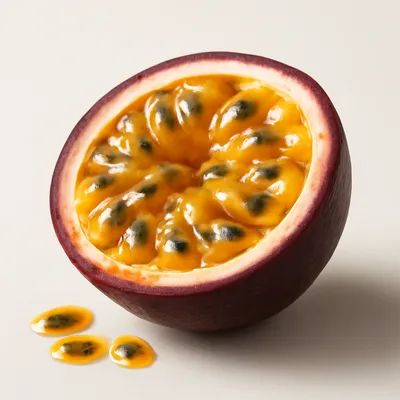
Before serving, prepare the passion fruit topping by scooping the pulp and stirring it gently to loosen the seeds. Spoon over the set panna cotta and serve chilled.
Watch outBe gentle when stirring the pulp to avoid crushing the seeds too much.
Archive tool suggestions — not reviewed
These legacy suggestions have not been evidence-reviewed and are not presented as required tools.