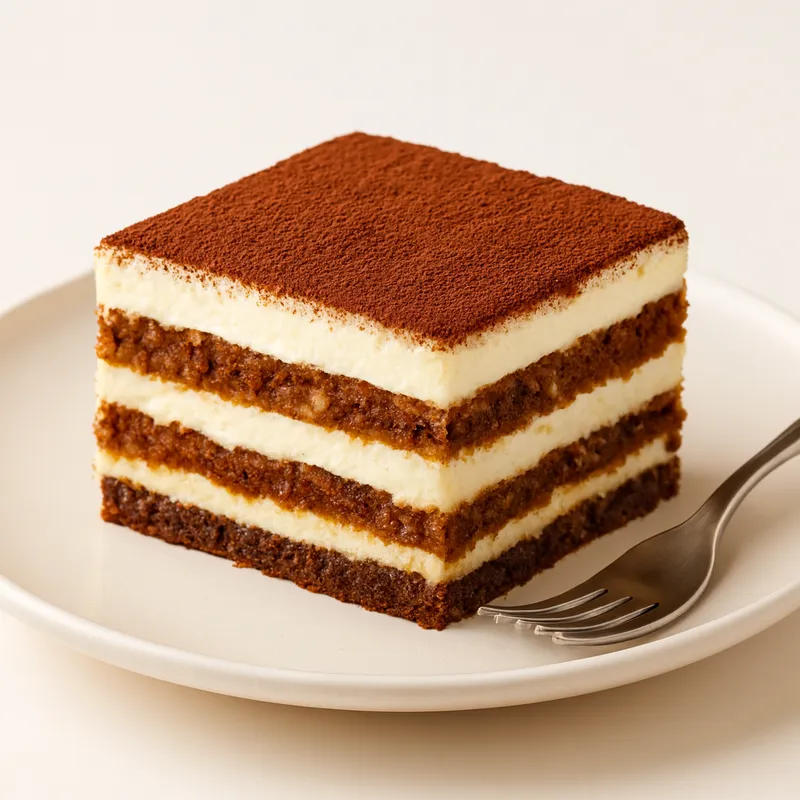
Iconic Italian dessert of espresso-soaked ladyfingers layered with mascarpone cream and cocoa.



Most associated with Treviso, Veneto, in the early 1970s (though Friuli–Venezia Giulia claims an earlier 1959 origin in Tolmezzo, and holds the official Italian PAT designation) — most accounts credit Le Beccherie restaurant and pastry chef Roberto Linguanotto, whose recipe (perfected c. 1971–72) replaced the traditional zabaglione with fresh mascarpone — that substitution being the dish's defining innovation — over espresso-dipped ladyfingers, with no alcohol. The name means «pick-me-up», pointing at the caffeine and sugar. Earlier «sbatudin» (whipped yolks with sugar and Marsala) from the Veneto countryside is the template the modern dish elaborates.
Treviso 1960s invention — Le Beccherie restaurant claims it. The mascarpone-yolk cream and the espresso-soaked Savoiardi must rest 24 hours; rushed tiramisu is just wet biscuits.
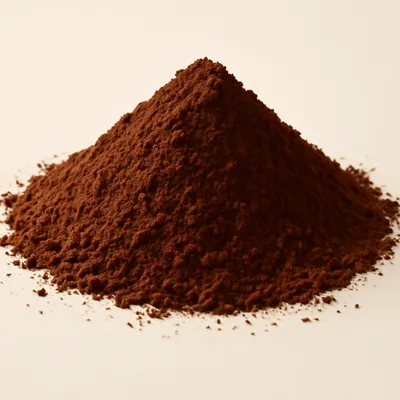
Cold layered slab in a glass dish: ladyfingers swollen with espresso and a splash of Marsala or rum, mascarpone-egg cream packed between, dark cocoa dusted on top right before serving. Fork goes through cleanly — biscuit yields, cream holds. If the cocoa is wet and clumped, it sat too long; if the biscuit crunches, the dip was too quick.
The cream is the test. Yolks must be cooked over a bain-marie to ribbon stage before mascarpone goes in — raw yolks taste eggy and won't hold; overcooked yolks scramble and grain. The dip is also load-bearing: ladyfingers go in espresso for one second per side, no more. Soak them and the whole tray collapses into pudding.
Variations
Mascarpone vs zabaglione (custard) bases; some Treviso recipes skip the eggs entirely; "tiramisu al pistacchio" subs Bronte pistachio paste; Roman versions sometimes float Marsala.
On the Palate
Where Tiramisu sits in the Italian flavor cloud
Whip the yolks and sugar to a pale ribbon, then fold mascarpone in just until smooth — keep beating past that point and the cream weeps and slumps, and no chilling will firm it back up.
Ingredients
Serves 8

How it's made
6 steps · 30 min active + 4 hours waiting
- 15 min
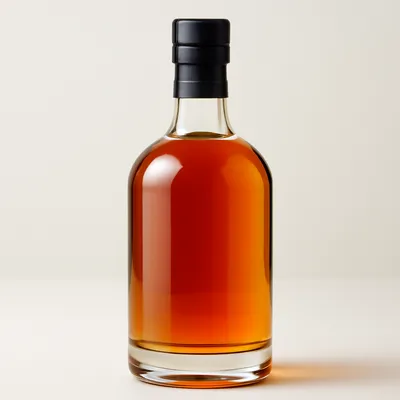
Brew a strong pot of coffee and let it cool. Add a splash of rum and set aside. The coffee should be rich, aromatic, and slightly bitter.
- 210 min
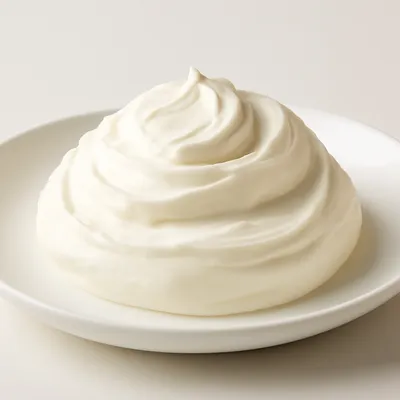
In a mixing bowl, whisk egg yolks with sugar until the mixture is pale and forms ribbons. Fold in mascarpone gently until smooth and creamy.
Watch outLift the whisk — the yolk-sugar should trail off in a slow ribbon that sits on the surface a second before sinking. That's the cue mascarpone can go in.
- 35 min
Dip each savoiardi briefly into the cooled coffee, ensuring they are moist but not soggy, and layer them in a dish to form the base.
Watch outThe biscuit darkens and softens at the edge but still feels firm in the center — pull it before the middle goes floppy.
- 43 min
Spread half of the mascarpone mixture over the coffee-soaked savoiardi, smoothing it with a spatula for an even layer.
- 55 min
Repeat the process with another layer of coffee-dipped savoiardi, followed by the remaining mascarpone mixture.
- 62 min
Dust the top generously with cocoa powder, creating a rich, chocolatey finish. Cover and refrigerate for at least 4 hours to allow the flavors to meld.
Watch outEnsure the tiramisu is well-chilled before serving for the best texture.
Archive tool suggestions — not reviewed
These legacy suggestions have not been evidence-reviewed and are not presented as required tools.