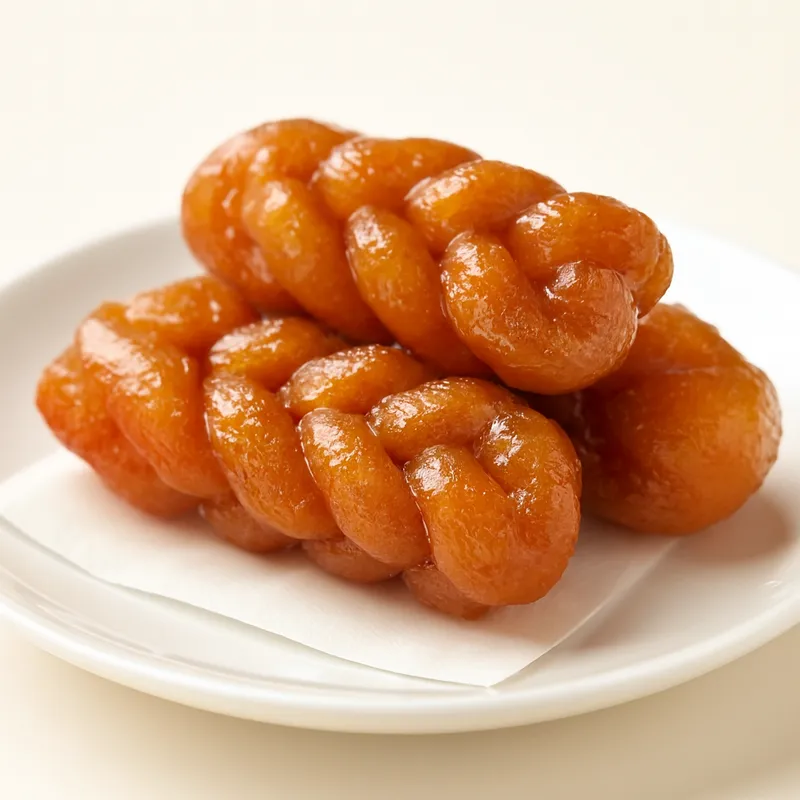



Afrikaner South Africa, 19th century, from Dutch koek (cake) plus a contested second element — possibly sissen (the sizzle of dough in hot oil), possibly echoing the paired Dutch pastries koekbroers and koekzusters ('brother' and 'sister' cakes); the etymology is unsettled. The two pastries that share the name are often conflated. The more commonly told account runs the other way from how it's sometimes stated: enslaved Cape Malay cooks are said to have taken leftover Dutch koeksister dough home, spiced it and adapted it into their own koesister — making the Cape Malay version more likely a branch off the Afrikaner line than its source, though the two traditions have intertwined at the Cape for so long the order is hard to fix. The plaited Afrikaner version was farm food — fried in batches on cooler farmhouse mornings, then stored in syrup that both sweetened and preserved them for days.
Afrikaner 19th-century farm bake from Dutch koekje, often confused with the Cape Malay koesister (a different spiced doughnut). The hot-dough-into-cold-syrup shock locks a crystalline crust; skip the ice bath and the saturation goes uneven.
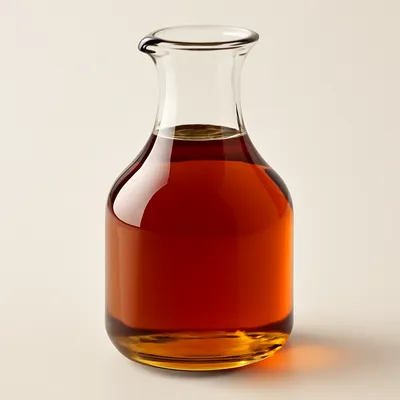
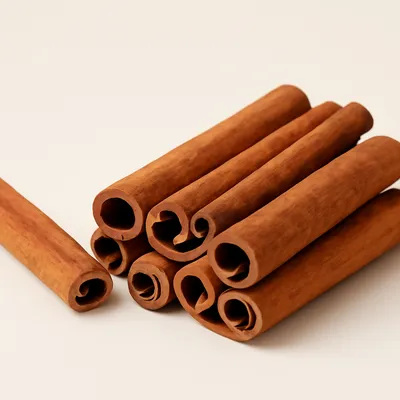
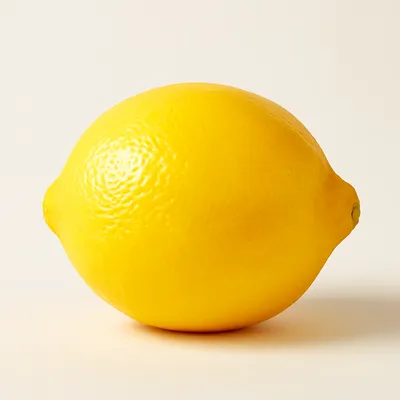
Plaited dough, deep-fried golden, then dropped immediately into ice-cold sugar syrup spiced with ginger, lemon, and cinnamon. The contrast is the trick: hot dough, cold syrup, and the sudden temperature shock locks a thick crystalline crust on the outside while the inside stays soft and saturated. Sticky enough to need a napkin.
The cold syrup is everything. If the syrup is room temperature when the dough hits it, the syrup heats up and the koeksister absorbs it slowly and unevenly — soggy outside, dry inside. Cold syrup forced into hot dough by the pressure differential gives the saturation all the way through. Most home cooks fail this step by not keeping the syrup over an ice bath.
Variations
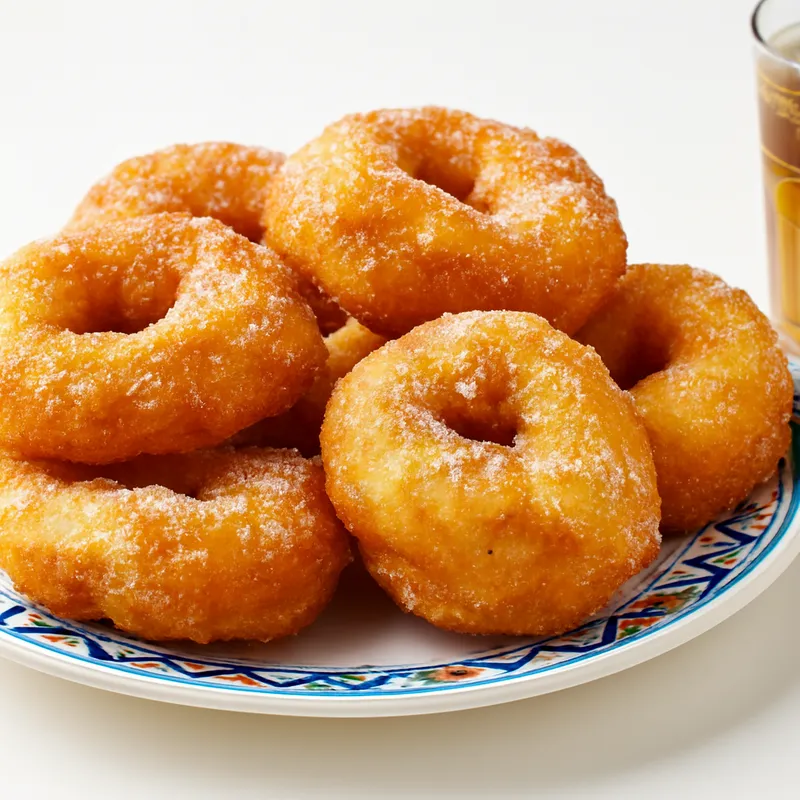
The plaited Afrikaner version is the crisp, syrup-soaked one; the Cape Malay koesister is a rounder yeasted ball, spiced with cinnamon, aniseed, ginger, cardamom and often dried naartjie (tangerine) peel, fried then simmered briefly in hot syrup and rolled in desiccated coconut — softer and cakier than the Afrikaner version, and eaten as a Sunday-morning breakfast tradition in Cape Town's Cape Malay community. The Afrikaner plait is classically three interlocking strands, the shape memorialised in the koeksister monument at Orania.
On the Palate
Where Koeksisters sits in the South African flavor cloud
Ingredients





How it's made
6 steps · 1 hour 10 min active + 8 hours waiting
- 110 min
Combine sugar, water, ginger or cinnamon, cream of tartar, and salt in a saucepan. Bring to a boil, stirring until the sugar dissolves completely.
- 210 min
Reduce heat and let the syrup simmer for 5-8 minutes. Cool to room temperature, then divide into two containers and refrigerate overnight.
- 310 min
Sift flour, baking powder, and salt into a bowl. Rub in butter until the mixture resembles breadcrumbs, then add buttermilk to form a soft dough.
- 410 min
Knead the dough thoroughly on a lightly oiled surface, cover with a damp cloth, and let rest for 15 minutes.
Watch outKnead until the dough is smooth and elastic; under-kneaded dough will not hold its shape.
- 515 min
Roll the dough to 5mm thickness, cut into strips, and plait them. Keep unused dough covered to prevent drying out.
Watch outEnsure the dough is rolled evenly to maintain consistent cooking times for each piece.
- 615 min
Deep fry the plaited dough in hot oil until golden brown on both sides. Immediately dip each piece into ice-cold syrup, ensuring it absorbs the syrup well.
Watch outEnsure the syrup is ice-cold before dipping; warm syrup won't be absorbed properly, leaving the koeksisters dry.
Archive tool suggestions — not reviewed
These legacy suggestions have not been evidence-reviewed and are not presented as required tools.