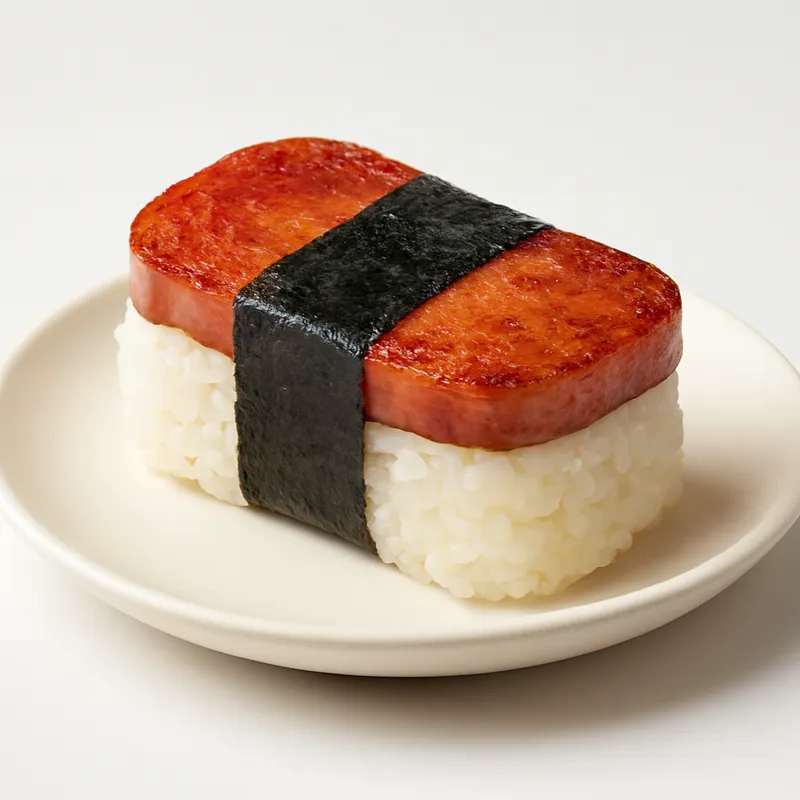
A popular Hawaiian snack consisting of a slice of Spam on top of rice, wrapped with nori seaweed.




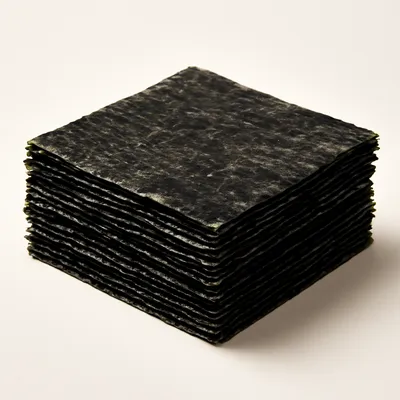
Spam entered Hawaiian foodways during World War II, when the shelf-stable canned meat was shipped to the Pacific in bulk to feed troops; with fresh meat scarce, locals embraced it, and the taste never faded — Hawaiʻi still leads the U.S. in per-capita Spam consumption, around 7 million cans a year, roughly six per resident. Separately, Japanese laborers recruited from the late 1800s to Hawaiʻi's sugarcane and pineapple plantations brought onigiri (musubi) with them as a plantation-lunch staple; tucking Spam into the rice ball produced the early musubi. The rectangular form is generally credited to Japanese-American Barbara Funamura, who introduced it around 1982–83 at her shop Joni-Hana in the Kukui Grove Center on Kauaʻi — first shaped as a triangle, later pressed into a block with a mold — and it spread statewide within a year. (Exact dating varies across accounts; an earlier claim attributing it to Mitsuko Kaneshiro at a Joni's Drive-In on Oʻahu appears to be mistaken.)
Invented 1983 at Joni's Drive-In on Oahu by Mitsuko Kaneshiro. Spam stuck around because the U.S. military shipped 150 million cans to Hawaiʻi during WWII; nori must wrap right before eating or it goes soft from rice steam.
A finger-thick block: a slab of pan-fried Spam glazed with shoyu and sugar, pressed onto a brick of short-grain rice, banded with a strip of nori. Eaten cold or room-temp, by hand, often from a plastic-wrapped pile at a Hawaiian convenience store. The Spam has crisp edges; the rice is firm enough to hold without falling apart.
The Spam is sliced about a centimeter thick and pan-fried until both faces caramelize from the sugar in the meat — too thin and it dries; too thick and the center stays cold against the rice. The shoyu-sugar glaze is brushed on at the end, not at the start, so the sugar doesn't burn. Nori must be wrapped right before eating or it goes soft from the rice steam.
Variations
Classic shoyu-sugar Spam (Joni's original); teriyaki Spam musubi (7-Eleven Hawaiʻi standard); Spam-and-furikake-egg layer; Iyasume's mustard-mayo Waikiki version; Spam fried-rice musubi is the late-night takeout cousin.
On the Palate
Where Spam Musubi sits in the Hawaiian flavor cloud
Get the Spam right: slice it about a centimeter thick and pan-fry until both faces caramelize, then brush on the shoyu-sugar glaze only at the end so the sugar glosses instead of burning.
Ingredients

How it's made
4 steps · 37 min
- 120 min
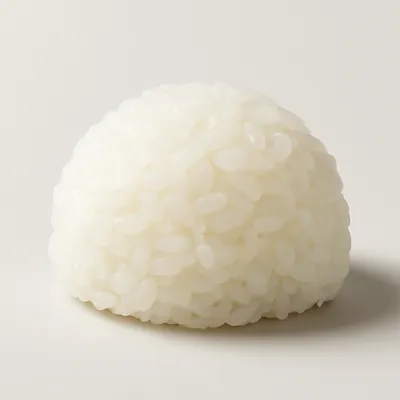
Cook sushi rice according to the package instructions until sticky and slightly sweet. The rice should be glossy and hold together well when pressed.
Watch outThe rice is right when it's glossy and clumps together under gentle pressure, not dry and separate.
- 25 min
Slice the Spam into even pieces and pan-fry over medium heat until golden brown on both sides. Listen for the gentle sizzle as the Spam crisps up in the pan.
Watch outListen for a steady sizzle and fry until both faces are deep golden and lightly crisp.
- 32 min
Cut nori sheets into strips wide enough to wrap around the rice and Spam. The nori should be pliable and ready to adhere to the rice.
- 410 min
To assemble, place a slice of Spam on top of a molded block of rice. Wrap a strip of nori around the middle, pressing gently to secure. The nori should stick to the rice, holding everything in place.
Watch outPress the nori strip firmly against the rice so the moisture tacks it down and the stack holds.
Archive tool suggestions — not reviewed
These legacy suggestions have not been evidence-reviewed and are not presented as required tools.