


The earliest detailed English-language record of nasi lemak is in Sir Richard Olaf Winstedt's 1909 book on Malay life (often cited as 'The Circumstances of Malay Life'); the dish itself is almost certainly older as a Malay kampung breakfast staple. Cooking rice in coconut milk rather than water preserved it longer in a hot climate without refrigeration — the fat coated each grain and slowed spoilage, giving farmers and fishermen an energy-dense meal for a full day's labor. Notably, the now-canonical 'trinity' of rice, coconut milk and sambal can only have formed after chili peppers reached the Malay world via the Portuguese around 1511 (chili is native to the Americas). It was promoted as Malaysia's national dish in the 1980s as part of post-independence identity-building, and in 2024 was inscribed on UNESCO's Representative List of the Intangible Cultural Heritage of Humanity as part of Malaysia's multi-ethnic 'breakfast culture' nomination. The banana-leaf cone (nasi lemak bungkus) is the original format; restaurant plates came later.
Documented in Winstedt's 1909 record of Malay village life; declared Malaysia's national dish in the 1980s. Coconut milk gels each rice grain — water-thinned coconut is the stall-grade tell.
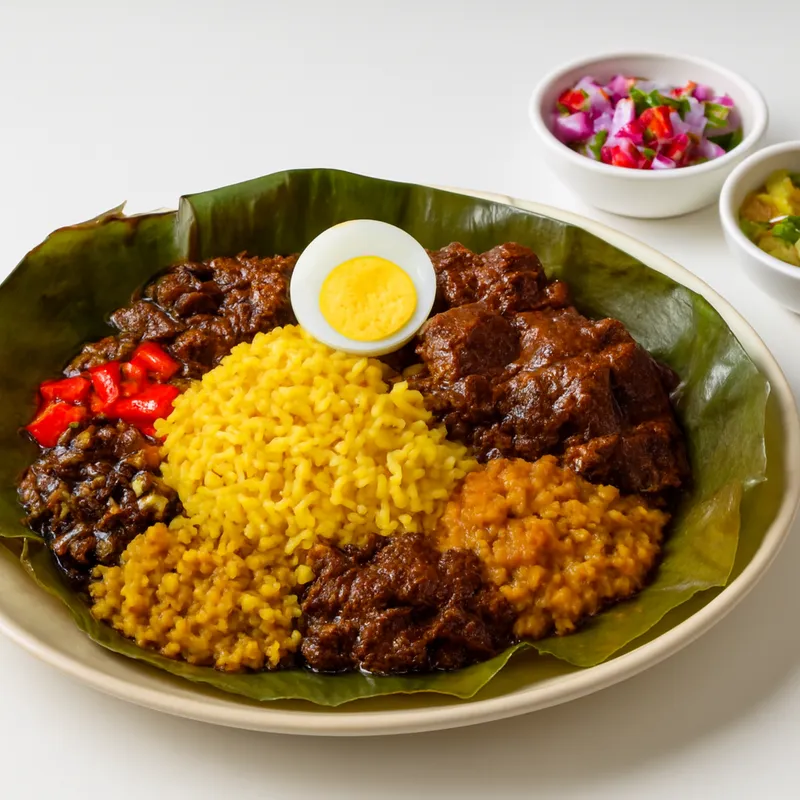
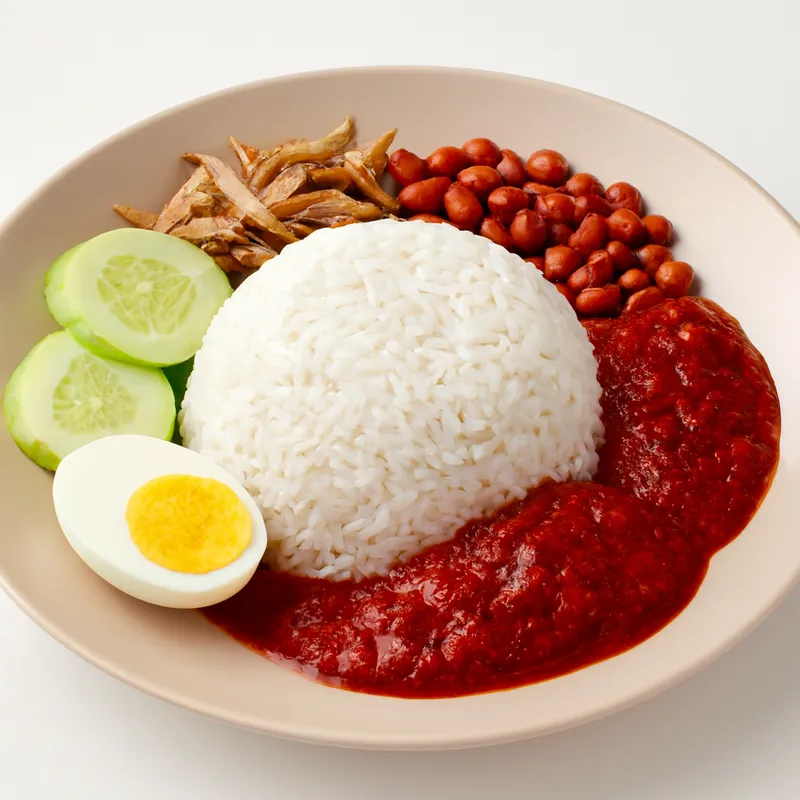
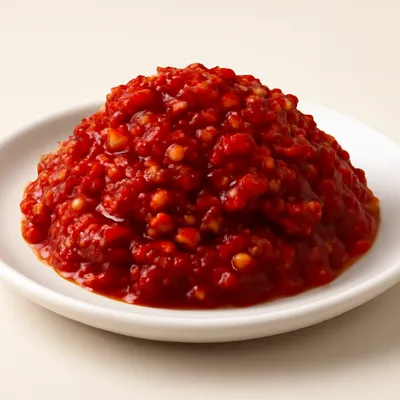
A mound of coconut rice, cooked with pandan leaf and a knot of ginger, plated with five things around it: dark-red sambal, crisp fried ikan bilis (anchovies), roasted peanuts, cucumber slices, half a hard-boiled egg. Often a banana leaf underneath. Eat with fingers or a spoon — push some sambal into the rice, lift egg and anchovy together. Breakfast food, sold from morning stalls wrapped in paper cones.
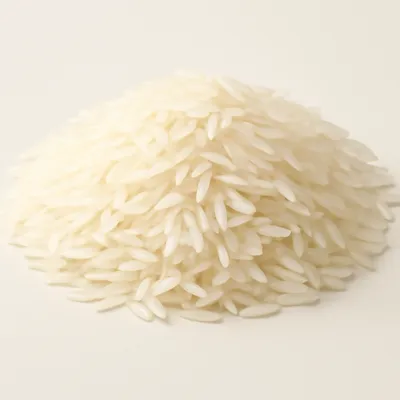
Coconut milk does two things at once: it gels the rice (the fat physically separates grains, so each one stays distinct rather than clumping) and supplies a faint sweetness that the sambal needs to push against. Use water-thinned coconut milk and the rice goes mushy and the sambal tastes harsh — that's the most common stall-grade shortcut to spot. Pandan is for aroma, ginger is for cutting the coconut richness; both are non-optional.
Variations
Nasi lemak bungkus (banana-leaf cone, breakfast format); Kelantan version runs sweeter with budu drizzle; Negeri Sembilan adds rendang; Singapore hawker plates push fried chicken wing as the protein.
On the Palate
Where Nasi Lemak sits in the Malaysian flavor cloud
Cook the rice in full-fat coconut milk, not water-thinned — the fat coats each grain so they stay separate and faintly sweet, which is exactly what the sharp sambal needs to play against.
Ingredients









How it's made
5 steps · 44 min
- 15 min
Rinse rice under cold water until the water runs clear. In a pot, combine rice, coconut milk, sliced ginger, and a pinch of salt. Add water to cover the rice by about 1 inch. Bring to a boil, then reduce heat to low and cover tightly.
Watch outRinse until the water runs clear — leftover surface starch is what makes the finished rice gummy instead of separate.
- 220 min
Cook the rice for 15-20 minutes until the liquid is absorbed and the rice is tender. Fluff with a fork and let it sit covered for 5 minutes off the heat.
Watch outDon't fluff until it has rested off the heat — resting lets the grains firm up so they separate cleanly instead of tearing.
- 35 min
In a small pan, dry roast peanuts over medium heat until golden and fragrant, about 5 minutes. Set aside.
Watch outWatch closely to prevent burning, as peanuts can go from golden to burnt quickly.
- 44 min
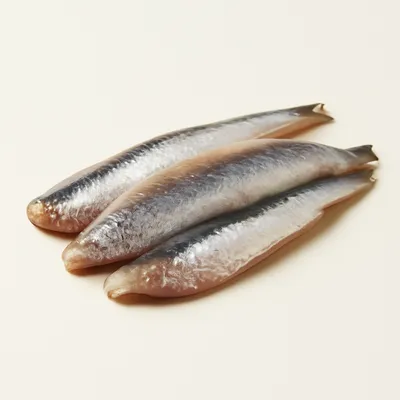
Fry anchovies in a little oil until crispy and golden, about 3-4 minutes. Drain on paper towels.
Watch outPull the anchovies the moment they turn deep gold — they crisp further as they cool and burn to bitter in seconds.
- 510 min
Assemble the dish by plating the coconut rice with crispy anchovies, roasted peanuts, sliced cucumber, and boiled eggs. Serve with sambal on the side.