Guangxi's canonical whole-chicken dish and one of the Ten Named Dishes of Guangxi Cuisine (2024): a free-range mountain chicken poached at just-simmering heat to preserve silky flesh and taut golden skin, then plunged into ice water for a final crispening. Served with a pounded galangal-garlic dipping sauce that gives Guangxi's version its distinct identity from its Cantonese cousin.
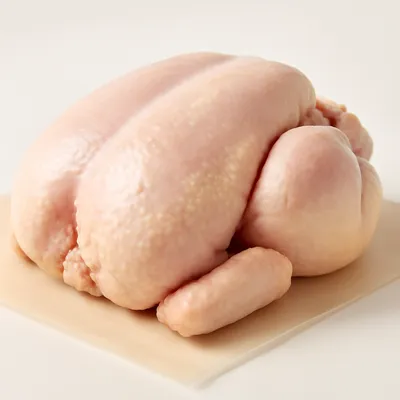


White-cut chicken (白斩鸡) originated in Qing dynasty folk eating houses where chickens were boiled plain — without seasoning — and sliced to order, earning the name 'white-boiled, cut to serve.' The dish spread from Guangdong through Guangxi, Hainan and Hong Kong, each region adapting it to local chicken breeds and dipping sauces. Guangxi's version draws on the territory's celebrated local breeds: the 七百弄鸡 from Dahua County, raised free-range on maize and rice grain in karst-mountain terrain; and the 南丹瑶鸡, entered in the Guangxi Livestock Breed Register in 1985 and awarded a geographic indication trademark in 2008, prized for its lean, resilient flesh. In 2024 the Guangxi Bureau of Commerce and the Guangxi Cuisine and Restaurant Association, through a combined public vote and expert panel, designated Guangxi White-Cut Chicken one of the Ten Named Dishes of Guangxi Cuisine.
Silky, just-set chicken flesh with a taut, faintly gelatinous skin — clean and sweet with the bird's natural fat, then sharp and aromatic from a pungent galangal-garlic sauce that cuts through the richness.
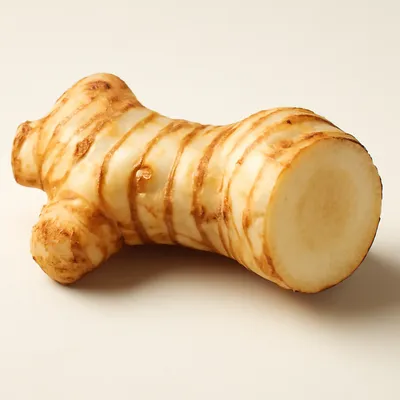
Poaching at just below boiling (80–85°C) prevents myosin proteins from over-denaturing: temperatures above 80°C cause muscle fibres to shrink and expel juice, while lower temperatures fail to fully soften the collagen network in connective tissue. The ice-water bath creates thermal shock that causes surface collagen to contract rapidly, giving the skin its characteristic taut, gelatinous texture. Galangal contains methoxyphenyl ketone compounds whose aromatic volatiles interact with glutamates in the chicken to amplify overall savouriness.
Variations
Hezhou Hakka households poach the chicken in rice wine and salt water instead of plain water, infusing a subtle wine fragrance into the meat — the sharpest divergence from the Guangdong original. Some Guangxi cooks use a soy-vinegar dipping sauce for sweeter notes. Cold sliced chicken over cucumber is a lighter summer presentation.
On the Palate
Where Guangxi White-Cut Chicken sits in the Chinese flavor cloud
Ingredients
Serves 4

How it's made
7 steps · 20 min
- 15 min
Pat chicken dry inside and out; stuff the cavity with 3 slices ginger and 2 scallion stalks; truss legs loosely.
- 25 min
Fill a pot large enough to submerge the chicken; add water, remaining ginger, scallion and 1 teaspoon salt; heat to 85°C — the 'shrimp-eye' stage where tiny bubbles rise steadily.
Watch outBring the water only to 'shrimp-eye' — tiny bubbles rising steadily, never a rolling boil, or the skin bursts and the meat toughens.
- 33 min
Holding the chicken by the neck, submerge it three times and lift each time, allowing the cavity to fill with hot water and temperatures to equalise; then fully submerge.
- 430 min
Adjust flame to maintain 80–85°C without a full boil; poach 25–30 minutes, turning the chicken once halfway through, until juices at the thigh joint run completely clear.
Watch outPoach until juices at the thigh joint run completely clear — pink juice means back in the pot.
- 515 min
Lift chicken immediately into a prepared ice-water bath; soak for 15 minutes until fully chilled through; drain and pat skin dry.
Watch outPlunge straight into the ice bath the instant it's done — that cold shock is what tightens the skin to its signature snap.
- 67 min
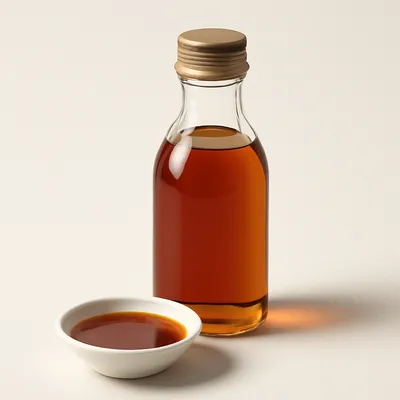
Brush skin lightly with sesame oil; rest 5 minutes; chop through the bone into 3 cm pieces and arrange on a serving plate.
- 75 min
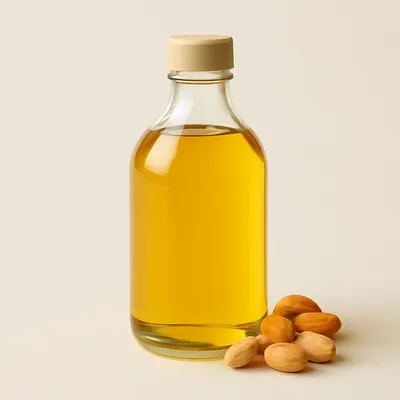
For dipping sauce: pound galangal and garlic to a fine paste; heat peanut oil until just smoking, pour over paste; add soy sauce and a pinch of salt; stir and serve alongside the chicken.
Archive tool suggestions — not reviewed
These legacy suggestions have not been evidence-reviewed and are not presented as required tools.



