


Dim sum (点心) grew out of late-Qing Guangzhou tea stalls called 二厘馆 (named for their two-li tea price), which served dockworkers and laborers; these evolved into 茶居 and then the multi-storey 茶楼, where 一盅两件 (one pot of tea, two baskets) became the morning ritual, and 一盅两件 (one pot of tea, two items) became the morning ritual. Hong Kong refined it postwar, expanding to 100+ items per house. Cart service peaked mid-century; modern restaurants moved to paper-order cards for speed and inventory.
Yum cha tradition out of Guangzhou tea houses, codified in Hong Kong's Lin Heung and Luk Yu in the early 1900s. The trolley-call system died with the floor space; modern dim sum is order-by-paper-slip.
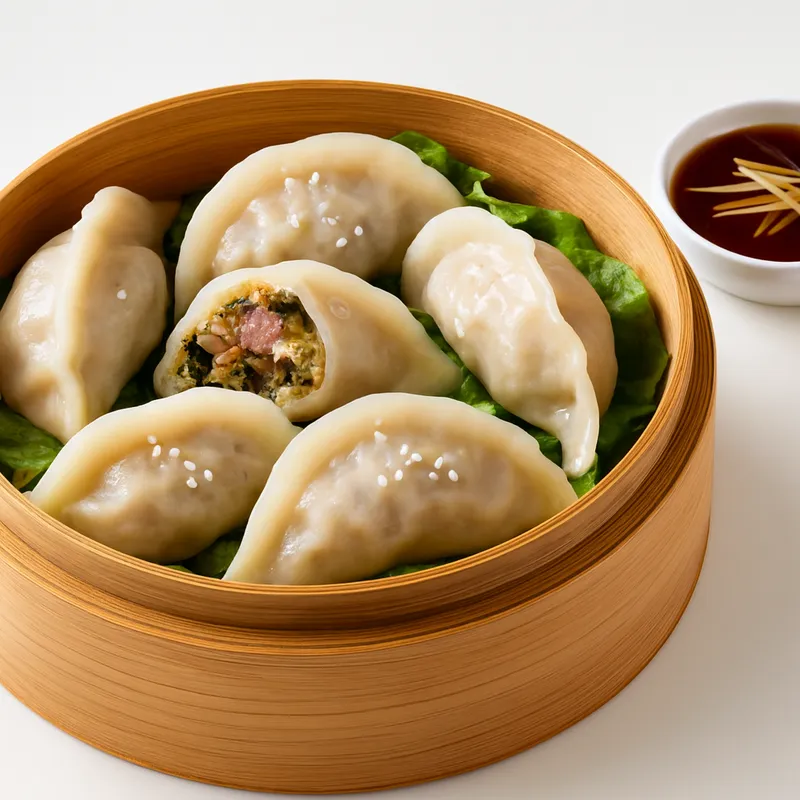
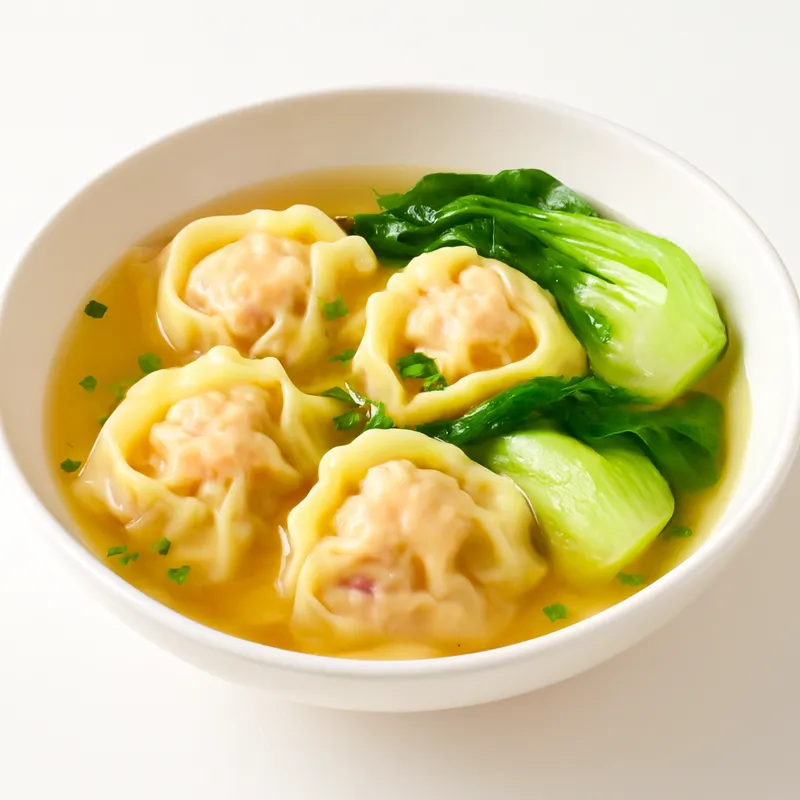
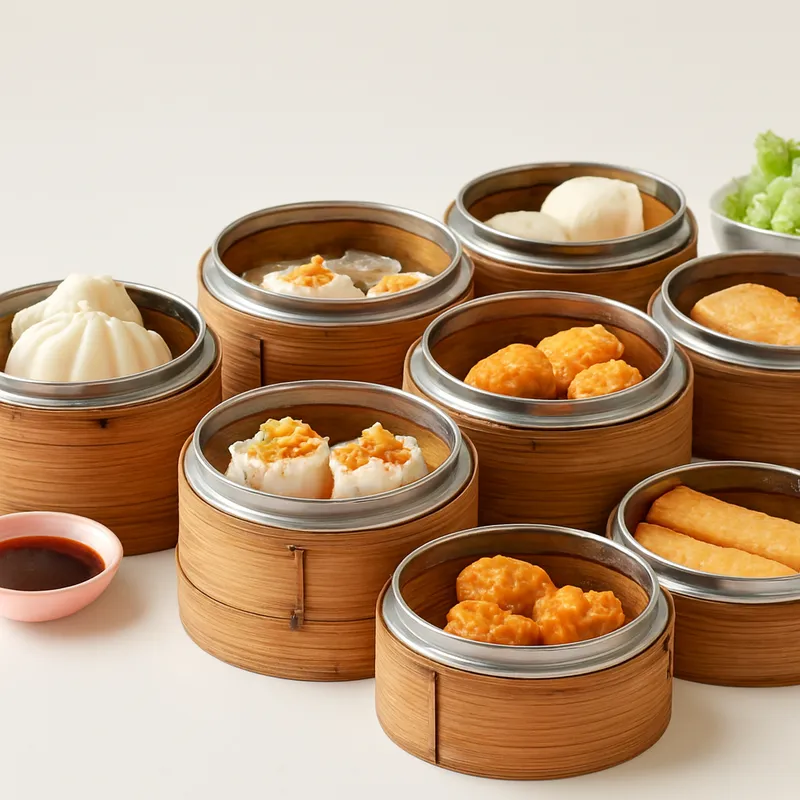
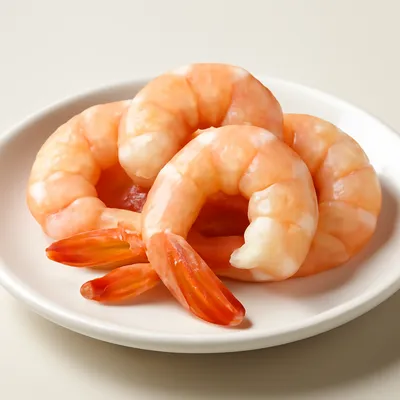
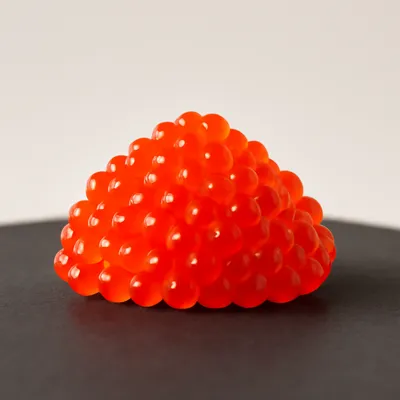
A round table covered in small bamboo steamers stacked three high, plus a few side plates. Pink shrimp glow through translucent har gow skins; siu mai sit open-topped with orange tobiko; rice rolls slide in soy. Tea is poured constantly. You eat by tapping the table with two fingers to thank whoever pours, and you order more by checking boxes on a paper card. Carts have mostly disappeared.
The category covers four cooking methods (steam, fry, bake, boil) but the technical pillar is the wrapper. Har gow's wheat starch dough — wheat starch only, no gluten — is what gives the translucent skin; substituting flour gives an opaque, doughy result. The trolley/chit system also enforces freshness: each piece sits at most 20 minutes from steamer to table, otherwise the skin tightens.
Variations
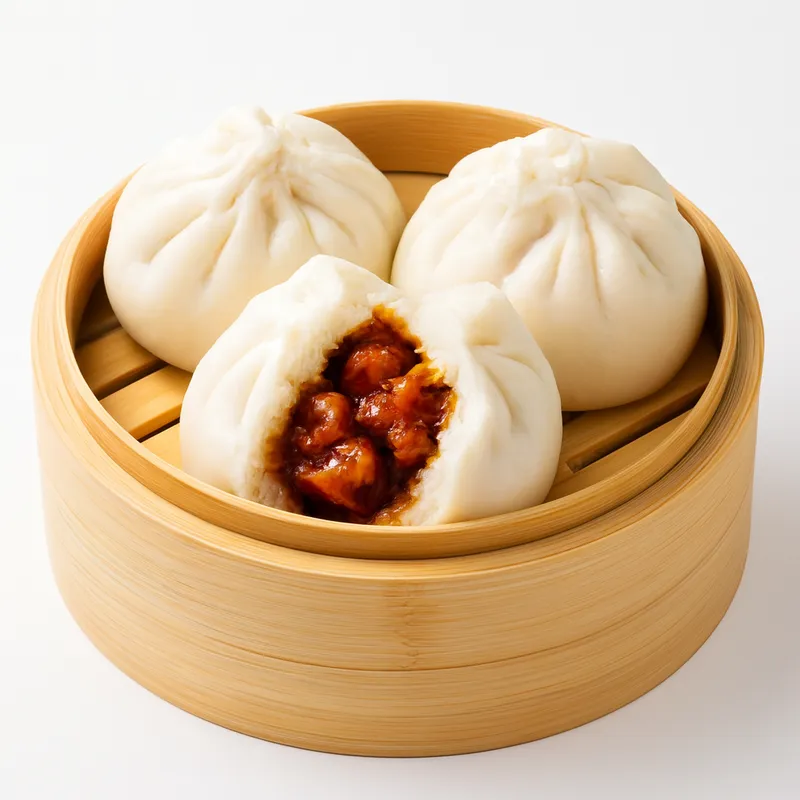
Guangzhou old-school morning yum cha leans savory; Cantonese dim-sum master 陈勋 named the four heavenly kings — har gow, steamed siu mai, BBQ-pork bun, and egg tart; Shanghai variant is dianxin-influenced and dumpling-heavy.
On the Palate
Where Dim Sum sits in the Chinese flavor cloud
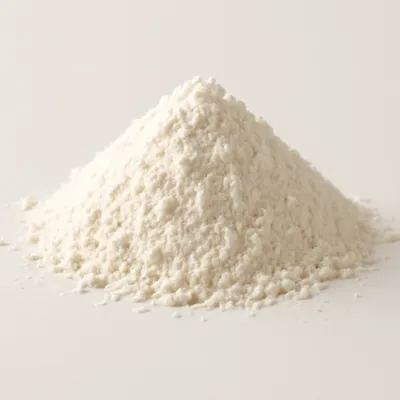
The whole thing rides on the wrapper: a proper har gow skin is wheat starch (澄粉) scalded with boiling water, not flour — that's what turns translucent and snaps clean; a flour or plain dumpling wrapper steams up opaque and doughy no matter how good the filling is.
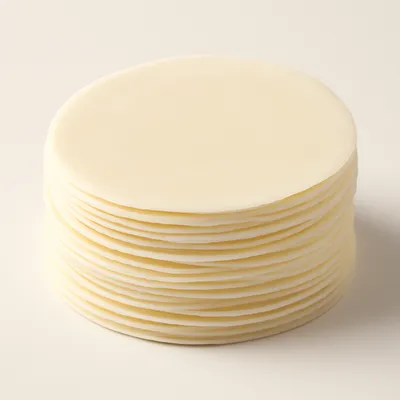
Ingredients
How it's made
5 steps · 30 min
- 15 min
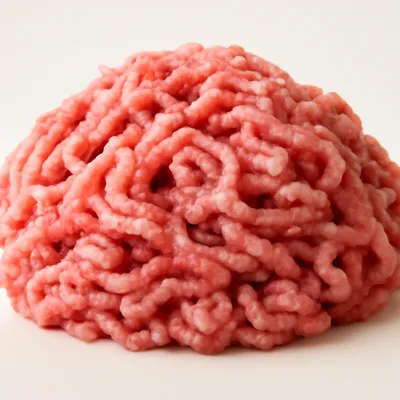
Prepare the filling by finely chopping shrimp, ginger, and vegetables. Combine them with ground pork in a bowl, adding a splash of soy sauce for seasoning.
- 210 min
Place a small spoonful of filling in the center of each dumpling wrapper. Fold and pleat the edges to seal, ensuring no air is trapped inside.
Watch outPleat with the air pressed out and the skin hugging the filling — any trapped bubble becomes a blowout in the steamer.
- 33 min
Arrange the dumplings in a single layer in a bamboo steamer lined with parchment paper. Leave space between each to allow steam to circulate.
- 410 min
Bring a pot of water to a rolling boil. Place the bamboo steamer over the pot, cover with a lid, and steam the dumplings until the wrappers are translucent and the filling is cooked through, about 10 minutes.
Watch outDone when the skin turns glossy and see-through and you can just make out the pink shrimp inside — about ten minutes on strong steam.
- 52 min
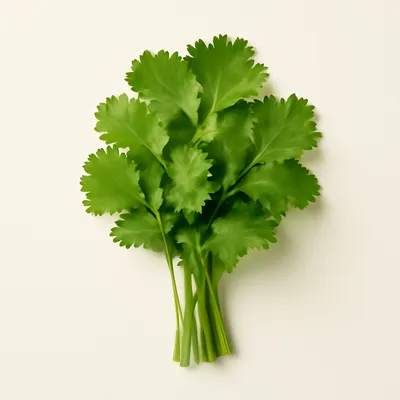
Serve the dim sum immediately with soy sauce for dipping, garnished with fresh cilantro if desired.
Watch outServe straight from the steamer — within twenty minutes, before the skin cools, tightens, and starts to stick.
Archive tool suggestions — not reviewed
These legacy suggestions have not been evidence-reviewed and are not presented as required tools.