In Practice
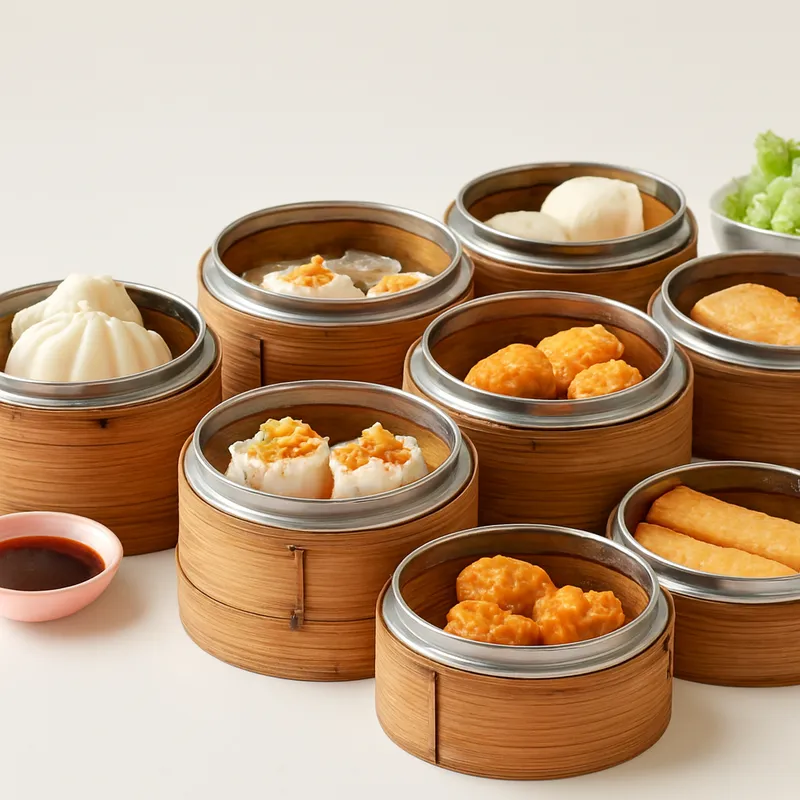
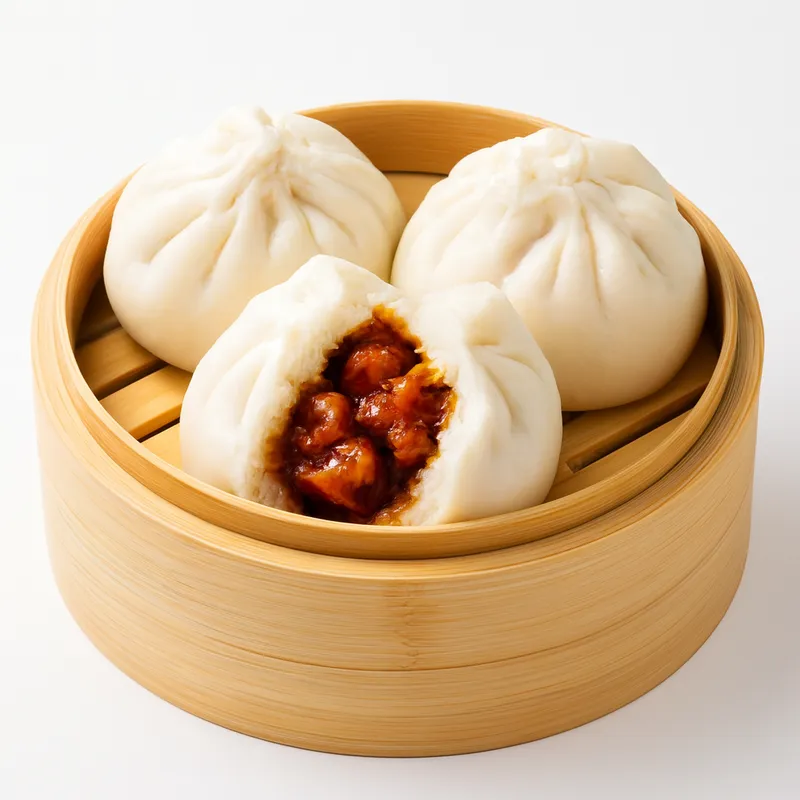
Bamboo steamers 10 cm (small) or 13 cm (medium) diameter, three to four per stack over a single wok of rolling water at 100°C — steam reaches 95-98°C inside the basket. Canonical four mountains: har gow (4 shrimp, 12-pleat translucent skin), siu mai (open-top pork-shrimp), char siu bao (yeast bun, 60-65% hydration dough), cheung fun (rice-flour roll, 30:70 wheat starch ratio). Failure mode: har gow skin tears — wheat starch must be scalded at 95°C+ for transparency.
Background
The tradition of Dim Sum dates back to the Song dynasty in the 10th century, in the southern region of Guangdong. Here, the bustling teahouses along the Silk Road catered to weary travelers and merchants seeking a respite. The small, delicate dishes were designed to be enjoyed with tea, creating a leisurely experience that encouraged conversation and relaxation.
As trade routes expanded, so did the popularity of Dim Sum, eventually becoming synonymous with the Cantonese dining culture. Each region along the way added its local twist — from the spicy notes of Sichuan to the sweet influences found in Shanghai. However, the heart of Dim Sum remains rooted in its Cantonese origins, where the ritual of yum cha, 饮茶, or 'drinking tea', continues to be an integral part of social gatherings.
How It Works
A tea-house architecture (yum cha, 飲茶) where 30-60 small steamed and fried items circulate on push-carts or bamboo steamer stacks while diners drink puer or tieguanyin. The mechanism is *grazing under sustained tannin* — tea's polyphenols cleanse fat from dumpling skins and char siu glaze, enabling 8-12 small bites across 90 minutes without palate fatigue.




Through Time
Roots in Tang-Song tea-house culture along the Silk Road and Grand Canal; the Cantonese yum-cha form crystallized in Guangzhou's 19th-century 茶樓 (Lin Lan Court, founded 1860s). Tao Tao Ju 陶陶居 (1880) and Lin Heung 蓮香樓 (1889) survive today. Hong Kong's mid-20th-century Maxim's Group industrialized push-cart service; Tim Ho Wan (2009) earned the first Michelin star for a dim sum house.
Related cooking knowledge
Steaming is dim sum's central technique; deep frying handles the wu gok and sesame ball periphery. Mezze parallels the small-plate logic but skips the steamer-tower architecture. Banchan and dim sum both serve everything quasi-simultaneously, but banchan is rice-anchored while dim sum is tea-anchored.


