The founding form of Shanghai's beloved xiaolongbao, created in 1871 by Huang Mingxian at his Ri Hua Xuan teahouse in Nanxiang. Huang transformed the conventional large steamed bun by drastically reducing its size, thickening the filling-to-wrapper ratio, and introducing jellied pork-skin stock (皮冻) into the filling—which melts into hot soup during steaming. Each bun is formed with exactly 14 pleats and contains 21 grams of filling within a 9-gram unfermented wrapper. The making technique is a National Intangible Cultural Heritage (No. Ⅷ-8, 2006). A seasonal crab roe version (蟹粉小笼) produced October through December is the most prized variety.




In 1871 (Tongzhi 10th year), Huang Mingxian took over the Ri Hua Xuan (日华轩) teahouse near Guyuan Garden in Nanxiang, Jiading. Observing that scholars gathering at the garden sought refined, bite-size refreshments rather than the large steamed buns then common, he transformed the product systematically: he reduced the bun's diameter, thinned the wrapper using unfermented water dough (紧酵面) for greater tensile strength, enlarged the filling proportion, and—crucially—introduced cooked pork rind simmered to gelatin (皮冻), which he mixed cold into raw pork filling. When steamed, the jelly melted into broth sealed within the wrapper. The Jiading County Continuation Gazette (嘉定县续志) recorded: 'Buns come in tight and loose fermented varieties; the tight variety uses water and flour alone—thin skin with abundant filling, and Nanxiang's version is the most celebrated.' Around 1900 the enterprise expanded to the City God Temple area in Shanghai, where Nanxiang Steamed Bun Store (南翔馒头店) still operates today as a nationally recognized time-honored brand.
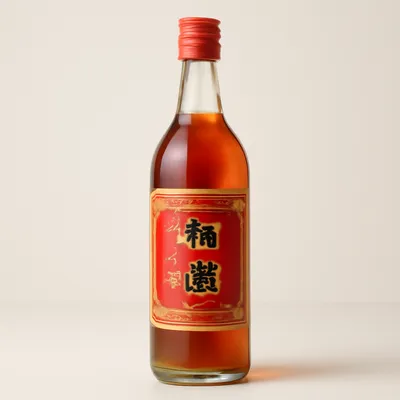
Set a bun in a ceramic spoon and pierce the pleated crown with a chopstick tip: a stream of broth fills the spoon. Sip it first—pork sweetness softened with ginger and Shaoxing wine—then place the bun whole in the mouth. The 9-gram unfermented wrapper yields instantly, releasing the dense 21-gram pork center in one clean collapse. The ratio of soup to meat is deliberate: you taste the labor of the stock before you chew the filling.
The soup-in-bun effect relies on the gelatin chemistry of pork rind: long-simmered collagen (triple-helix proteins rich in hydroxyproline) unravels above 60°C to form soluble gelatin chains, which set to a firm jelly at refrigerator temperature (~4°C). Mixed cold into raw filling, the jelly remains solid during the rapid assembly. At steaming temperature (100°C), the gelatin re-liquefies in seconds, creating trapped broth. The unfermented water dough (紧酵面) develops a denser gluten network than fermented dough—because no yeast activity disrupts the protein matrix—giving the 9-gram shell the tensile strength to contain liquid filling without bursting. The 14+ overlapping pleats add a mechanical seal at the crown. Sixth-generation inheritor You Yumin developed the double-rolling technique (双杆擀皮法) to achieve uniform wrapper thickness across large-scale production.
Variations
Crab roe xiaolongbao (蟹粉小笼) folds fresh hairy crab roe and crab meat into the pork filling, served only October to December when Yangcheng Lake crabs are in season—the most expensive and prized variant. Fresh river shrimp xiaolongbao substitutes shrimp for part of the pork. Contemporary Shanghai restaurants offer black truffle and fish roe versions. The ancestral form served at Guyuan Garden used no ginger—a defining trait that differentiates Shanghai-style from other regional xiaolongbao.
On the Palate
Where Nanxiang Steamed Bun sits in the Chinese flavor cloud
Ingredients
Serves 4
How it's made
7 steps · 1 hour
- 1120 min
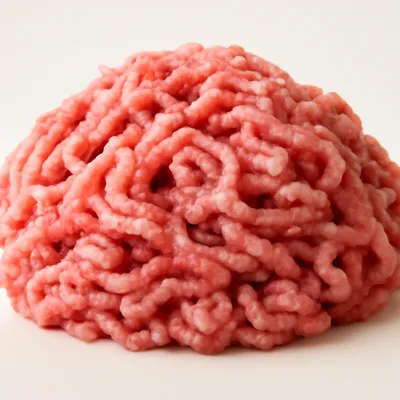
Make pork skin gelatin (皮冻): simmer 200g pork rind in water with ginger slices and Shaoxing wine for 2 hours; strain, season with soy sauce and salt; pour into a shallow dish and refrigerate until firm; dice into 5mm cubes.
Watch outSimmer the pork rind two hours, then chill until firm before dicing — under-set jelly won't hold solid during assembly and there's no soup in the bun.
- 230 min
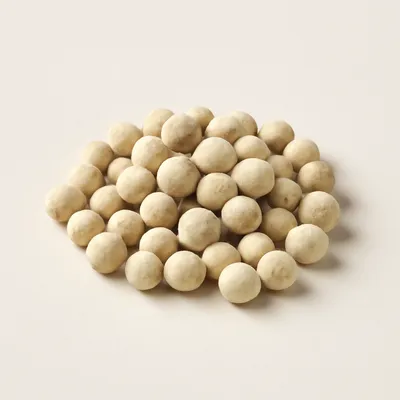
Make the filling: combine 250g finely minced pork with soy sauce, ginger juice, Shaoxing wine, sesame oil, and white pepper; stir vigorously in one direction until the mixture develops a sticky texture; fold in the diced pork skin gelatin; refrigerate 30 minutes.
- 330 min
Make the wrapper dough: mix 300g plain flour with 150ml cold water; knead until smooth and elastic (no fermentation); cover with a damp cloth and rest 30 minutes.
- 420 min
Roll the rested dough into a thin cylinder; pinch off 9g portions; flatten each with a small rolling pin into an 8–9cm round, slightly thicker at the center than the edges.
- 525 min
Place 21g of filling in the center of each wrapper; use the thumb and forefinger to pleat the edge 14 times continuously, rotating the bun while pleating; pinch the final pleat to seal the crown tightly.
Watch outPleat and pinch the crown tightly shut — a loose seal leaks the melted broth into the steamer instead of holding it inside.
- 65 min
Arrange buns with small gaps between them on dampened parchment inside bamboo steamer baskets.
- 78 min
Steam over vigorously boiling water for 8 minutes until the wrappers turn translucent and the buns tremble with internal liquid; serve immediately in the basket accompanied by Zhenjiang black vinegar and fine-sliced ginger.
Watch outSteam just eight minutes until the wrappers go translucent and the buns tremble with liquid inside — over-steam and the skin bursts and the soup's gone.
Archive tool suggestions — not reviewed
These legacy suggestions have not been evidence-reviewed and are not presented as required tools.


