The quintessential Cantonese steamed bun: a snowy-white half-leavened wrapper enclosing lotus seed paste that has been slowly fried with lard and sugar until silky and non-sticky — a technique called "sanding" (起沙). Found in teahouses across Guangdong, Hong Kong, and Macau, it is the serene counterpart to the exuberant char siu bao.

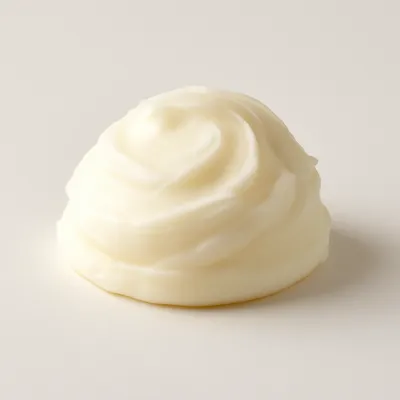



Lotus paste buns are a quintessential dim sum sweet widely served across Guangdong, Hong Kong, and Macau. The technique of slow-frying the lotus paste filling with lard until it "sands" was established in Guangzhou teahouses by the early Republic period. By the 1920s the bun dough was refined into the snowy half-leavened wrapper that distinguishes it from the cracked-top char siu bao, forming the classic presentation still used today. Lotus seeds from Hunan (湘莲) and Fujian (建莲) have been the preferred varieties for their superior sweetness and fine texture.
The bun is cloud-white and yielding; the lotus paste inside is silky, just sweet enough, with the faint, clean fragrance of dried lotus seeds. It is the mildest, most serene item on the dim sum cart — and somehow always the one you come back to.
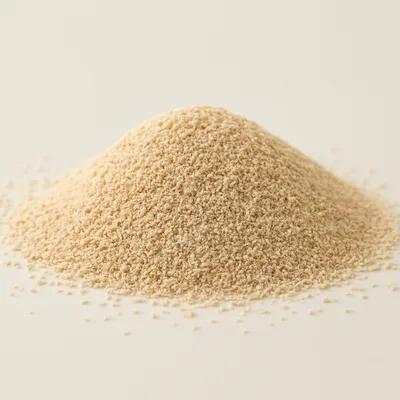
Lotus seeds contain roughly 67% starch, rich in amylopectin; after boiling to a paste and grinding smooth, slow-frying with lard (about 15% by weight) coats the starch granules in fat, preventing them from re-crystallising (retrogradation) at room temperature — this is the "sanding" (起沙) step, which keeps the filling smooth and non-sticky indefinitely. The bun dough uses roughly 60% of the yeast quantity of a char siu bao, yielding fewer, finer CO₂ bubbles; after steaming, the crumb is close-textured, snow-white, and never cracks.
Variations
Classic version uses white lotus paste (皮去芯); double-salted-egg-yolk lotus paste version (双黄莲蓉) adds two yolk halves for a savoury-sweet balance; flaky pastry version (酥皮莲蓉包) uses an oil-and-flour dough for a layered, pastry-like shell; Hong Kong teahouses sometimes substitute red bean paste or green-bean paste as a lighter variant.
On the Palate
Where Lotus Paste Bun sits in the Chinese flavor cloud
Ingredients
Serves 6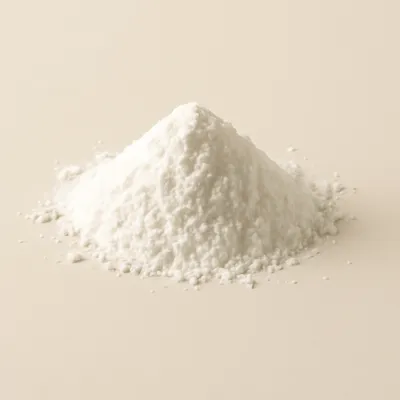
How it's made
7 steps · 1 hour
- 110 min
Soak lotus seeds overnight; simmer in fresh water 1 hr until very soft; drain; blend while hot to a very smooth paste
- 220 min
Cook lotus paste in a wok with lard and sugar over medium-low heat, stirring constantly until the paste thickens, pulls away from the pan, and develops fine sandy granules on the surface (起沙); cool to room temperature
Watch outFry the paste until it pulls cleanly off the pan and turns sandy on the surface — that 'sanding' is what keeps it smooth and non-sticky; stop early and it stays wet and gummy.
- 340 min
Mix flour, yeast, sugar, and warm water; knead 10 min until smooth; cover and rest in a warm spot 30–40 min until doubled in size
- 45 min
Punch down dough; add baking powder; knead 5 min until smooth and no air pockets remain
- 55 min
Divide dough into 30 g portions; flatten each into a disc thicker in the centre than at the edges
- 610 min
Place 20 g lotus paste in the centre; gather the dough up around the filling and pinch tightly to seal; roll into a smooth ball; place sealed-side down on a small square of parchment
- 715 min
Rest buns 15 min; steam over high heat 12 min; turn off heat and keep lid on 2 min before opening to prevent collapse
Watch outSteam on high, then leave the lid on two minutes off the heat before opening — a sudden draft collapses the snow-white skin into wrinkles.
Archive tool suggestions — not reviewed
These legacy suggestions have not been evidence-reviewed and are not presented as required tools.

