Wuhan's most revered soup dumplings, with tissue-thin wrappers cradling a torrent of savory pork broth. Born at a century-old Hankou institution, these small-basket steamed dumplings balance Jianghuai refinement with the bold, brothy appetite of the Yangtze heartland.





Tian Yushan, a native of Hanyang County, opened a modest thirty-square-metre stall on Hankou's Flower Tower Street in 1922, serving Jianghuai-style soup dumplings alongside Jiangzhe dishes. In 1927, after relocating to Jianghan Road, the Wuchang calligrapher Chen Yingmei inscribed the shop name 'Siji Mei' — Beauty of All Four Seasons. The restaurant's definitive character was shaped when master chef Zhong Shengchu (1922–1992) systematically adapted the Jianghuai small-basket technique to Wuhan palates, earning the title 'Soup Dumpling King.' His successor Xu Jiaying in the 1980s expanded the repertoire to over a hundred varieties, reportedly winning a Gold Cauldron Award from the Ministry of Commerce. The brand was recognised as a China Time-Honoured Brand in 2011 and entered the Hubei Province Intangible Cultural Heritage list in 2020.
Nip a tiny hole in the wrapper, let the first rush of steaming broth pool on your spoon, drink it, then eat the dumpling — pork silk tender, wrapper just toothsome enough to resist.
The soup is not poured in — it is solid at room temperature. Pig-skin collagen is simmered for hours, yielding a gelatin stock that sets below 20 °C into a firm jelly. Mixed into the raw pork filling it stays solid during pleating. Steam at 100 °C melts the gelatin back to liquid within minutes, flooding the sealed wrapper with hot broth. The thin dough — high-gluten flour at roughly 30% wet gluten — is rolled to near translucency; its tight gluten network holds the pressurised soup without bursting.
Variations
Three-delicacies (shrimp, pork, egg); crab-roe; mushroom; sea-cucumber; softshell-turtle; chicken-paste. Seasonal limited editions appear for festivals.
On the Palate
Where Siji Mei Soup Dumplings sits in the Chinese flavor cloud
Ingredients
Serves 4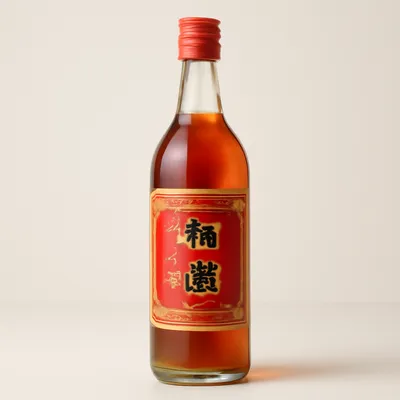


How it's made
6 steps · 1 hour active + 30 min waiting
- 1120 min
Make gelatin stock: simmer cleaned pork skin in water for 2 hours until reduced by half; strain, season with salt and soy sauce, pour into shallow trays and refrigerate until firmly set (at least 4 hours or overnight).
Watch outChill the pork-skin stock until it sets to a firm, sliceable jelly — if it's still loose it won't hold solid through pleating and the soup leaks.
- 220 min
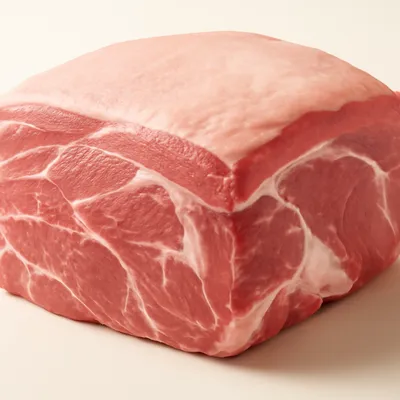
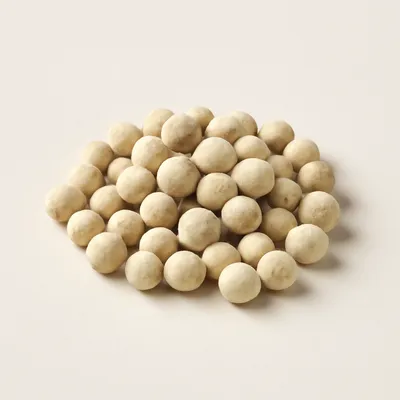
Prepare filling: finely mince pork shoulder; dice the set gelatin jelly into small cubes; combine pork, jelly cubes, ginger, soy sauce, sesame oil, Shaoxing rice wine, sugar, and white pepper; stir vigorously in one direction until cohesive; refrigerate.
- 330 min
Make dough: combine high-gluten flour with warm water; knead until smooth and elastic; cover with a damp cloth and rest 30 minutes.
- 415 min
Roll wrappers: divide rested dough into small portions (about 15 g each); roll each to a thin round about 8 cm across, thicker at centre, very thin at edges.
- 515 min
Pleat and seal: place a generous spoonful of filling at the centre; fold and pleat 18–20 times around the top edge; pinch shut firmly, leaving no gap.
Watch outPinch every pleat shut with no gap at the top — one open seam and the melted soup blows out the moment it hits the steam.
- 68 min
Steam: line bamboo basket with cabbage leaves; arrange dumplings without touching; steam over vigorous boiling water for 8 minutes until wrappers turn translucent.
Watch outSteam over a hard boil about eight minutes and pull them the moment the wrappers go translucent — over-steam and the thin skin sags and tears.
Archive tool suggestions — not reviewed
These legacy suggestions have not been evidence-reviewed and are not presented as required tools.


