A ceremonial Teochew rice-flour kueh pinched into a pomegranate shape and capped with a single black bean. The skin is soft and mildly translucent, encasing a glutinous rice and black-bean filling. Traditionally made for the coming-of-age rite of 出花园 and presented as one of the four auspicious wedding kueh.




The 石榴粿 belongs to the Teochew ceremonial kueh tradition tied to ancestral worship and rites of passage in Chaoshan. The pomegranate form carries deep fertility symbolism in Chinese culture — stone-fruit seeds (籽) are homophonous with sons (子). Historical records from the Chaoshan region list it alongside 红桃粿 and 龟仔粿 as essential offerings during the 出花园 ceremony, performed when a child turns fifteen to mark entry into adulthood. It also appears as one of the 'four auspicious kueh' (灯火粿, 石榴粿, 肚兜粿, 龟仔粿) dispatched by the bride's family at weddings, expressing hope for many descendants. Also called 秀才粿 — the Scholar's Kueh — the black bean cap is said to symbolize outstanding talent.
The thin rice skin yields softly; the lightly sweet glutinous filling is dense and moist, and the single black bean cap provides a subtle earthy counterpoint.
The skin is made by scalding rice flour with boiling water, which partially gelatinizes the starch granules and makes the dough pliable enough to press thin without cracking — unlike cold-water rice dough, which tears. The glutinous rice filling uses waxy rice with nearly 100% amylopectin; its densely branched molecular structure resists retrogradation far more than regular rice starch, keeping the filling soft and cohesive after cooling rather than hard and grainy.
Variations
Savory variants fill with stir-fried diced taro, dried shrimp, and peanuts. Sweet variants use red bean paste. A version with white sesame scattered on top replaces the black bean crown while keeping the pomegranate silhouette.
On the Palate
Where Pomegranate-Shaped Stuffed Kueh sits in the Chinese flavor cloud
Ingredients
Serves 4How it's made
8 steps · 45 min active + 15 min waiting
- 130 min
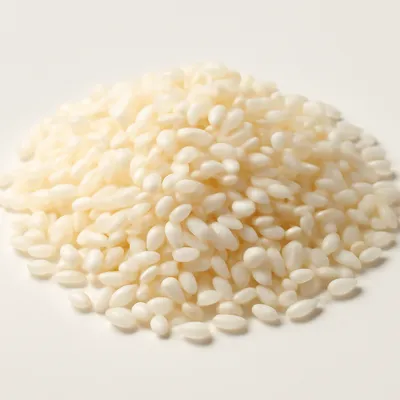
Prepare the filling using raw glutinous rice soaked in cold water for at least 4 hours beforehand: drain, spread in a shallow steamer basket, and steam over high heat for 25 minutes until fully cooked. Season lightly with salt and a few drops of sesame oil. Set aside.
- 210 min
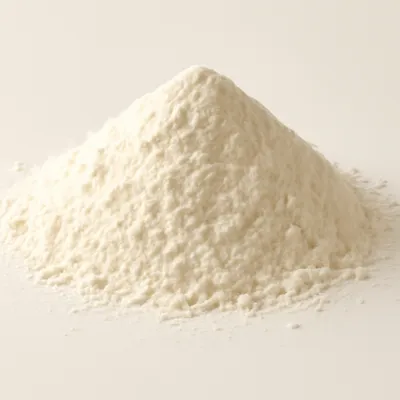
Boil 100 ml water and pour immediately over 150 g rice flour; stir rapidly with chopsticks. When cool enough to handle, knead into a smooth, pliable dough for about 5 minutes.
Watch outPour boiling water over the rice flour and stir fast — the scald partly gelatinises the starch so the dough presses thin without cracking; cold water dough tears.
- 35 min
Divide the dough into balls of about 30 g each. Flatten each ball in your palm to a disc about 6 cm across.
- 45 min
Pinch the edges of each disc upward between your thumb and fingers to form a small open cup with walls about 2 mm thick.
- 55 min
Fill each cup with a heaped tablespoon of seasoned glutinous rice and 3–4 cooked black beans.
- 65 min
Gather the cup edges upward and pinch firmly to seal. Press one raw black bean into the pinched crown to create the pomegranate tip.
- 712 min
Arrange kueh in a bamboo steamer lined with lightly oiled parchment. Steam over high heat for 12 minutes.
Watch outSteam twelve minutes; the skins should turn slightly translucent when done.
- 85 min
Remove from steamer; brush surfaces with a thin coat of cooked peanut oil to prevent sticking. Cool 5 minutes before serving.
Archive tool suggestions — not reviewed
These legacy suggestions have not been evidence-reviewed and are not presented as required tools.


