
A perennial yum-cha best-seller: chicken feet blanched, deep-fried until the skin blisters into a puckered 'tiger-skin' crust, soaked in cold water to plump it, then steamed in a fermented-black-bean and garlic sauce until skin, tendon and the little pads of meat slip clean off the bone. Served hot from the steamer basket, glossy and falling-apart soft — the opposite of the cold pickled-pepper version.
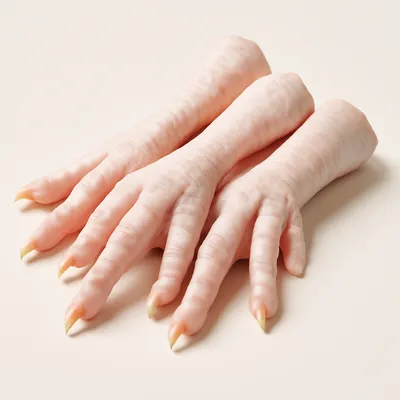




Steamed phoenix claws is a folk staple of the Cantonese teahouse rather than the invention of any one cook, and has no reliably dated origin. What is documented is the dish's place and its language. 凤爪 — 'phoenix claws' — is the standard Cantonese culinary euphemism for chicken feet, part of a teahouse habit of dressing humble parts in auspicious names (pork backbone becomes 龙骨, 'dragon bones'), drawing on the lucky pairing of dragon and phoenix; in a city of merchants, a 'grasping claw' also carried a welcome suggestion of raking money in. Chicken feet themselves are a prized texture-ingredient across Chinese cooking, valued not for meat — there is almost none — but for gelatinous skin and tendon. The defining method is two-part: the 虎皮 ('tiger-skin') deep-fry that blisters the skin, and the 豉汁 fermented-black-bean braise-steam that makes it tender, and it is this hot, soft, savory treatment that separates the Cantonese dim-sum classic from cold, sour-spicy pickled-pepper chicken feet (泡椒凤爪) of Sichuan and Chongqing.
Hot and gloriously soft. The blistered tiger-skin has puffed into plump, wrinkled bubbles that drink up the sauce; the skin and the tendon beneath it have gone to a slithery, gelatinous tenderness and slip off the bone with the lightest tug. The black-bean sauce is salty-savory and deeply umami, edged with a touch of sweetness from oyster sauce and sugar and a mild chili warmth. You work each claw with your lips, spitting out the slender bones, and finish with sticky, collagen-rich fingers and a lip-coating gloss — the very opposite of the cold pickled version's crisp, sour snap.
Four steps, each with a reason. (1) Blanch the cleaned feet in boiling water — often with a little maltose and white vinegar — to rinse off impurities, firm the skin and set its shape; then dry them thoroughly, because surface water is what makes hot oil explode. (2) Coat the dried feet in a maltose- or honey-water (饴糖/麦芽糖水) or soy for color and deep-fry: the feet go in at about 50-60% oil heat (五六成热) and the oil is pushed up toward 七八成热, and the lid goes on at once — water trapped in and just under the skin flashes to steam and erupts outward, blistering the surface into the puckered tiger-skin crust while the sugars brown by the Maillard reaction. Frying wet feet spatters violently, so a lid or splatter screen is non-negotiable, left with a crack so condensation can't drip back and re-trigger the spatter. (3) Plunge the fried feet into cold water and soak — an hour or more — this step is not optional: thermal expansion and contraction (热胀冷缩) and rehydration swell the blistered skin into its plump, wrinkled tiger-skin form, the puckers that will later soak up sauce. (4) Dress with a sauce of fermented black beans (豆豉 — salted, mold-fermented soybeans, rich in free glutamate for deep umami), garlic, oyster sauce, sugar and soy, and steam 30 minutes to an hour: sustained moist heat breaks the abundant collagen down to gelatin, so skin and tendon turn meltingly soft and the meat falls off the bone.
Variations
Two main lines turn on the deep-fry. Skipping it and steaming the feet directly gives a plain 豉汁蒸凤爪 — softer-skinned, no blisters; doing the fry-and-soak first gives the puffed 虎皮凤爪 ('tiger-skin claws'). The black-bean base is often enriched into abalone-sauce or oyster-sauce versions, and a 香辣 (savory-spicy) rendition leans harder on chili and Sichuan pepper. At yum cha it arrives in a small bamboo steamer basket, traditionally wheeled around on the dim-sum cart. A wholly separate, non-dim-sum treatment is 卤水凤爪 — chicken feet simmered in a soy-based master stock and eaten cool or warm — savory and aromatic rather than fried, blistered or black-bean-sauced, and not to be confused with this steamed dish.
On the Palate
Where Steamed Phoenix Claws sits in the Chinese flavor cloud
Ingredients
Serves 4


How it's made
8 steps · 1 hour 30 min
- 120 min
Clean the chicken feet, snip off the nail tips, and blanch in boiling water with a spoon of maltose and a splash of white vinegar until the feet tighten and shrink; lift out and dry them completely with a towel.
Watch outAfter blanching, towel the feet bone-dry — surface water is exactly what makes the hot oil explode, and it also blocks the color coating from sticking.
- 23 min
Optionally brush the dried feet with maltose- or honey-water (or a little dark soy) for color, making sure no surface water remains.
- 38 min
Heat oil to about 50-60% hot, add the feet, push the heat up to 70-80%, and immediately cover with a lid or splatter screen (leave a small gap) — fry until the skin blisters and turns golden, as it will spit violently.
Watch outLid on the instant the feet hit the oil — the trapped water flashes to steam and erupts, blistering the skin; fry until it puffs and turns golden, and expect it to spit violently.
- 470 min
Plunge the fried feet straight into a basin of cold water and soak at least 1 hour (longer for more pronounced tiger-skin), until the skin is plump and wrinkled.
Watch outShock the fried feet straight into cold water and soak at least an hour — the sudden chill plumps and wrinkles the blistered skin into the puckered tiger-skin; skip it and the skin stays flat and tough.
- 58 min
Make the sauce: fry minced garlic and rinsed fermented black beans in a little oil until fragrant, then stir in oyster sauce, sugar, light soy, a pinch of salt and chopped red chili.
- 63 min
Drain the soaked feet, toss thoroughly with the black-bean sauce so every pucker is coated.
- 750 min
Spread the feet in a heatproof dish or bamboo basket and steam over high heat for 30 minutes to 1 hour, until the skin and tendon are meltingly soft and pull off the bone.
Watch outSteam long and hard until the skin and tendon go meltingly soft and pull off the bone at a suck — 30 minutes to an hour; understeamed and they stay chewy and cling to the bone.
- 82 min
Scatter with scallion and a few drops of sesame oil, and serve hot in the steamer basket.
Archive tool suggestions — not reviewed
These legacy suggestions have not been evidence-reviewed and are not presented as required tools.


