The ceremonial pork centerpiece of Yongding Hakka banquets, built on a pairing of thick-cut pork belly with Yongding preserved mustard greens (菜干)—a centuries-old ingredient made by repeatedly steaming and sun-drying fresh mustard. The pork is boiled, then deep-fried to a blistered tiger-stripe skin, then slow-steamed upside-down over the greens for nearly an hour. Inverted tableside, it reveals glistening amber pork slices over dark, fat-saturated mustard that has become almost jammy with absorbed rendering.





Yongding County, Longyan Prefecture, Fujian Province. Yongding dried mustard greens are made from local mustard leaves preserved through repeated cycles of steaming and sun-drying—traditionally 'three steam, three dry' at minimum, or 'seven steam, seven dry' for premium quality—a technique said to date from the Ming dynasty Jiajing reign (1521-1567). The dried vegetable stores for years without refrigeration and sustained Hakka communities through long migration journeys, spreading with Hakka settlers to Guangdong and Southeast Asia. Paired with pork belly in the 扣肉 (inverted braised pork) format, it became the defining banquet dish of Yongding. In 2022, the craft of making Yongding dried mustard greens was included in Fujian's Provincial Intangible Cultural Heritage representative list (7th batch).
The pork belly arrives glistening and amber, skin rippled and tender, practically dissolving on the tongue. Underneath, the dark mustard greens are dense and almost jammy—they have absorbed the rendered pork fat over an hour of steaming and transformed from dried leaves into something deeply savoury and softly sticky. The combination of silky skin, rich fat, lean meat, and fat-saturated greens is one of the great Hakka flavour contrasts.
The three-stage cooking builds complexity through three distinct chemical processes. Initial boiling sets the connective tissue and partially renders the subcutaneous fat. The coating of soy sauce and malt sugar followed by deep-frying at around 180°C drives a Maillard reaction on the skin surface: the reducing sugars in malt sugar react with amino acids from the pork proteins to produce hundreds of aromatic compounds and the characteristic blistered 'tiger stripe' (虎皮) through rapid moisture evaporation and surface caramelisation. Plunging the fried pork into cold water causes rapid contraction of the skin collagen, locking the blistered texture. The final long steam hydrolyzes pork belly collagen into gelatin over 50-60 minutes, liquefying the fat cells and making the meat fall-tender, while the rendered fat migrates downward by capillary action into the fibrous dried mustard greens. The residual lactic acid produced during the mustard greens' multi-cycle drying process provides mild acidity that further tenderizes the pork proteins in contact.
Variations
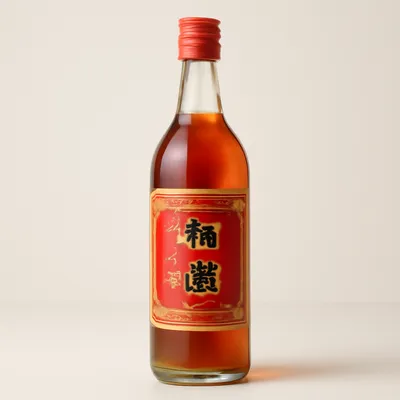
Hakka clay-pot version: pork belly and dried greens are braised directly in a clay pot with soy sauce and Hakka rice wine, skipping the frying and inversion—earthier, less theatrical, equally flavourful. Lotus-leaf wrap: some Yongding households line the bowl with fresh lotus leaves before steaming, adding a faint floral fragrance that penetrates the meat and greens. Glutinous rice variant: a layer of pre-soaked glutinous rice is placed between the pork and the dried greens before steaming; the rice absorbs both rendered fat and vegetable juices and becomes intensely flavoured.
On the Palate
Where Yongding Dried Mustard Braised Pork sits in the Chinese flavor cloud
Ingredients
Serves 6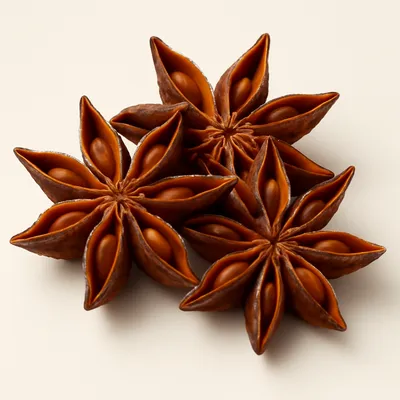

How it's made
8 steps · 30 min
- 120 min
Rinse the dried mustard greens thoroughly; soak in warm water for 20 minutes to rehydrate slightly; squeeze firmly to remove excess liquid, then roughly chop and set aside.
- 238 min
Place the whole pork belly skin-side down in a pot of cold water with ginger slices and Shaoxing wine; bring to a boil and simmer over medium heat for 35-40 minutes until a chopstick pierces through the flesh cleanly.
- 35 min
Remove the pork belly and pat the skin completely dry with kitchen paper; while still hot, brush the skin side thickly and evenly with a mixture of dark soy sauce and malt sugar.
Watch outPat the skin bone-dry before you brush on the soy and malt sugar — any water left will spit violently in the oil and keep the skin from blistering into tiger stripes.
- 48 min
Heat oil in a wok or deep pan to 180°C; lower the pork skin-side down into the hot oil and deep-fry for 3-5 minutes until the skin blisters into deep amber tiger-stripe ridges; remove and immediately submerge in cold water for 5 minutes to firm the skin.
Watch outFry skin-down until it swells into deep amber blistered ridges, then plunge it straight into cold water — the sudden shock is what pops the tiger-stripe crackle; skip it and the skin stays flat.
- 510 min
Slice the cooled pork belly into pieces about 1 cm thick; arrange them skin-side down in a single layer in a deep heatproof bowl; pack the seasoned dried mustard greens firmly and evenly over the pork.
- 63 min
Mix light soy sauce, Shaoxing wine, sugar, star anise, and a ladleful of the pork cooking broth; pour evenly around the edges of the bowl until the mustard greens are just moistened.
- 755 min
Place the bowl in a steamer and steam over high heat for 50-60 minutes until the pork is completely tender and the greens have absorbed the rendered fat and turned soft and glossy.
Watch outSteam long enough that a chopstick sinks through with no resistance and the mustard greens have drunk up the fat and turned dark and glossy — that oily sheen means the flavours have married.
- 82 min
Press a deep serving plate firmly over the mouth of the bowl and invert in one swift motion; lift the bowl away to reveal glistening pork slices atop a mound of fragrant dark mustard greens; serve immediately.
Archive tool suggestions — not reviewed
These legacy suggestions have not been evidence-reviewed and are not presented as required tools.


