A Bengbu centrepiece built around the prized Huai River fei-wang fish — a long-nosed catfish native to the stretch around Fengtai Gorge — simmered at a rolling boil until the broth turns as white and thick as milk. The flesh is silky and boneless-tender; the soup is clean and faintly rich.



The fei-wang fish has been prized in the Huai River basin since the Western Han period. Local legend holds that Liu An, the Han King of Huainan, was so devoted to the fish that he named it 'hui huang,' and tradition tells of his once identifying a substitute species served at a banquet, reputedly declaring he could not go a single day without the real fish. Because of the Huainan Wang's legendary association with the fish, it gained the name 'huai wang fish'; the pronunciation shift from 'hui' to 'fei' in the Shouxian dialect produced the current name 'fei wang.' The milky-broth preparation was later refined by Bengbu cooks who discovered that vigorous high-heat boiling emulsified the fish's collagen and fat into a snow-white soup, and the dish became the anchor of Huai River banquet menus.
The broth arrives in a deep bowl, opaque white and faintly trembling. A sip coats the tongue with velvety warmth — no fishiness, only the clean sweetness of freshwater. The flesh separates in soft flakes at the touch of chopsticks, yielding and almost custardy, with a clean mineral finish of river water and lard.
The milky-white colour is a fat-protein emulsion. The fei-wang fish's skin and bones are rich in collagen; prolonged high-heat boiling hydrolyses the collagen into gelatin (primarily glycine and proline peptide fragments). Simultaneously, vigorous turbulence from the rolling boil breaks the fish's lipids into microscopic droplets; the dissolved gelatin and denatured proteins act as natural emulsifiers, coating and stabilising the fat droplets suspended in water. These micro-droplets scatter visible light (Mie scattering), producing the opaque white colour. The more vigorously the broth boils, the whiter and richer it becomes.
Variations
Some cooks pan-fry the fish first until lightly golden to develop Maillard-flavoured complexity before adding water for the broth. Silken tofu blocks simmered in the broth in the final minutes are a classic accompaniment. Restaurant versions often substitute pork bone stock for water to deepen the base.
On the Palate
Where Creamy Fei Wang Fish sits in the Chinese flavor cloud
Ingredients
Serves 3How it's made
7 steps · 15 min
- 110 min
Clean and gut the fish; remove gills; score the sides with three diagonal cuts on each side; pat thoroughly dry with kitchen paper.
- 23 min
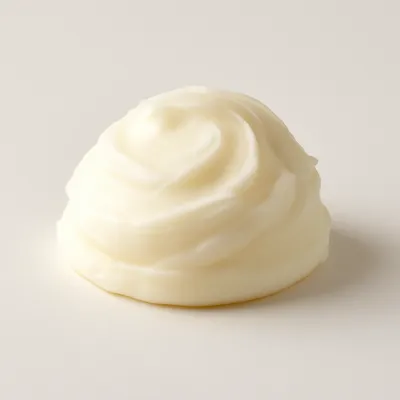
Heat lard in a heavy-bottomed pot or wok over high heat until shimmering; add ginger slices and the white parts of the scallion; stir-fry for 30 seconds until fragrant.
- 35 min
Gently lay the fish flat in the hot fat; fry without moving for 2 minutes until lightly golden on the underside, then carefully flip and fry the other side.
Watch outFry the fish undisturbed until the underside is lightly golden before you flip — moving it early tears the skin, and the skin's collagen is what turns the broth white.
- 42 min
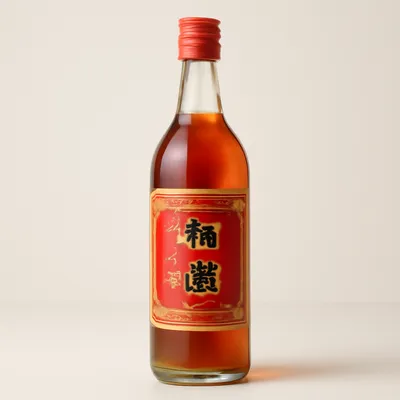
Pour Shaoxing rice wine along the rim of the pot; let it sizzle and steam for 30 seconds to deglaze any browned residue.
- 53 min
Add enough boiling water or pork stock to nearly submerge the fish; bring to a vigorous rolling boil.
- 620 min
Maintain a high, turbulent boil for 18–20 minutes without lowering the heat; the fat and collagen emulsify progressively, turning the broth from clear to milky white.
Watch outHold a hard, turbulent boil the whole 18–20 minutes without lowering the heat — the violent boil emulsifies the fat and collagen into milky white; drop the heat and it stays clear.
- 72 min
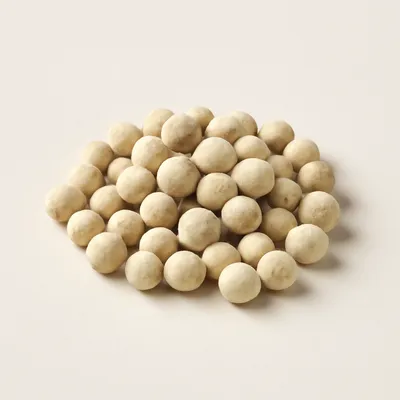
Season with salt and white pepper; ladle into a deep serving bowl; scatter scallion greens on top and serve immediately while the broth is at a full boil.

