Qianjiang braised pork belly demands six preparatory steps—scraping, pricking, frying, lacquering, stacking, and inverting—before alternating layers of pork and taro are steamed until meltingly tender, then flipped onto a platter in a dramatic reveal. Local red yeast paste gives the dish its vivid russet hue and a faint fermented sweetness.

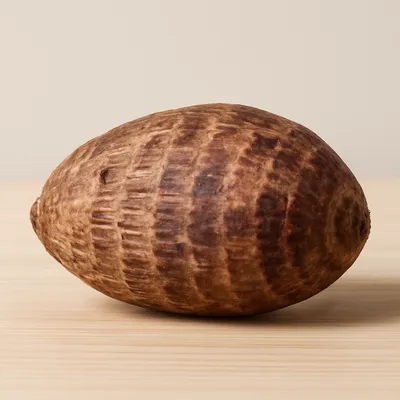

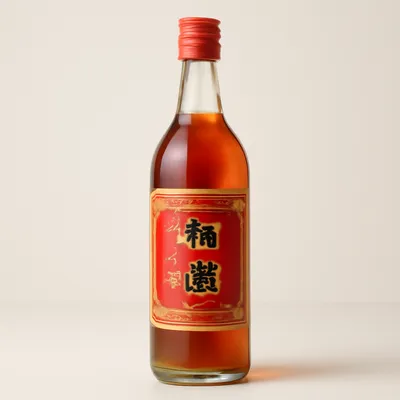

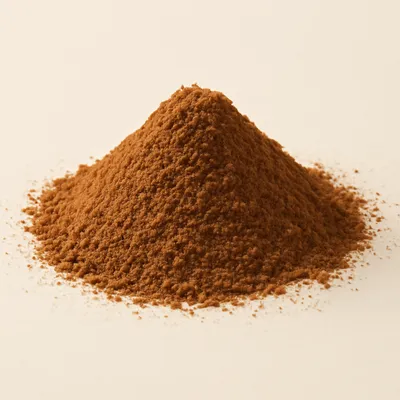
Qianjiang, historically a busy inland waterway junction in central Guangxi, absorbed culinary influences from traveling merchants. Braised pork belly is a pan-southern banquet tradition, but Qianjiang cooks distinguished theirs by centering it on local red yeast paste. Red yeast rice appears in Chinese texts from at least the Song dynasty, and the Ming-era Tiangong Kaiwu recorded its production methods in detail; its circulation through Guangxi's Fujian merchant routes embedded it in local kitchens by the Qing period. No dated founding record survives; oral tradition attributes the localized form—pork alternated with taro, lacquered with red yeast—to Qing-dynasty cooks adapting incoming banquet customs to local ingredients.
A chopstick nudge confirms the pork has surrendered all resistance; the first bite delivers a mild tang and warmth from the red yeast glaze, followed by a silky gelatin layer from the skin, then rich yielding fat, then the lean meat's gentle chew. The taro at the base is creamy-dense, soaked through with two hours of meat drippings and red yeast perfume.
Three chemical phases define Qianjiang braised pork's transformation. Phase one: frying at around 180°C triggers Maillard browning on the skin's surface; the pre-pricked holes allow steam pockets to form, creating a honeycombed skin that later absorbs sauce deeply. Phase two: sustained steaming at around 100°C over two-plus hours hydrolyzes pork collagen—accounting for roughly 65% of connective tissue—into gelatin, yielding the characteristic melt-in-mouth texture; rendered triglycerides seep into the taro, enriching it with fat. Phase three: Monascus pigments (monascin, rubropunctatin) from red koji permeate the meat, producing the deep-red color and a subtle fermented sweetness.
Variations
Neighboring villages substitute lotus root slices for taro, yielding a crisper contrast, or layer in dried tofu skin or preserved mustard greens. A festive version adds hard-boiled eggs steamed alongside, which take on a vivid crimson hue from the koji pigment.
On the Palate
Where Laibin Qianjiang Braised Pork sits in the Chinese flavor cloud
Ingredients
Serves 4

How it's made
7 steps · 1 hour
- 120 min
Blanch and pierce: Scrape pork skin clean; simmer whole in water with ginger and scallion about 15 minutes until skin turns white. Remove, pat dry, and use a skewer to prick the skin densely all over.
Watch outPrick the skin densely all over while it's still warm — those tiny holes let steam pocket the skin so it drinks up sauce; miss spots and the skin stays flat and bland there.
- 225 min
Lacquer with red yeast: Grind red koji rice to a coarse powder; mix with rice wine, dark soy sauce, and salt into a thick paste. Brush generously all over the warm pork; rest 20 minutes to let color penetrate.
- 320 min
Deep-fry: Heat oil to 180°C; lower pork skin-side down and fry with a lid on (splatters heavily) until skin is blistered, golden, and puffed, about 8 minutes. Transfer to cold water and soak 10 minutes to wrinkle the skin.
Watch outFry skin-down under a lid until it blisters, puffs, and turns golden — stand back, it spatters hard; the puffed blister is what makes the melting 'tiger-skin' texture.
- 415 min
Slice and arrange: Cut pork into roughly 0.5 cm thick slices; peel and cut taro to matching size. Lay pork slices skin-down in a deep bowl, alternating each pair with a taro slice. Pour remaining red yeast sauce over.
Watch outAfter frying, soak the skin in cold water until it wrinkles — that shrivel is what gives the finished skin its loose, sauce-soaking folds.
- 5150 min
Steam: Set bowl in a steamer over vigorously boiling water; cover and steam 2.5 hours, replenishing water as needed, until a chopstick pierces through with no resistance.
Watch outSteam a full 2.5 hours until a chopstick slides through with no resistance — anything firmer and the collagen hasn't melted to that spoon-soft richness.
- 63 min
Invert to plate: Place a deep serving plate over the bowl and flip quickly; lift the bowl away to reveal the layered pork and taro mound.
- 75 min
Glaze and serve: Pour cooking juices into a small pan, thicken with a cornstarch slurry, and spoon over the platter. Garnish with scallion.
Archive tool suggestions — not reviewed
These legacy suggestions have not been evidence-reviewed and are not presented as required tools.
