A festival sweet from northern Shaanxi: glutinous millet patties stuffed with jujube paste and toasted sesame, deep-fried to a shatteringly crisp golden shell over a chewy, fragrant interior. Indispensable at weddings and New Year celebrations across the loess plateau, served ten to a plate alongside white sugar.

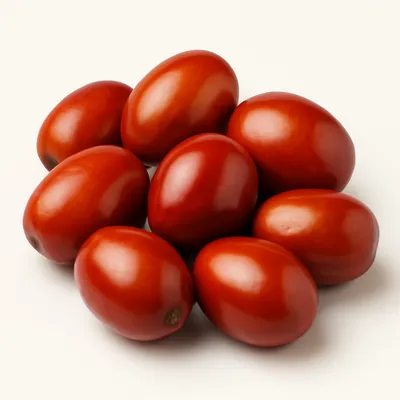


The loess plateau of northern Shaanxi has cultivated broomcorn millet (糜子/黍米, a glutinous-textured millet variety) for millennia — among the oldest dry-farmed grains of the Yellow River basin. Oil cakes made from its flour are recorded in local accounts as essential wedding and New Year food: served ten to a plate alongside white sugar and a thin starch soup (粉汤). Two sources — a Sohu regional food column and a 163.com culture piece on northern Shaanxi snacks — confirm this as one of the most representative local specialty foods of 陕北, also called 年糕 (New Year cake) and 枣糕 (jujube cake), with jujube (枣) evoking the homophone 早 and the phrase 早生贵子.
The outside shatters like thin glass; inside is warm, sticky millet dough fragrant with jujube sweetness and a whisper of toasted sesame.
Glutinous millet (糜子/黍米) is high in amylopectin — the branched starch fraction that gelatinizes into a sticky, stretchy mass when hydrated and heated. Deep frying at 170–180°C rapidly dehydrates the surface, setting a rigid crust via Maillard browning; the dense gelatinized starch shell resists oil penetration, keeping the interior soft and non-greasy. The jujube paste filling caramelizes slightly from conductive heat through the dough wall, deepening its sweetness beyond that of raw fruit.
Variations
Fillings vary by county and season: pure jujube paste, jujube mixed with toasted sesame, or red bean paste. Winter celebration versions sometimes add brown sugar and crushed walnuts to the filling. In some villages a plain unfilled version is made and dusted with powdered sugar after frying.
On the Palate
Where Fried Glutinous Millet Cake sits in the Chinese flavor cloud
Ingredients
Serves 4How it's made
7 steps · 30 min
- 135 min
Soak dried jujubes in warm water for 20 minutes; steam for 15 minutes until very soft. Remove skins and pits, then press through a fine sieve or mash with a fork into smooth paste. Mix in toasted sesame seeds.
- 210 min
Combine glutinous millet flour (黄米面) with boiling water, stirring vigorously with a spoon; when slightly cooled, knead into a smooth, pliable dough.
Watch outStir the boiling water in fast while the flour is still scalding — this cooks the starch so the dough turns silky and stretchy, not gritty.
- 35 min
Divide the dough into portions the size of a large walnut; flatten each into a thin round disc with your palm.
- 410 min
Place a heaped teaspoon of jujube-sesame filling in the center of each disc; gather the edges up and pinch firmly to seal, reshaping into a smooth round patty.
Watch outPinch the seam tight and smooth it shut — the tiniest gap and the jujube paste blows out into the hot oil.
- 55 min
Heat vegetable oil in a wok to 170°C — a wooden chopstick inserted into the oil should produce a steady stream of small bubbles.
Watch outTest with a chopstick: a steady stream of fine bubbles off the wood means the oil's ready; a violent boil means it's too hot and will scorch the crust.
- 64 min
Gently slide oil cakes into the oil in batches; fry for 3–4 minutes, turning once halfway, until all sides are deep golden and the surface is set and crisp.
- 72 min
Remove with a slotted spoon, drain on a rack, and arrange on a plate — ten to a serving. Offer white sugar on the side for dipping.
Archive tool suggestions — not reviewed
These legacy suggestions have not been evidence-reviewed and are not presented as required tools.