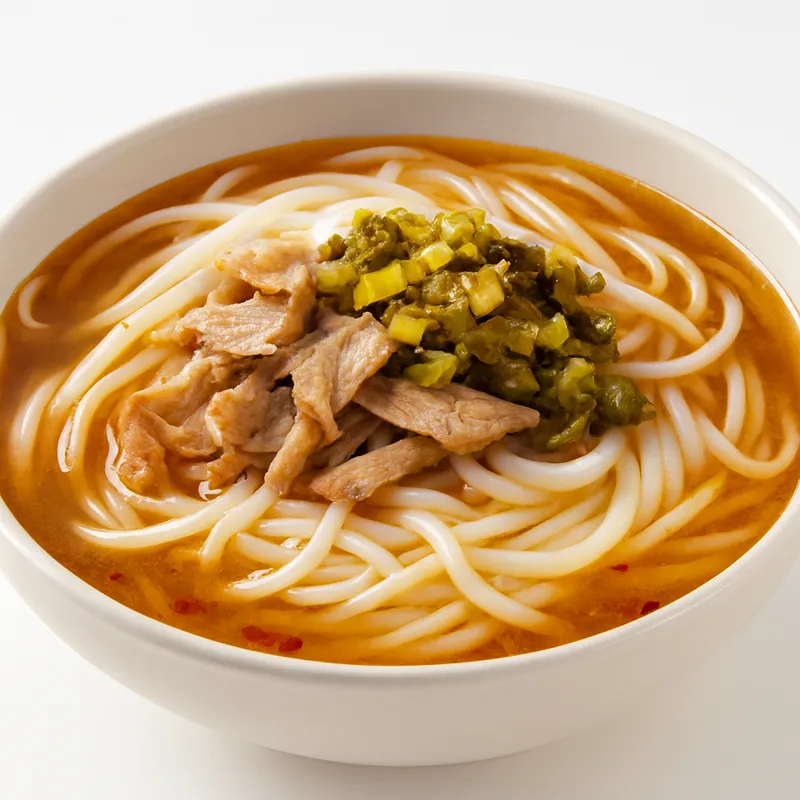
Silky rice noodles in a savory broth, enriched with pork and pickled mustard greens.



The Hunan habit of eating rice noodles in place of wheat noodles traces back to the Qing dynasty: under the early-18th-century 改土归流 resettlement, Hui/Uyghur migrants near Jinshi, finding no wheat noodles in this rice-eating region, substituted local rice noodles for their beef noodles; Changde's round, fine noodle is separately credited to the Yunnan Hui officer Ma Rulong, who brought 过桥米线 technique to Changde in 1874 — the fresh rice noodle was a southern alternative to the wheat noodle dominant north of the Yangtze. Each city has its own broth style: Changsha goes light and clear; Changde uses a heavier beef stock with flowing chili oil.
Changsha and Changde breakfast institution since the early 1900s — fresh round or flat 米粉, never dried. Changsha runs clear and pale; Changde 牛肉粉 uses heavier beef stock with a slick of red oil. Noodle blanches 15 seconds, broth on, served in under a minute or it goes mealy.
Round or flat rice noodles in a clear pork-bone broth, topped with a 「码子」 — your choice of stewed beef brisket, pork-rib, fried minced pork, or pickled-mustard-and-pork. Pickled chili, chopped scallion, sometimes a spoon of hot oil go on at the table. Breakfast food, eaten standing or hunched on a low stool by 7 a.m. The broth must read of bone, not bouillon cube.
The 「码子」 is cooked separately and ladled on at the moment of service — the broth and noodle together must take less than a minute or the rice noodle goes mealy. The noodle is fresh, never dried, and is only blanched fifteen seconds in a side pot before going into the bowl. A dried-noodle version is recognizable instantly: it tastes of starch, not rice.
Variations
Changsha 肉丝粉 with stir-fried pork shred; 津市牛肉粉 from Changde area with chili oil and beef brisket; Changde/Shaoyang/Hengyang/western-Hunan round-noodle versus Changsha flat-noodle preference — and to Changde locals the flat noodle is not 米粉 at all but 米面; Liuyang 浏阳 蒸肉粉 is a separate noodle-and-rice-flour-coating dish entirely, despite the shared name.
On the Palate
Where Hunan Rice Noodles sits in the Chinese flavor cloud
Ingredients


How it's made
4 steps · 25 min
- 15 min
Prepare a broth with pork and soy sauce.
- 25 min
Cook rice noodles until tender.
Watch outBlanch the fresh rice noodles just fifteen seconds — they only need to warm through; boil them and they turn mealy and taste of starch, not rice.
- 35 min
Add pickled mustard greens to the broth.
- 42 min
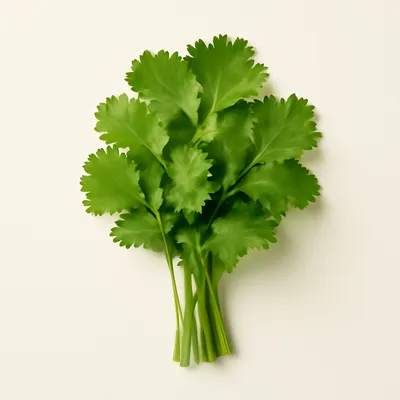
Serve noodles in broth, garnished with scallion and cilantro.
Watch outLadle the hot broth on and serve within the minute — rice noodles sitting in soup go soft and grainy fast.