A cornerstone of Hong Kong yum cha, formally called 豉汁蒸凤爪—phoenix claws in black bean sauce. The name 凤 (phoenix) replaces 鸡 (chicken) as a Cantonese euphemism that elevates the humble ingredient. Chicken feet are first deep-fried until blistered and golden, then soaked in cold water to relax and wrinkle the skin, braised in fermented black beans, garlic, soy sauce, and oyster sauce, and finally steamed in bamboo baskets until the collagen-rich skin swells to a soft, sauce-permeated gelatinous mass. No part of a Cantonese dim sum spread is more closely associated with leisurely teahouse culture.
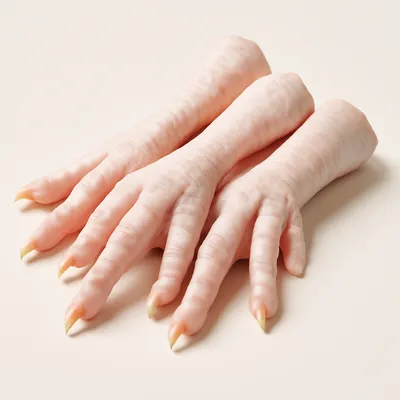





Chicken feet have been consumed throughout southern China for centuries as a prized source of collagen and flavor. The specific 豉汁蒸凤爪 form—deep-fried, then braised in fermented black bean sauce, then steamed—crystallized as a Cantonese teahouse standard during the expansion of yum cha culture in Guangzhou and Hong Kong in the early twentieth century. The 先炸後炆 (fry-then-braise) technique for trotters and feet appears in Cantonese culinary documentation from the Republican era, parallel to its use for white cloud pig's trotters (白云猪手). By the 1950s and 1960s, as Hong Kong's teahouse industry expanded dramatically, 凤爪 was established alongside har gow (虾饺) and siu mai (烧卖) as an indispensable must-order—three items that together anchor any yum cha spread. The Cantonese habit of renaming animal parts after more auspicious creatures—phoenix for chicken, tiger for certain cuts of beef—reflects an aesthetic sensibility embedded deeply in the cuisine's market culture.
Pick up a claw with chopsticks; the swollen, gelatinous skin yields softly before you even bite. Gnaw gently along each toe—the pleasure is not in speed but in the unhurried retrieval of sauce-saturated skin from the bone. The fermented black bean and garlic hit first, rich and earthy; then the collagen-thick skin coats the palate in a savory, self-dissolving film. The bones and cartilage are gnawed clean, then set aside: nothing is left.
Deep-frying the feet first in oil at 180°C causes the skin to rapidly expel moisture and undergo Maillard browning, creating a blistered, porous surface structure. Immediate immersion in cold water causes the puffed skin to contract, forming wrinkles and micro-pores that dramatically increase surface area for sauce absorption during braising. In the subsequent braise, the sauce—glutamates from fermented black beans (豆豉, produced by Aspergillus oryzae fermentation of soybeans), sugars, and soy salts—penetrates the pores and binds to the expanded collagen matrix. A final steam at 100°C allows the Type I collagen fibers in the skin and connective tissue to fully hydrate and gel, producing the characteristic soft, gelatinous texture that is distinct from both the firm raw state and the stringy texture of overcooked collagen.
Variations
White Cloud Phoenix Claws (白云凤爪) substitute a light vinegar-sugar brine for the black bean braise, producing a pale, refreshingly tangy version. Sichuan-style cold-marinated chicken feet (川卤凤爪) are simmered in spiced brine then dressed in chili oil and Sichuan pepper. Chaoshan teahouses flavor with sand ginger (沙姜). In Taiwan, deboned phoenix claws (去骨凤爪) are common—the labor-intensive deboning commands a higher price.
On the Palate
Where Steamed Chicken Feet sits in the Chinese flavor cloud
Ingredients
Serves 4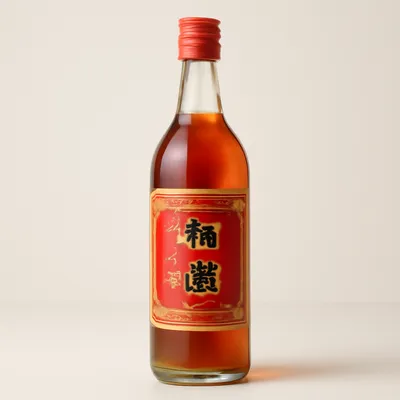


How it's made
7 steps · 45 min
- 110 min
Trim chicken feet: cut off nail tips with kitchen shears; blanch in boiling water with ginger slices and Shaoxing wine for 3 minutes; drain thoroughly and pat completely dry with paper towels.
Watch outPat the feet bone-dry before they hit the oil — any water left will spit and splatter violently.
- 250 min
Deep-fry the dry chicken feet in oil heated to 180°C for 4–5 minutes, turning once, until the skin is blistered, golden-brown, and puffed all over; remove and immediately submerge in a large bowl of cold water; soak 30–45 minutes until the skin wrinkles visibly and softens.
Watch outFry until the whole skin blisters and puffs, then straight into cold water — the shock wrinkles the skin so it drinks up sauce later.
- 35 min
Mash fermented black beans coarsely; combine with minced garlic, soy sauce, oyster sauce, sugar, Shaoxing wine, sesame oil, and a pinch of white pepper to make the braising sauce.
- 45 min
Heat a wok or wide pan over medium heat; add a little oil and stir-fry the black bean and garlic mixture for 1 minute until fragrant; drain and add the soaked chicken feet; toss to coat every surface in the sauce.
- 525 min
Add just enough water to barely cover the feet; braise over low heat for 20–25 minutes, stirring occasionally, until the sauce reduces to a thick, glossy glaze and the skin is tender throughout.
Watch outBraise low until the sauce pulls down to a thick shiny glaze and the skin gives softly — rushing on high heat splits the skin off the bone.
- 65 min
Portion the braised chicken feet into small dishes or bamboo steamer liners; spoon any remaining sauce over the top.
- 712 min
Steam over vigorously boiling water for 10–12 minutes until the skin is fully swollen and deeply sauce-saturated; drizzle with sesame oil, garnish with sliced scallion, and serve at once.
Archive tool suggestions — not reviewed
These legacy suggestions have not been evidence-reviewed and are not presented as required tools.


