
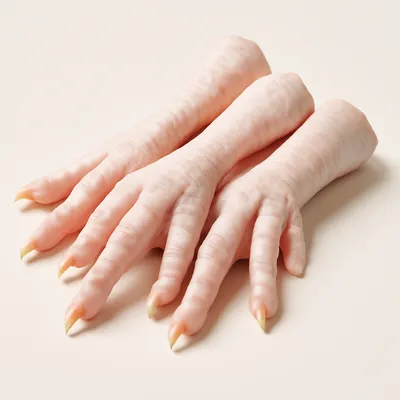
Chicken feet boiled, deep-fried until the skin blisters, then braised in a spiced master stock until tender. The frying-then-soaking is what gives the wrinkled, puffed surface the name 'tiger skin'. Done right the skin and tendon slip cleanly off the bone with a soft, gelatinous bite, soaked through with the braise. A classic of Cantonese dim sum and braised snacks, it became a packaged-snack phenomenon as the hero product of the brand Wang Xiaolu.



Tiger-skin chicken feet comes out of Cantonese cooking, where chicken feet — phoenix talons on the dim sum cart — are braised, steamed in black-bean sauce, or fried and stewed soft. The fried-then-braised tiger-skin style long appeared in dim sum houses and braised-snack stalls. It found a second life as a packaged snack: Wang Xiaolu, founded in April 2016 by Wang Xiong, built its business on tiger-skin chicken feet as the hero product. The brand's revenue climbed from tens of millions of yuan in 2019 to over a billion by around 2022, and its chicken feet became one of the best-known braised snacks sold online.
The surface is wrinkled and puffed, a pale tiger-stripe pattern from the fry; under it the skin and tendon are soft and gelatinous, yielding the moment you bite. Worked over with the tongue, the whole foot comes off the bone — skin, padding and tendon together — leaving clean knuckles. The flavor is deep and savory from the master stock, often warm with star anise and a little sweet, sometimes lifted with pickled chili. It is finger food, sticky and slow, the kind you gnaw through a whole plate of without noticing.
The tiger-skin texture comes from a sequence. Chicken feet are mostly skin, tendon and collagen over fine bone. Boiling sets and partly cooks them; deep-frying at around 180 degrees Celsius flashes the surface moisture to steam, which puffs and blisters the skin into wrinkles — the tiger-skin look — and opens its structure. A cold-water soak after frying makes the puffed skin contract and pleat further. Then long braising in master stock does the real work: sustained heat hydrolyzes the collagen into gelatin, turning the skin and tendon soft and sticky while the seasoning soaks deep into the now-porous, wrinkled surface.
Variations
The Cantonese dim sum version is steamed in fermented black-bean and chili sauce, plump and savory-spicy; the braised-snack version leans on a spiced master stock, sweeter and aromatic. Some cooks finish them with pickled chili for a sour-spicy edge close to paojiao feng zhua, a separate dish; others keep them in plain spiced brine. Packaged brands run salted, spiced and spicy lines. The fry-then-braise step is the constant that earns the tiger-skin name.
On the Palate
Where Tiger-Skin Chicken Feet sits in the Chinese flavor cloud
Ingredients
Serves 4


How it's made
7 steps · 40 min
- 115 min
Clip the nails off the chicken feet, rinse, and boil in water with ginger and a splash of cooking wine for ten minutes; drain and pat thoroughly dry.
- 23 min
Optionally rub the dried feet with a little maltose or soy for color.
- 38 min
Heat oil to about 180 degrees Celsius and deep-fry the feet, covered, until the skin blisters and wrinkles; lift out carefully.
Watch outKeep the lid on — the feet spit hard as the skin blisters; fry until the surface wrinkles all over, that's the tiger-skin forming.
- 430 min
Soak the fried feet in cold water for at least thirty minutes so the skin puffs and pleats.
Watch outThe cold-water soak is what makes it pleat — give it a full half hour so the blistered skin puffs and wrinkles deeply.
- 510 min
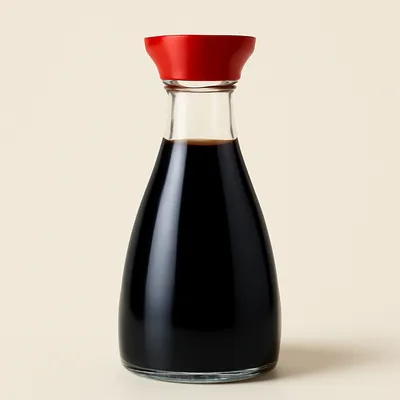
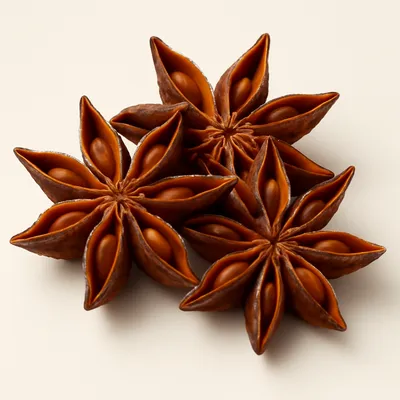
Build a master stock: simmer water with soy sauce, rock sugar, star anise, bay leaf, ginger, scallion and dried chili.
- 640 min
Add the soaked feet and braise gently for about forty minutes until soft and gelatinous.
Watch outBraise gently until the skin and tendon go soft and gelatinous — rushed on high heat they stay tough instead of turning sticky-tender.
- 760 min
Turn off the heat and let the feet steep in the stock until cooled to soak up flavor, then serve.


