
A classic of Anhui cuisine and one of China's Four Famous Chickens, originating in the town of Fuli (Fuliji) in Suzhou's Yongqiao District, northern Anhui. A whole chicken is brushed with maltose and tinted with red yeast rice, deep-fried to a glossy red-gold, then braised in a long-kept spiced master stock until the meat is so tender it slips off the bone. It carries a national Geographical Indication and is an Anhui intangible cultural heritage.
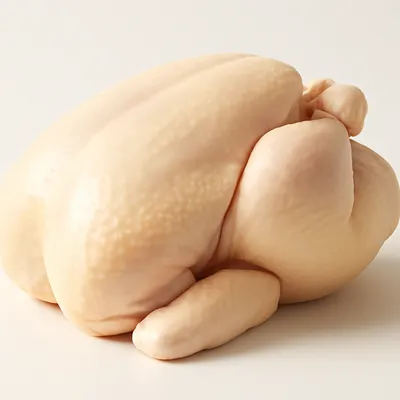


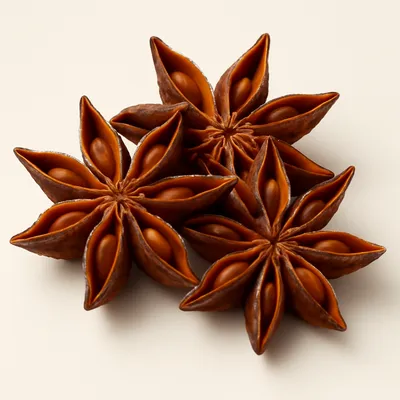

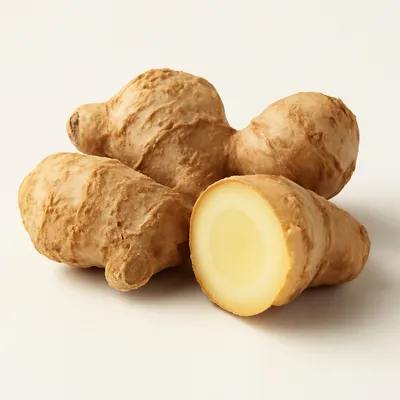
Fuliji roast chicken takes its name from Fuli, an old town on the Bian River north of Suzhou (Anhui); the place name is recorded from antiquity, and one tradition holds that a Fuli chicken was sent to the Han court as tribute, though this ancient claim is not firmly documented. The dish in its present form took shape in the early 20th century and is the product of several makers rather than a single inventor. By the common account, a Shandong braised-chicken cook named Guan Zaizhou settled in Fuliji around 1910 and introduced colouring the bird with red yeast rice; Wei Guangming refined the method around 1915; and around 1925 Han Jingyu combined the two into his "Han family chicken," yellow-skinned, tender and bone-loosened. The craft was further improved by learning from Henan's Daokou roast chicken, the older of the two, and the two differ chiefly in their spice blends. In 1951 the local government unified the various shop brands under the single name Fuliji roast chicken. Its spread followed the railway: the Tianjin-Pukou line, opened through Fuliji in 1910, carried it across the country. It is counted among China's Four Famous Chickens alongside Henan's Daokou roast chicken, Shandong's Dezhou braised chicken and Liaoning's Goubangzi smoked chicken.
The skin is a deep, glossy reddish-amber; the flesh underneath is pale, moist and exceptionally tender. Lift a leg of a freshly cooked bird and shake it, and the meat falls cleanly off the bone, leaving the frame standing. The flavour is savoury and aromatic rather than sweet or hot — a rounded warmth of star anise, cassia and a dozen other spices soaked deep into the meat from the old master stock.
Colour comes from two sources working together. Red yeast rice carries Monascus pigments (the natural red colourants known in Chinese as hongqu hong), which stain the skin a stable red; the maltose brush coat is a reducing sugar, so in the hot oil it drives Maillard browning and caramelisation, deepening the red-gold and giving a thin, set skin. The brief deep-fry fixes this colour and firms the surface before braising. The long braise then does the tenderising: held first at a hard boil and then at a low simmer for several hours, the heat hydrolyses the chicken's connective-tissue collagen into gelatin, so the muscle fibres lose their binding and the cooked meat slips from the bone — the bone-loosened, tuogu, texture. The decades-old master stock supplies accumulated gelatin and aromatics, and the dozen-odd spices are fat- and water-soluble compounds that the slow simmer drives deep into the meat.
Variations
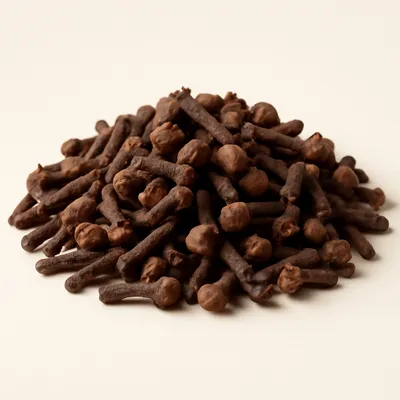
The closest relative is Henan's Daokou roast chicken, from which Fuliji's method was developed; the two share the maltose-glaze-then-fry-then-braise sequence and differ mainly in the spice mix and in Fuliji's use of red yeast rice for colour. Within Fuliji itself the spice formulas of different houses vary, traditionally citing around thirteen aromatics such as sand ginger, angelica root, nutmeg, clove and magnolia bud. Most product sold today is vacuum-packed and retort-sterilised for shelf life, which firms the texture compared with a bird eaten hot from the stock.
On the Palate
Where Fuliji Roast Chicken sits in the Chinese flavor cloud
Ingredients
Serves 4


How it's made
7 steps · 30 min
- 130 min
Choose a plump young chicken; slaughter, scald, pluck and clean it, then truss it into a compact tucked shape and hang it to air-dry the skin.
- 210 min
Brush the dry skin all over with a syrup of maltose and red yeast rice so it is evenly coated and tinted.
- 315 min
Heat frying oil until hot and deep-fry the whole chicken briefly until the skin is set and a glossy red-gold; lift out and drain.
Watch outDeep-fry the coated bird only until the skin sets to a glossy red-gold — this brief fry fixes the color and firms the surface before braising; do not cook it through here.
- 410 min
Lower the fried chicken into a long-kept spiced master stock with the spice bundle (star anise, cassia, sand ginger, nutmeg, clove and the rest), topping up with stock or water to submerge it.
- 515 min
Bring to a hard boil over high heat to drive the flavour in, then turn down to a low simmer.
Watch outBring to a hard boil first to drive the flavor in, then turn right down — the color is already set, now the low simmer does the tenderizing.
- 6260 min
Braise gently for several hours until the meat is bone-loosening tender, then lift the chicken out carefully so it keeps its shape.
Watch outBraise gently for hours until the meat loosens from the bone, then lift it out carefully so it keeps its whole shape.
- 715 min
Let it cool and set briefly before serving whole or torn; strain and keep the master stock for the next batch.


