A whole chicken rubbed with maltose, flash-fried to a lacquered mahogany, then slow-braised for hours in a century-old spiced stock until the bones soften and the meat falls with a gentle tug — Daqing's proudest table centerpiece.


Daqing, known to the world as China's oil capital, has quietly sustained a parallel tradition in slow-braised whole chicken. The technique of pa ji — flash-frying a whole bird before long-braising in a maintained stock — belongs to the broader North Chinese school of spiced poultry, with Shandong's Dezhou braised chicken as the most celebrated exemplar. Daqing producers adapted the method to the cold Heilongjiang climate, where rich, warming five-spice braises became staple festive food from the mid-twentieth century onward. The defining element is the lao tang, or aged stock: a braising liquid replenished and re-boiled across hundreds of cycles, accumulating a depth of flavour that no single-batch seasoning can replicate. The prepared bird is coated in maltose syrup before frying, which caramelises on contact with hot oil to create a tight, lacquered skin that holds the meat's juices during the subsequent long braise.
Pull-apart tender flesh threaded with five-spice warmth, a taut mahogany skin that shatters at the tooth, and a faint sweetness from the maltose that lingers long after the bite.
The two-stage technique is functionally precise: deep-frying at roughly 180°C triggers Maillard browning between the maltose coating and chicken skin proteins, sealing a glossy, semi-impermeable crust that slows excessive moisture loss during the long braise. In the subsequent slow braise at 80–90°C, collagen (primarily Type I and III) in the connective tissue hydrolyses into gelatin over 2–3 hours; the marrow cavity softens as bone collagen dissolves, yielding the hallmark fall-from-bone texture. The aged stock contributes a dense matrix of free amino acids — notably glutamate and aspartate — plus nucleotides from repeated protein breakdown cycles, creating umami depth that far exceeds what fresh spicing alone can produce.
Variations
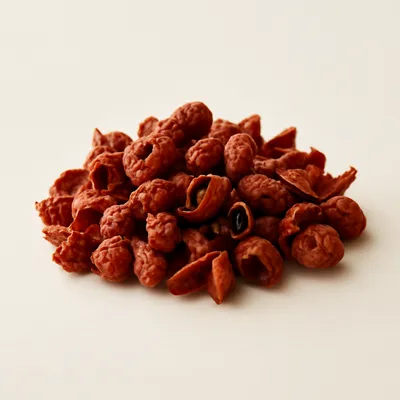
Some Daqing producers add dried hawthorn slices to the braise for a subtle tartness that cuts the richness; home cooks often substitute rock sugar for maltose in the frying glaze; a variant uses smoked stock for a lighter Dongbei smoke note.
On the Palate
Where Daqing Spiced Braised Chicken sits in the Chinese flavor cloud
Ingredients
Serves 4

How it's made
7 steps · 25 min
- 15 min
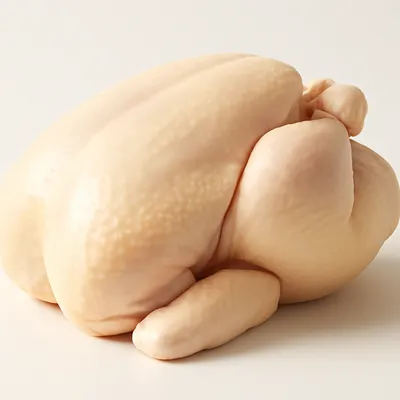
Rinse and pat dry a whole chicken (about 1.5kg); truss the legs and tuck the wings behind the back to hold the shape during frying.
- 220 min
Mix 3 tablespoons maltose syrup with 1 tablespoon dark soy sauce and 2 tablespoons warm water; brush evenly over the entire skin and let the chicken air-dry for 20 minutes until the coating feels tacky.
Watch outAir-dry the maltose-brushed skin until it feels tacky to the touch, not wet — a dry-tacky surface browns to mahogany; a damp one steams and stays pale.
- 310 min
Heat oil to 180°C in a deep wok or pot; carefully lower the chicken in and fry, turning once or twice, for 6–8 minutes until the skin is a deep mahogany; remove and drain on a rack.
Watch outFry to a deep even mahogany, turning once or twice — the maltose colors fast, so lift it before any spot scorches past brown.
- 45 min
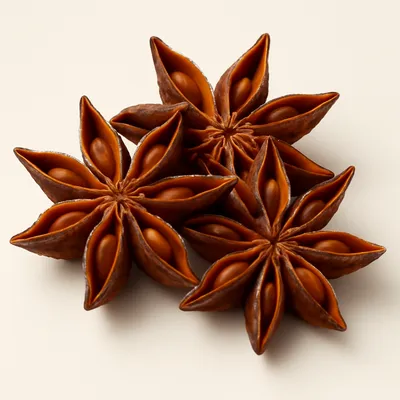
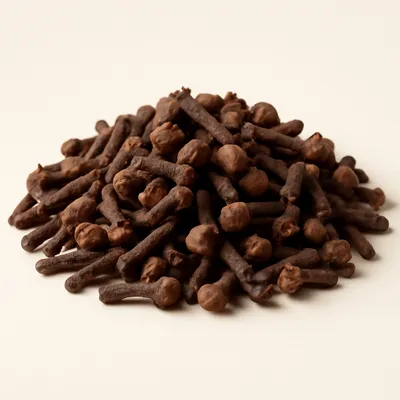
In a large braising pot, combine aged stock (or freshly made chicken stock, 2 litres) with star anise, cloves, cinnamon, amomum, white angelica root, Sichuan pepper, bay leaves, dried tangerine peel, dark and light soy sauce, and rock sugar; bring to a boil.
- 55 min
Lower the fried chicken into the simmering spiced stock; ensure it is fully submerged; return to a gentle boil, skim any foam, then reduce heat to the lowest setting.
- 6150 min
Braise uncovered on a very low simmer for 2 to 2.5 hours, turning the chicken once halfway through, until a skewer slides through the thigh with no resistance and the leg joint pulls free easily.
Watch outIt's done when a skewer slides through the thigh with no resistance and the leg joint pulls free easily — that's the fall-from-bone point.
- 710 min
Remove the chicken gently and rest on a rack for 10 minutes; brush with a little of the reduced braising stock for gloss; portion at the table.


