The anchor dish of the Wuhan banquet table, where 'eating a banquet' and 'eating meatballs' are the same phrase in Hanyang dialect. Hand-ground pork and fish meatballs are deep-fried to a golden crust, then braised in stock with black fungus and daylily until the exterior softens to a lacquered amber and the center retains its springy bounce. The round shape carries an explicit symbolism of reunion—hence the Hubei saying 'no banquet is complete without meatballs'.



The meatball tradition in Wuhan is rooted in the 八大碗 (eight-bowl banquet) culture of Hanyang district, where the most celebrated source is the historic Shengguan Du ferry crossing (升官渡) in Hanyang, a community long associated with the local meatball-making craft. Hanyang people use 'eating yuanzi (meatballs)' as the universal term for attending a banquet, indicating the dish's ritual primacy. The technique of frying meatballs first to build structure before braising is a classic expression of Chu cuisine's combined fry-braise method. In 2017, the Wuhan meatball-making craft was inscribed on the Wuhan Municipal Intangible Cultural Heritage list.
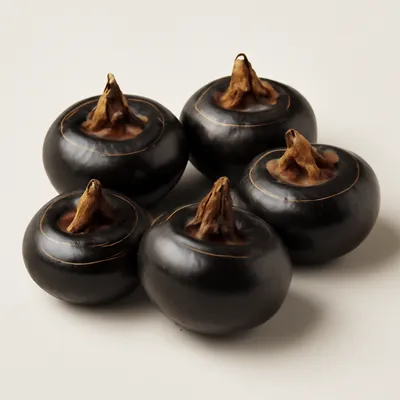
The meatball has a lacquered amber skin that yields at the bite with a brief, pleasant resistance before giving way to a dense springy interior where pork and fish fats have fused into a single savory mass. Water chestnut dice appear unexpectedly, providing crunchy punctuation in the otherwise uniform bounce. The braising stock has reduced around each ball into a light gravy, while the black fungus beneath is silky, glutamate-laden, and almost gelatinous.
Deep-frying the meatballs creates a Maillard-browned crust that seals the exterior and sets the surface protein network, preventing the balls from disintegrating during the subsequent braise. The water chestnut's high water content keeps the interior moist during frying while its insoluble fiber cell walls provide structural pockets that trap juice and deliver crunch. During braising at 70–80°C, collagen from pork connective tissue slowly dissolves into gelatin, gradually softening the fried crust from outside in without collapsing the interior protein matrix. Fish proteins contribute inosinate that synergizes with soy-based glutamate in the stock to produce a compound umami response significantly greater than either alone.
Variations
In northern Hubei (Xiangyang, Suizhou), meatballs are made from pure pork without fish, yielding a denser, more robustly flavored result. Huangpi households substitute diced lotus root for water chestnut. Festival versions in some towns add shrimp paste or minced dried shrimp for extra marine depth. A steamed variant (蒸圆子) skips the braising step entirely, serving the fried balls over salted dried mustard greens; the result is drier and more concentrated.
On the Palate
Where Yellow-Braised Pork and Fish Meatballs sits in the Chinese flavor cloud
Ingredients
Serves 6


How it's made
7 steps · 30 min
- 110 min
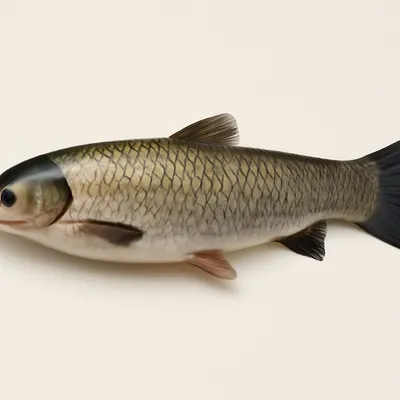
Hand-chop pork front leg meat and fish fillet in a 3:2 ratio into a coarse paste; avoid over-processing—some visible texture is desirable for the final bounce.
- 28 min
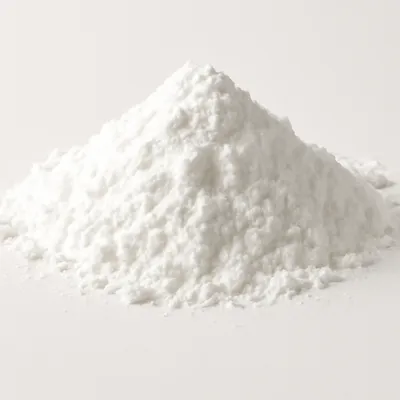
Add ginger-scallion water (squeezed from minced ginger and scallion steeped in water), egg, salt, white pepper, cooking wine, and cornstarch; stir vigorously in one direction until the mixture becomes sticky and elastic, able to pull away cleanly from the bowl.
Watch outBeat only one direction until the paste turns sticky and tacky and pulls cleanly off the bowl — that pull is the protein web that makes the meatball bounce and hold together in the braise.
- 37 min
Fold in diced water chestnut. With wet palms, roll portions into smooth balls about 4 cm in diameter (roughly 40 g each); place on a lightly oiled tray.
- 412 min
Heat oil to 180°C; fry meatballs in batches of 6–8, turning occasionally, for 4–5 minutes until deeply golden-brown and firm to the touch; drain on a wire rack.
Watch outHold the oil at 180°C and fry until the shell is deep golden and firm to the touch — that crust seals the ball so it won't fall apart in the braise; too pale and it will crumble.
- 510 min
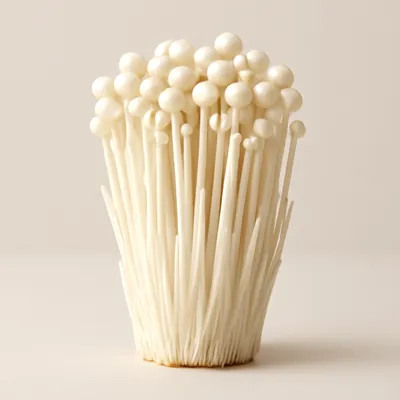
Soak dried black fungus and daylily in warm water until softened; squeeze out excess liquid. Blanch enoki mushrooms briefly in boiling water; drain. Arrange all vegetables in the base of a deep braising pot.
- 622 min
Nestle fried meatballs over the vegetables; pour in stock; add soy sauce and a pinch of sugar; bring to a boil, cover, and braise over medium-low heat for 20 minutes.
Watch outKeep it at a lazy medium-low bubble, not a rolling boil — a gentle braise lets the crust drink in the sauce and soften from outside in without the balls breaking up.
- 76 min
Stir one teaspoon of cornstarch into two tablespoons of cold water; drizzle into the pot while stirring gently until the sauce reaches a light coating consistency; garnish with blanched leafy greens and serve directly from the pot.

