A beloved Tianjin vegetarian dish built on nothing but wheat gluten. Balls of raw gluten are deep-fried until they puff golden and hollow, then torn open by hand and slow-simmered in a savory soy braise until they drink the sauce all the way through. The frying gives the gluten a sponge of tiny pockets; the long simmer fills every pocket with brown, faintly sweet gravy, so each piece is springy on the outside and soaked soft within. The name's "du" — alone, only — points to the dish's whole conceit: gluten and nothing else, raised by technique to the satisfaction of meat.






Wheat gluten — the chewy protein left when starch is rinsed from a wheat dough — is an old staple of Chinese vegetarian and temple cooking, prized because it takes on savory braises like meat. Tianjin, a city with deep flour-food habits and a long tradition of vegetarian banquet dishes, made this gluten braise one of its standards, building it on the city's characteristic brown soy-braise rather than the lighter southern style. Its exact origin is not recorded; it stands as a classic of the local su cai (vegetarian dish) repertoire — proof of the wei pai conviction that humble materials, handled right, can anchor a table.
Each piece is torn, not cut, so the edges are ragged and catch the sauce. Bite in and the outside is springy, almost meaty, with that distinct gluten chew; press through and the spongy interior gives up a mouthful of brown gravy it has soaked up, savory and just touched with sweetness. There is no heat and no clutter — only the deep, clean savor of a good soy braise carried by something that eats with the satisfying heft of meat. It clings to rice, and you find yourself spooning up the sauce after the gluten is gone.
The dish hangs on the fry and the simmer. Raw gluten is elastic and dense; dropped into hot oil it puffs dramatically as its moisture flashes to steam, expanding into a golden ball riddled with hollow pockets — this sponge structure is the entire point, because solid gluten cannot absorb a braise but this honeycomb can. Tearing rather than slicing keeps that open structure and gives more ragged surface to drink the sauce. Then it is simmered low and slow in a soy braise (with sugar, ginger, scallion, perhaps a little fermented bean paste) until the gravy works clear through the spongy interior and reduces to a glaze. Hurried over high heat, the gluten stays chewy-tough and dry at the core; the long, gentle braise is what turns it tender and saturated.
Variations
The gluten is often braised with companions — soaked shiitake, wood ear, day-lily buds, bamboo shoot, fried tofu or peanuts — though the "du," alone, version keeps strictly to gluten. Some cooks add a little fermented bean paste or oyster-flavored sauce for depth (the latter no longer strictly vegetarian); the braise can be kept brown and savory or pushed sweeter. The same fried gluten balls also turn up in northern stews and hotpots, but here they are the whole dish.
On the Palate
Where Du Mianjin sits in the Chinese flavor cloud
Ingredients
Serves 4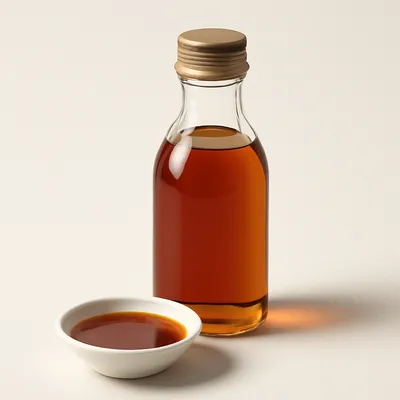
How it's made
8 steps · 40 min
- 120 min
Rinse a stiff wheat dough under water, kneading, until only the elastic gluten remains; rest it so it firms.
- 25 min
Pull the gluten into walnut-sized balls.
- 38 min
Deep-fry the balls in hot oil until they puff up golden and hollow; lift and drain.
Watch outFry the gluten until it puffs golden and hollow — that honeycomb is the whole point; solid gluten can't drink the braise.
- 45 min
Tear each fried ball open by hand into rough bite-size pieces.
Watch outTear it open by hand, don't slice — the ragged torn surface drinks far more sauce.
- 53 min
In a little oil, fry ginger, scallion and (optionally) a spoon of fermented bean paste until fragrant.
- 63 min
Add soy, a little sugar, water or stock and the torn gluten, and bring to a gentle simmer.
- 730 min
Simmer low and slow until the gluten has drunk the sauce through and the liquid reduces to a clinging glaze.
Watch outSimmer low and slow until the sauce works clear through the sponge and reduces to a clinging glaze — rushing it leaves the center bland.
- 82 min
Thicken lightly if needed, finish with sesame oil and scallion, and serve hot over rice.
