A Gaoyou folk cold-cut unique to the Lixia River corridor: coarsely hand-chopped pork is packed into a cattail-rush woven pouch lined with bean-curd skin, tied into a gourd shape, slow-braised in master stock with angelica root, and served cold with the reed-grass weave imprint still visible on the surface.




A folk preserved meat from the Gaoyou area along the Lixia River network in central Jiangsu, traced back over 300 years in local records. The cattail-rush pouch is woven from the leaves of Typha plants, abundantly available in the Grand Canal wetlands. The writer Wang Zengqi described it in precise detail in his short story Yi Bing: 'Pu-bao meat seems to be unique to this county. Inside a pouch of cattail leaves lined with bean-curd skin is packed minced meat bound with a cord across the middle into a gourd. Once cooked and turned out, it carries the clear imprint of the weave. Sliced, it is very fragrant.' Central television later travelled to Gaoyou specifically to document its production.
Slice open the gourd-shaped parcel to reveal densely packed coarse-chopped pork, brick-pink from the brine, with the faintest echo of reed grass in every mouthful — firm, springy, and unlike any other cold pork you have tasted.
Cattail leaves contain cellulose and hemicellulose that soften in hot water without rupturing; during simmering they release trace volatile grassy compounds that permeate the filling. The permeable pouch acts as a natural press mould: as water escapes through the weave under heat, the meat paste compacts into a firm, springy cake. The filling uses roughly hand-chopped (not ground) pork at a 7:3 lean-to-fat ratio, preserving coarse fibrous texture. Master-stock simmering with angelica root introduces fat-soluble terpenes that produce a distinctive herbal-brine base note unique to Gaoyou's version.
Variations
A bean-curd skin lining is traditional and contributes a second layer of texture; some makers omit it for simplicity. A summer variant mixes in chicken to lighten the richness. For banquet presentation the pouch is left intact and cut open at the table, displaying the lattice pattern on the surface. Commercial vacuum-packed versions without the pouch exist widely, but locals consider them inferior — the cattail fragrance is irreplaceable.
On the Palate
Where 蒲包肉 sits in the Chinese flavor cloud
Ingredients
Serves 6
How it's made
7 steps · 30 min
- 115 min
Coarsely chop pork hind-leg meat (70% lean, 30% fat) with a heavy cleaver into rough small pieces; do not use a meat grinder — the coarse texture is essential.
Watch outHand-chop the pork coarse with a cleaver, never a grinder — the rough grain is what gives the cake its bite; ground meat turns it pasty.
- 230 min
Season the chopped meat with Shaoxing wine, scallion and ginger juice, salt, five-spice powder and a small amount of potato starch; mix firmly until sticky; rest for 30 minutes to allow flavours to develop.
- 310 min
Soften dried cattail-rush leaves in warm water for 10 minutes; line the inside of each pouch with a sheet of bean-curd skin.
- 415 min
Pack seasoned pork paste tightly into each prepared pouch, pressing firmly to eliminate air pockets; twist the top shut and tie with kitchen twine at the neck and around the waist to form a gourd shape.
Watch outPack the paste in tight and press out every air pocket before tying — trapped air leaves hollow spots and the cake won't set firm.
- 55 min
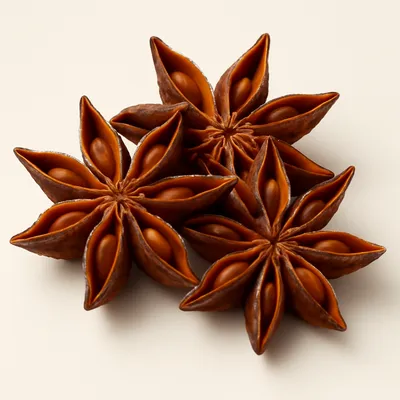
Place filled pouches in a pot; pour over master stock with star anise, cassia, cloves, angelica root and rock sugar; bring to a boil.
- 690 min
Reduce to a steady low simmer; cook for 90 minutes, turning the pouches halfway through, until the meat is fully set and the outer surface has taken on a reddish-brown colour.
Watch outSimmer steady and low until the meat sets firm and the pouch skin turns reddish-brown, turning halfway through.
- 715 min
Remove from stock; press lightly under a small weight as they cool to firm the gourd shape; serve cold by cutting through the pouch and slicing, displaying the weave imprint on the surface.
Archive tool suggestions — not reviewed
These legacy suggestions have not been evidence-reviewed and are not presented as required tools.



