Shimen County's signature dish: pork large intestine scrubbed clean with flour, parboiled until silky-tender, then stir-braised in a dry wok with Tujia-style dried chilies, doubanjiang, and Sichuan pepper. Crisp and resilient outside, velvety within—fiercely spicy and deeply savory.




Shimen pork intestines emerged as a named dish in the early 1990s, created by Tan Zhengcun (覃正村), a Tujia man from Shimen County who learned to cook while serving in the People's Liberation Army in Anshan, Liaoning, from 1968. After leaving the army in 1974, he worked as a canteen chef in Shimen from 1976, then in 1993 opened 'Huahua Restaurant' on Station East Street. The dish gained national recognition in 1994 when Vice Premier Zou Jiahua visited Shimen to inaugurate the county's new power plant: county officials commissioned Tan to cook dry-pot intestines for 80 banquet tables, and the dish was reportedly eaten completely clean. Within years, Shimen-style intestine restaurants spread to Beijing, Guangzhou, and Hainan—becoming a symbol of Hunanese cuisine's nationwide expansion.
A tug of resistance, then the casing snaps and releases—each chew floods the mouth with chili heat, deep pork umami, and five-spice warmth. The interior walls are silk-smooth against the crisp, caramelized exterior.
Boiling intestines with star anise and ginger drives off the sulfur-containing volatile amines (trimethylamine, indole) responsible for offal odor through volatilization above 90°C. The collagen-rich intestine wall—approximately 25–30% collagen by dry weight—partially gelatinizes during the 30-minute parboil, creating the signature velvety interior. High-heat stir frying in a dry wok then rapidly dehydrates the outer casing through evaporative drying, while Maillard reactions between residual sugars and amino acids at the scorched surface produce a crisp, aromatic shell. The textural duality—crisp exterior, gelatin-soft interior—is the defining characteristic of the dish.
Variations
The original 'dry-pot' (干锅) style is most common, served in a wok-shaped vessel over a burner. A 'clay-pot stew' (钵子) version simmers intestines with potato wedges and tofu in a clay pot at the table. Some cooks add pickled bamboo shoots or fermented black beans for extra umami. A milder version for non-Tujia diners reduces dried chili and adds Shaoxing wine to soften the heat.
On the Palate
Where Shimen Braised Pork Intestines sits in the Chinese flavor cloud
Ingredients
Serves 4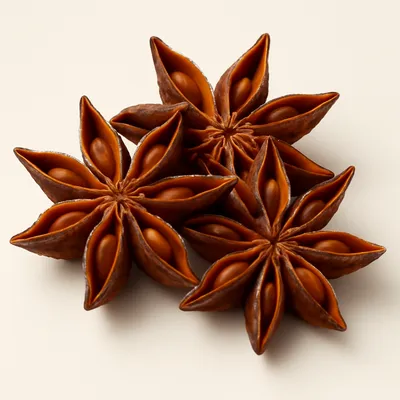

How it's made
7 steps · 30 min
- 15 min
Sprinkle flour generously over pork intestines; knead and rub firmly inside and out for 3 minutes to draw out odors; rinse under cold running water. Repeat twice.
Watch outKnead the intestines hard with flour inside and out to draw out the odor, then rinse — skimp here and no amount of spice hides the offal smell.
- 23 min
Blanch intestines in a pot of boiling water for 2 minutes; drain and rinse under cold water.
- 330 min
Add blanched intestines to fresh cold water with star anise, cinnamon stick, ginger slices, and a splash of rice wine; bring to a simmer and cook 30 minutes until a chopstick passes through easily.
Watch outSimmer with star anise and ginger until a chopstick passes through easily — that's the tender interior; the crisp comes later in the wok.
- 43 min
Remove intestines; let cool briefly, then slice diagonally into 3 cm pieces.
- 53 min
Heat a wok dry until wisps of smoke appear; add oil, then fry Sichuan peppercorns and cinnamon until fragrant; add minced garlic, ginger, and doubanjiang and stir fry 1 minute until red oil blooms.
Watch outFry the doubanjiang until the red oil blooms — that red oil is the flavor base before the intestines go in.
- 64 min
Add intestine pieces with dried chili segments, a splash of rice vinegar, and rice wine; stir fry over high heat 3–4 minutes until exteriors are caramelized and deeply fragrant.
- 72 min
Transfer to a clay pot or dry pot with par-boiled potato wedges; serve on a table burner over low heat, garnished with fresh cilantro.


