The most visually theatrical dish in the Kongfu repertoire: rehydrated monkey-head mushrooms sculpted into calligraphy brush shapes, coated with minced chicken paste, decorated with Jinhua ham threads to render the brush hair, and arranged in a dozen parallel staves on a platter. The reference is to the vast collection of imperial calligraphy plaques that line the halls of the Kong mansion.



Imperial-Brush Monkey-Head Mushroom was created by Kongfu kitchen masters to honor the imperial calligraphy plaques gifted to the Kong mansion by successive Chinese emperors. The Kong mansion complex contains one of the largest collections of imperial inscriptions in China, with plaques from the Tang, Song, Jin, Yuan, Ming, and Qing dynasties lining the ceremonial halls. Monkey-head mushroom—long prized in Chinese gastronomy alongside bear paw, sea cucumber, and shark fin as one of the four great mountain delicacies—was chosen both for its nutritional prestige and its naturally soft, brush-head-shaped form. The Yuan dynasty dietary compendium Yinshan Zhengyao (1330) recorded the properties and culinary uses of various mountain delicacies including monkey-head mushroom, reflecting its established standing in elite Chinese food culture.
Monkey-head mushroom's texture is unique—dense yet yielding, absorbing the rich stock it steams in; the chicken-paste coat adds a silky umami counterpoint, while the ham lends faint smokiness. Nothing about this dish is sharp or aggressive—it is food for contemplation.
Rehydrated monkey-head mushroom develops a highly porous sponge structure that readily absorbs the steaming stock. Its beta-glucan polysaccharides and hericenones differ from the dense fibers of shiitake, allowing maximum liquid uptake. The minced chicken paste applied to the surface sets during steaming as proteins coagulate around 70°C, bonding to the mushroom exterior and forming a smooth, unified surface. Kongfu's triple-cycle stock—made by simmering chicken, duck, and pork repeatedly—delivers layered umami through glutamate, inosinate, and guanylate acting synergistically, all of which permeate the porous mushroom through sealed steam.
Variations
A related Kongfu dish, Jade-Belt Monkey-Head, sandwiches the mushroom between strips of ham to resemble a jade official's belt—the same mushroom, a different political metaphor. Some modern versions substitute the chicken paste coating with egg-white foam for a lighter texture.
On the Palate
Where Imperial-Brush Monkey-Head Mushroom sits in the Chinese flavor cloud
Ingredients
Serves 4


How it's made
6 steps · 1 hour active + 4 hours 10 min waiting
- 1240 min
Rehydrate the mushroom: Soak dried monkey-head mushroom in cold water for 2 hours, then transfer to warm water for 2 more hours until fully expanded and soft. Squeeze out any bitter liquid by pressing gently in fresh cold water; repeat 2–3 times until no bitterness remains.
Watch outKeep pressing and changing the water until the squeezed-out liquid runs clear and tastes clean — any lingering bitterness will telegraph straight through the delicate stock later.
- 220 min
Shape and pre-steam: Trim each mushroom to a compact conical shape resembling a calligraphy brush head. Steam the shaped mushrooms over boiling water for 20 minutes to set their form and remove residual bitterness.
- 310 min
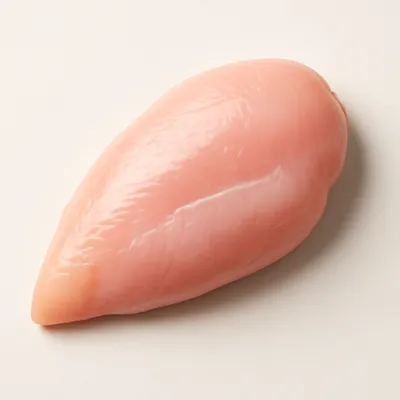
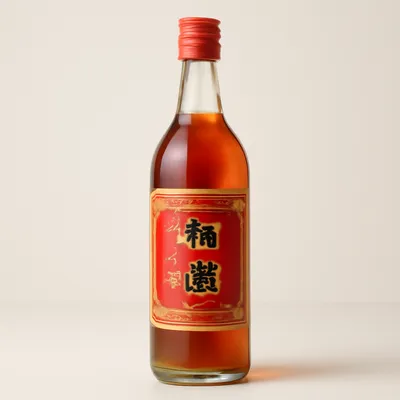
Prepare the chicken paste: Mince chicken breast finely, then pound to a smooth paste with egg white, salt, Shaoxing wine, and cornstarch, working in one direction until sticky and smooth.
Watch outBeat the paste in one direction only until it's sticky and can hold a peak — stirred back and forth it breaks and won't cling to the mushroom or set smooth.
- 410 min
Coat and decorate: Evenly coat each mushroom piece with the chicken paste. Arrange fine julienned strips of Jinhua ham over the paste surface to mimic the strands of brush hair.
- 530 min
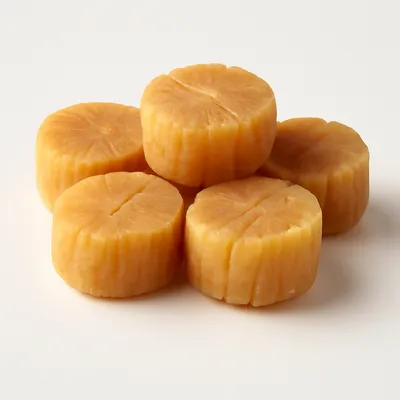
Steam with stock: Place the coated mushrooms in a deep heatproof bowl. Pour hot chicken stock to just cover. Scatter dried scallops and ginger slices around. Cover tightly and steam for 25–30 minutes until the chicken paste is fully set.
Watch outThe paste is done when it's set firm and no longer wet-glossy — poke it and it springs back; under-steamed it stays soft and slides off when you slice.
- 610 min
Plate as brushes: Remove the mushrooms and slice each lengthwise into 1.5–2cm stave pieces. Arrange 10–12 pieces in neat parallel rows on a long oval platter. Strain the steaming stock, bring to a boil, thicken with a light cornstarch slurry, and pour as a clear glaze over the platter.
Archive tool suggestions — not reviewed
These legacy suggestions have not been evidence-reviewed and are not presented as required tools.


