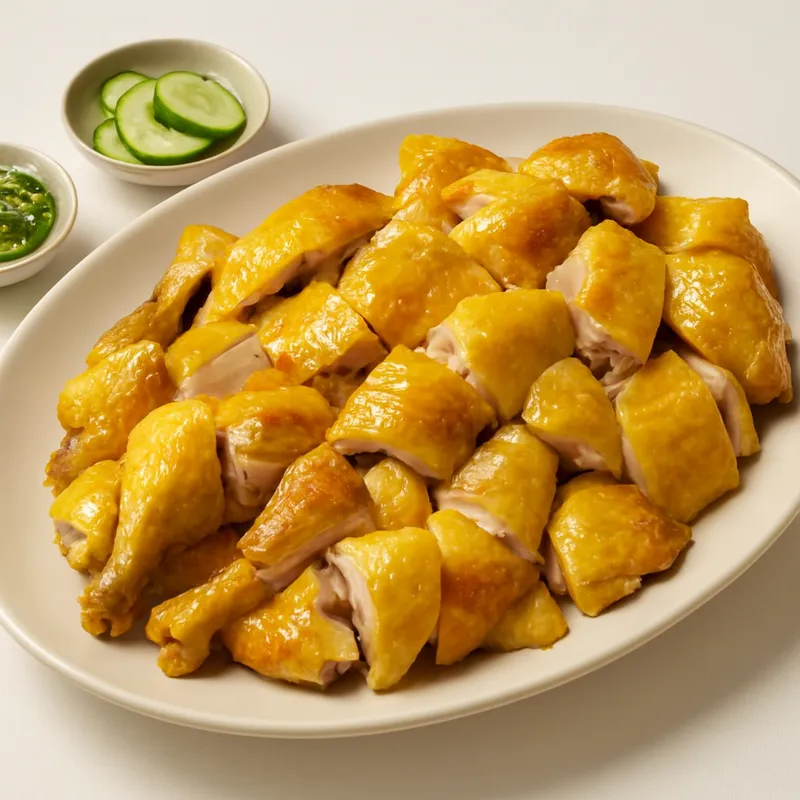
The famous salt-cured aged beef of Pingyao, the walled merchant town of central Shanxi. Whole cuts of beef are dry-salted and left to cure, then slow-simmered for hours in a plain master broth with almost no spice, and cooled in their own stock. Sliced thin and eaten cold, the meat is deep brick-red, dense and fine-grained, glistening with a little fat, and tastes purely of salt and beef — no soy, no five-spice masking it. It has been a Shanxi delicacy since the Qing, when Pingyao was a banking capital, and is today one of the province's signature cold cuts.




Pingyao beef comes from Pingyao, the central-Shanxi merchant town famous for its intact Ming-Qing city wall and, in the 19th century, for being the cradle of China's earliest draft-banking houses (票号). The town's salt-cured beef grew famous alongside that prosperity in the Qing dynasty, when the merchants who ran banks across the empire carried its reputation outward; old guild names like 兴盛雷 are recorded among the historic makers. The traditional craft was honored as state-level intangible cultural heritage, and the largest modern producer, the Pingyao Beef Group, traces its 冠云 brand to a state-owned plant set up in 1956. The cure is prized for its restraint — salt and water do nearly all the work.
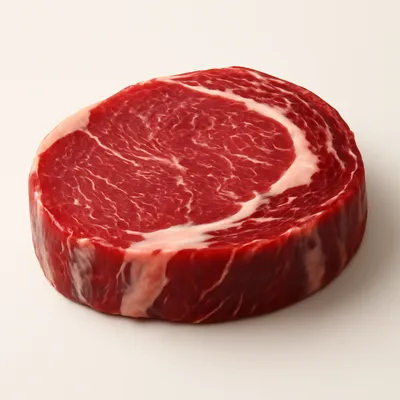
Cut into thin slabs, the meat is a deep brick-to-rose red all the way through, fine and tight in the grain, with thin seams of softened fat that go translucent. It is firm but tender — it yields cleanly and is never stringy or rubbery. The flavor is straightforward: well-salted, deeply beefy, faintly savory-sweet from the long simmer, with none of the soy-darkness or spice perfume of a lu-shui braise. Eaten cold, on its own or with a little raw garlic, it is a drinking dish and a New-Year table fixture across Shanxi.
Two stages, both about restraint. First the cure: whole pieces of beef are rubbed and packed with salt and left to draw for days, the salt drawing out water, firming the protein and seasoning to the core while inhibiting spoilage. Then the cook: the salted beef goes into an old, lightly spiced master broth and is simmered low and long over many hours, then left to cool in that stock so it reabsorbs juice and sets dense. Traditional makers famously use very little seasoning — sometimes essentially only salt and well water, the local mineral water credited for the result — letting the cure and the slow simmer, not soy or five-spice, build the flavor and the brick-red color. The deep red is the cured myoglobin, not caramel or soy.
Variations
The provincial industrial standard is set by the 冠云 brand of the Pingyao Beef Group, while small workshops keep older, more frugal recipes. Honest Pingyao beef is salt-cured and very lightly spiced; the cheap imitations sold as it are often ordinary soy-braised lu beef, much darker and spiced, which the genuine article never is. Neighbouring 太谷 and other central-Shanxi towns make their own cured beef in the same family. It is almost always eaten cold and sliced — never the centerpiece of a hot dish — and pairs by tradition with the local aged vinegar and a cup of fenjiu.
On the Palate
Where Pingyao Beef sits in the Chinese flavor cloud
Ingredients
Serves 6How it's made
7 steps · 1 hour
- 120 min
Choose whole cuts of lean beef (traditionally from local yellow cattle); trim and portion into large blocks.
- 21440 min
Rub thoroughly with salt and pack to cure for 1–2 days so it firms and seasons to the core.
Watch outSalt rubbed all over and the surface starting to firm — that's the cure taking hold.
- 310 min
Rinse off surface salt; settle the beef into an old, very lightly spiced master broth.
- 4240 min
Bring up, skim, then simmer gently over low heat for several hours until tender but still dense.
Watch outThe stock should barely tremble, not boil — a hard boil shreds the beef.
- 5360 min
Turn off the heat and let the beef cool completely in its own stock so it reabsorbs juice.
Watch outLeave it in the stock until dead cold so it drinks the juice back in and sets dense.
- 630 min
Lift out, chill, and slice thin across the grain.
- 75 min
Serve cold as a starter, with raw garlic and aged Shanxi vinegar on the side.
Archive tool suggestions — not reviewed
These legacy suggestions have not been evidence-reviewed and are not presented as required tools.