A Zhangpu county speciality of hand-force-fed duck simmered whole in plain water and seasoned post-cooking with salt and five-spice — combining the richness of Beijing-style force-fed poultry with the clean simplicity of southern Fujian salted-water cooking. The prized 'powder liver', ballooned to twice normal size by fat infiltration, rivals French foie gras in texture.




Legend holds that Cai Xin (1707–1799), a Grand Secretary of the Qing court from Zhangpu, brought Beijing's force-feeding duck technique to his home village of Shiliu upon retirement. According to local oral tradition, his wife taught the method to neighbouring families; the practice spread through the village and became inseparable from Shiliu's fertile duck-farming landscape. A parallel folk account traces the dish to the Wanli reign of the Ming dynasty, when a resourceful woman in Meiling village hand-fed fattening ducks to solve a pre-festival shortage. Whichever story is truer, the result is a duck whose twenty-day hand-feeding regime sets it apart from ordinary poultry.
The meat is fine-grained and sweetly rich with a silky quality from evenly distributed intramuscular fat; the skin is thin and yielding. The prized powder liver dissolves like cultured butter on the tongue — luxuriantly smooth, with a gentle livery depth.
Force-feeding floods the duck's liver with carbohydrates far exceeding metabolic needs; hepatocytes convert the excess into triglycerides that accumulate as fat droplets within cells — the same hepatic lipidosis that produces French foie gras. Liver fat content can reach 50–60% of wet weight, dissolving the granular protein texture and creating the characteristic powder-liver softness. Simultaneous build-up of intramuscular fat in the breast improves water-holding capacity, keeping the meat moist even during long simmering. Duck subcutaneous fat melts at approximately 31°C — lower than pork lard at roughly 40°C — so it dissolves on contact with the tongue, creating the hallmark 'fatty but not greasy' sensation.
Variations
Some producers rub the duck after boiling with a blend of salt, five-spice and Sichuan pepper for a spicier finish; the powder liver is sometimes steamed separately with ginger and rice wine as a stand-alone dish. Home versions using grain-fattened Muscovy ducks can approximate the meat richness, though achieving true powder-liver texture requires the commercial force-feeding regimen.
On the Palate
Where Zhangpu Force-Fed Stuffed Duck sits in the Chinese flavor cloud
Ingredients
Serves 4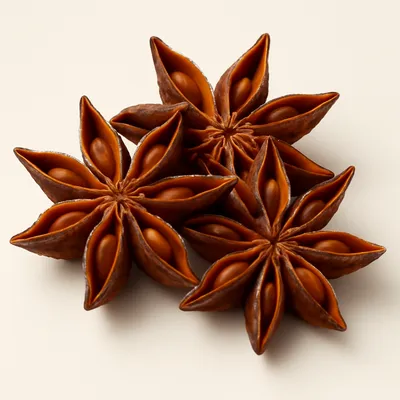
How it's made
7 steps · 1 hour
- 110 min
Rinse a whole force-fattened duck inside and out; remove excess fat from around the cavity opening; pat thoroughly dry; truss wings and legs with kitchen twine
- 25 min
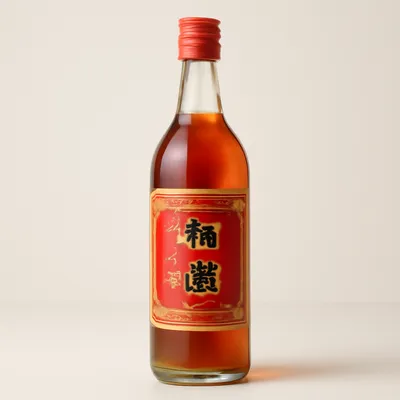
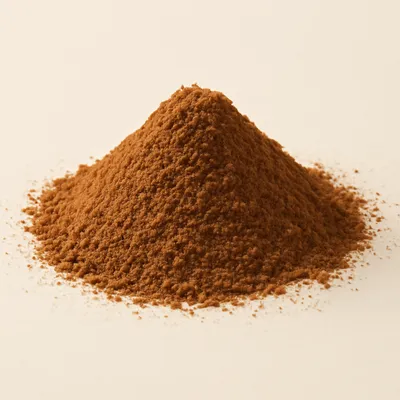
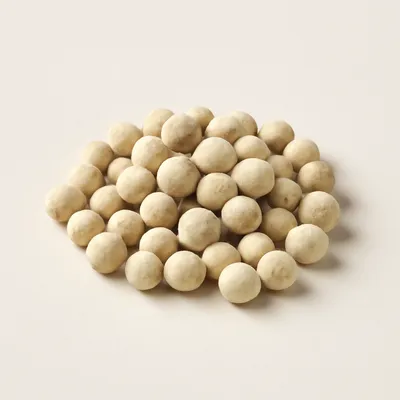
Mix salt, five-spice powder, white pepper and Shaoxing wine to make a rub; coat the interior of the cavity generously; tuck in ginger slices, scallion knots and star anise
- 38 min
Sew the cavity shut with a steel trussing needle and kitchen twine, stitching every 1 cm, to prevent the seasonings from washing out during cooking
Watch outSew the cavity shut with tight stitches about a centimetre apart — any gap lets the seasoning wash out into the pot during the long simmer.
- 45 min
Place the duck in a large pot; add cold water to cover by 5 cm; bring to a rolling boil over high heat; skim off all foam thoroughly
- 570 min
Reduce to a steady medium simmer; cook for 60–70 minutes; test doneness by inserting a skewer at the thickest part of the thigh — juices should run clear with no trace of pink
Watch outTest the thigh with a skewer — juices should run clear with no pink; the fatty liver goes to mush if overcooked.
- 65 min
Lift duck onto a rack; while still steaming hot, rub the skin and all cut surfaces immediately with a generous mixture of salt and five-spice powder
Watch outRub on the salt-and-spice mix the moment it's out and still steaming — hot meat drinks the seasoning in; cold, it just sits on the surface.
- 720 min
Leave uncovered at room temperature for 20 minutes so the seasoning penetrates; chop into serving pieces; arrange on a platter and serve with soy sauce for dipping
Archive tool suggestions — not reviewed
These legacy suggestions have not been evidence-reviewed and are not presented as required tools.



