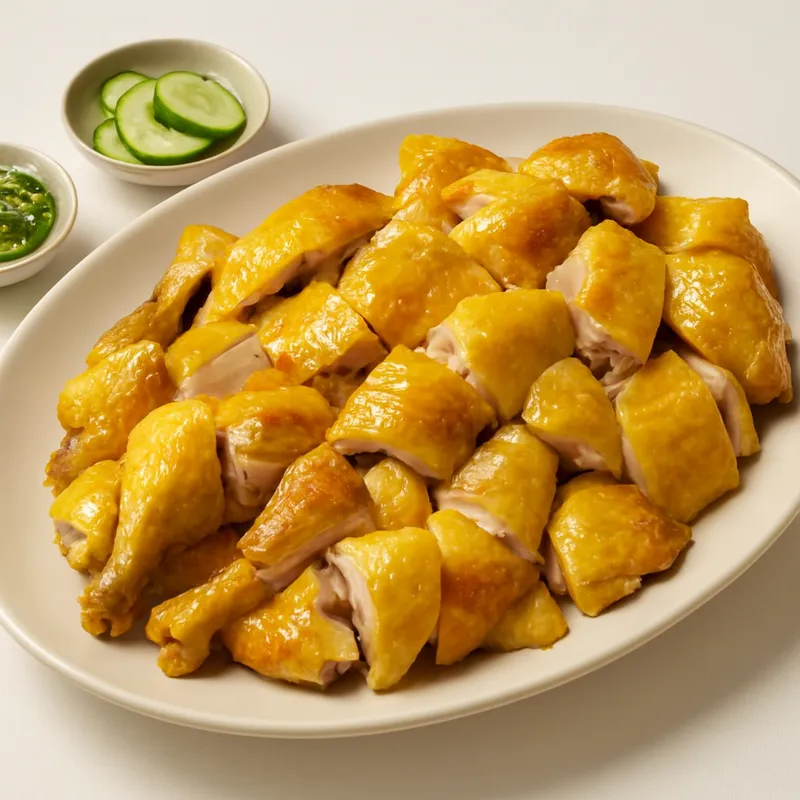
Whole chicken wrapped in unoiled coarse paper (cao zhi / sha zhi, traditionally white bamboo paper), buried in 3kg of hot rock salt, slow-cooked until the meat is moist and the skin yellow-tight.


Hakka invention from the salt-mining regions of eastern Guangdong (Dongjiang area) — Hakka people were salt traders, and burying a chicken in salt was both flavor technique and preservation. Codified in 19th-century Dongjiang and now found in every Cantonese-Hakka restaurant. The Heyuan and Meizhou districts of Guangdong still claim the most authentic version. Modern shortcuts (oven-baking with a salt rub instead of true salt-burying) miss the point.
Hakka migrant dish from Dongjiang, Guangdong — chicken wrapped in sand paper, buried in 3 kg of dry-roasted coarse salt at 200°C for 40 minutes. The salt is a heat conductor, not a seasoning.
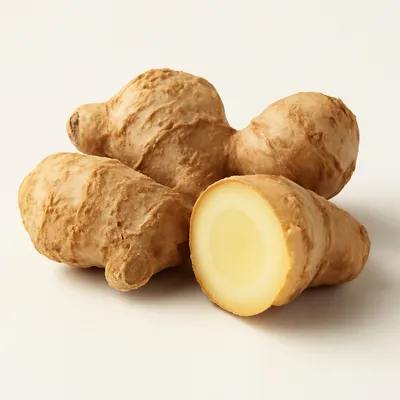
Pulled apart by hand, the chicken comes out yellow-skinned and tight, with no glistening fat. The meat is moist but firm, slightly chewy at the breast in a way no oven-roast achieves — the salt's even-radiant heat cooks every part at the same rate. Sand ginger / sha jiang (Kaempferia galanga, a ginger-family rhizome distinct from common ginger) is the dominant aroma; without it, the dish tastes like steamed chicken. Dip in the warm sand-ginger oil for each bite.
Salt has a low specific-heat capacity but conducts heat evenly — when the coarse salt is heated until it crackles (sources cite an optimal salt-baking temperature of roughly 170°C), it becomes a thermal mass that surrounds the chicken in steady radiant heat from all sides simultaneously. No spot is hotter or cooler than another, so the meat cooks uniformly without the surface drying out. The sand paper wrap is also load-bearing: it traps steam released by the meat, so the chicken effectively braises inside its own juices while baking. Without the wrap, it would dry out.
Variations
Dongjiang original buries the whole bird in dry salt; Heyuan version uses paper-wrapped salt-water injection; modern Cantonese restaurants do a hybrid steam-then-salt-rub for speed.
On the Palate
Where Salt-Baked Chicken sits in the Chinese flavor cloud
Ingredients
Serves 4
How it's made
5 steps · 25 min active + 1 hour 5 min waiting
- 130 min
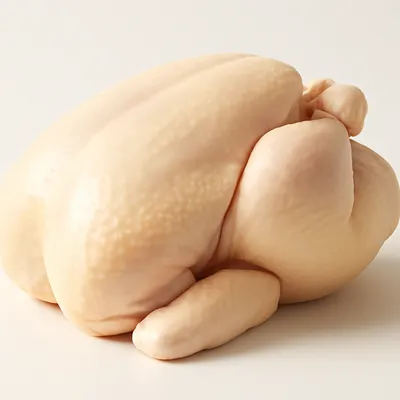
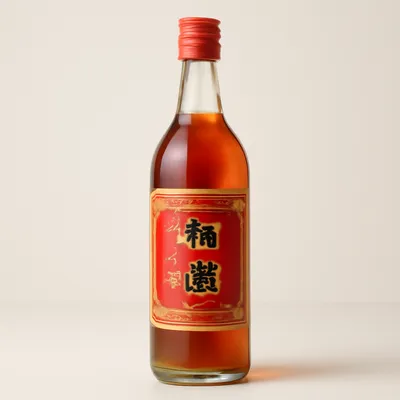
Rub a 1.4kg whole chicken inside and out with sand ginger powder (most important), Shaoxing wine, salt. Hang to air-dry 30 minutes until skin feels dry to the touch.
Watch outThe skin is ready to wrap when it feels dry and slightly taut to the touch, no longer damp from the wine-and-salt rub.
- 25 min
Wrap the chicken in two layers of unwaxed sand paper or lotus leaf. The wrapping must be sealed — flavor and juices stay inside.
Watch outMake sure the wrapping is tightly sealed to prevent moisture loss.
- 312 min
Heat 3kg coarse rock salt in a deep heavy clay pot over medium-high until salt is too hot to touch (about 250°C). Push half the salt to the side.
Watch outThe salt is hot enough when it crackles and you can't hold a hand near it — that snapping sound is the cue it will hold radiant heat.
- 450 min
Bury the wrapped chicken in the hot salt, covering completely. Lid the pot. Bake on low heat for 50 minutes, no opening.
Watch outKeep it on low and don't lift the lid — every peek drops the salt's temperature and lets the trapped steam out.
- 55 min
Lift chicken out, brush off salt, unwrap. Tear or cleaver-chop into pieces. Serve with sand-ginger oil dip (sand ginger + scallion + hot oil). Skin should be yellow and tight, meat just-cooked-through, faintly perfumed by the wrap.
Watch outCheck that the chicken is cooked through by ensuring juices run clear when cut.
Archive tool suggestions — not reviewed
These legacy suggestions have not been evidence-reviewed and are not presented as required tools.

A round-bellied unglazed clay pot, 1.5-3 liters, with a domed lid and side handles, used for slow-cooking Chinese soups, claypot rice (煲仔饭), and stews. The clay's high porosity diffuses heat slowly so soups never come to a violent boil — flavor develops over 2-3 hours of low simmer. Cantonese claypot rice gets its prized crispy bottom (锅巴) from the same direct-flame stovetop heat that would crack a less robust pot.

A heavy rectangular Chinese knife — the cai dao — with a flat 18-22 cm blade about 2 mm thick. The single tool handles every kitchen job: julienning ginger, splitting whole chickens, smashing garlic with the side of the blade, scooping diced onions on the broad face. The flat profile means knife-skill in Chinese kitchens is fundamentally different from Western technique — you push-cut and rock-cut, never slice through.


