A traditional dish of the Guangfu Ancient City in Yongnian, Handan, Hebei. Ringed by water and linked marshes, Guangfu has been a land of fish and rice since antiquity, rich in crucian carp and assorted small fish. Live fish are killed the day they are caught, briefly sun-dried, then fried golden and packed into a clay pot with scallion, ginger, garlic, Sichuan pepper, star anise, aged vinegar, sugar and water. Braised first over high heat and then for hours over a low flame, the fish emerges with bones and fins gone soft yet its shape intact, savory, fragrant, sour and sweet at once, and edible bones and all.
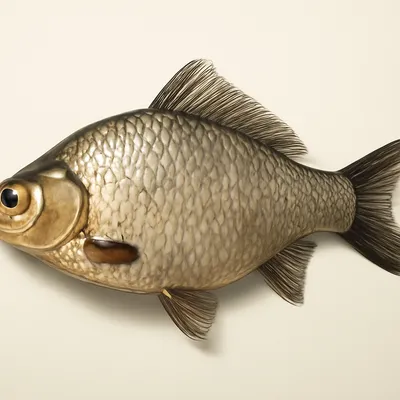





Guangfu crispy fish is said to date to the Qing dynasty: prized for its softened bones, intact shape and tender, flavorful flesh, it was reportedly chosen as a palace tribute, and by the Republican era every restaurant vied to sell it faster than it could be made. In 1961, when Chairman Mao Zedong inspected Handan, he tasted the crispy fish made by a Master Zhang from Guangfu in Yongnian — then working at the prefectural committee cafeteria — and remarked that the fish bones, rich in phosphorus and calcium, became easy for the body to absorb once softened, calling it a pity that such nourishment had ever been discarded; after which the method spread more widely. Today, at every festival, countless Guangfu households slow-braise the fish in clay pots, and it has become the area's signature dish.
The whole fish holds its shape but surrenders at the chopstick, bones, fins and all dissolving into a soft, savory richness with no sharp spine to pick out. Aged vinegar threads a mellow sourness through the deep braise, balanced by a quiet sweetness, while scallion and spice perfume each bite. It eats like the most comforting thing pulled from a grandmother's clay pot.
Softening the bones is acid chemistry plus time. Hydroxyapatite, the calcium-phosphate mineral that stiffens fish bone, slowly dissolves in the acetic acid of the vinegar, while the prolonged low, moist heat hydrolyzes the bone's collagen and the fish's connective tissue into gelatin; together these turn spine and fins tender enough to eat. Frying the fish first denatures the surface proteins into a firm skin that holds the body whole through hours of braising, and the clay pot's even, gentle heat keeps the simmer from breaking the fish apart. Sugar rounds the sharp acidity and, with the rendered gelatin, gives the sauce its glossy, clinging body.
Variations
Mixed small fish: instead of crucian carp, fill the clay pot with assorted little river fish, weighted with stones on top to keep them whole. Larger fish need far longer, up to about twelve hours, versus four to five for small ones. Some households add a splash of beer or a few hawthorn slices to speed the bone-softening and deepen the sour-sweet balance.
On the Palate
Where Guangfu Slow-Braised Crispy Fish sits in the Chinese flavor cloud
Ingredients
Serves 4

How it's made
8 steps · 45 min active + 4 hours 55 min waiting
- 110 min
Scale and gut the fresh crucian carp, rinse, and let them drain or briefly sun-dry until the surface is dry.
- 28 min
Fry the fish in hot oil until golden and firm on both sides, then lift them out.
Watch outFry the fish until both sides are golden and firm before braising — this skin sets a barrier that keeps the body whole through hours in the pot instead of breaking to mush.
- 35 min
Line the bottom of a clay pot with scallion segments, ginger slices and garlic, then lay the fried fish on top in neat layers.
- 44 min
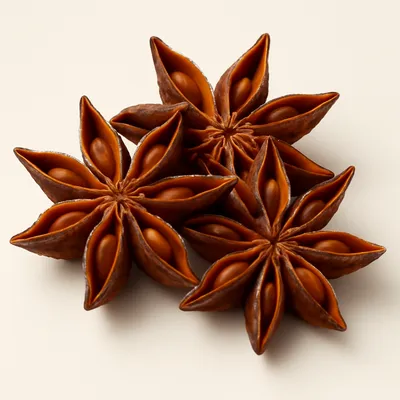
Scatter Sichuan pepper and star anise over the fish, then pour in aged vinegar and sugar and add water until the fish is just covered.
- 55 min
Bring to a boil over high heat, then immediately reduce to the lowest simmer and cover.
- 6290 min
Braise gently for 4 to 5 hours for small fish (up to about 12 hours for large fish), checking the liquid occasionally, until the bones are soft.
Watch outBraise on the barest simmer for hours until a chopstick presses through the spine with no resistance — that's the vinegar and long moist heat dissolving the bone soft enough to eat.
- 78 min
Uncover and raise the heat briefly to reduce the sauce to a glossy glaze, basting the fish.
Watch outAt the end, raise the heat just to reduce the sauce to a glossy glaze and baste it over — pull it before it darkens past shiny or the sugar catches.
- 810 min
Let the pot rest until just warm so the fish sets, then serve straight from the clay pot.
