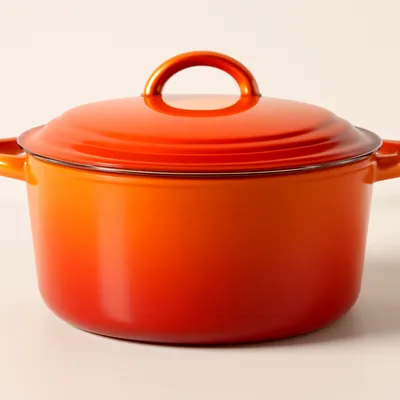
A signature Huaiyang eel dish from the Lixia River wetlands: scored eel middle sections braised with pork belly until the cuts curl open into arch shapes resembling traditional saddle-bridges, coated in a glossy, deeply reduced soy-and-ginger sauce.





The name comes from the eel's transformation in the pot: scored middle sections curl into arch shapes resembling traditional saddle-bridges after blanching. The dish is rooted in the eel-banquet tradition of the Lixia River wetlands around Yangzhou and Huai'an, documented alongside other eel preparations in Qing texts including Li Dou's Record of Painted Pleasure Boats on the Yangzhou Canals. Huai'an cooks long prided themselves on multi-course eel banquets, with the braised saddle-bridge holding pride of place as the richest preparation.
Lacquered mahogany eel coils that wobble like bridge arches, sheened with reduced soy and a lick of pork fat — one pull of chopsticks and the flesh unspools velvet-soft.
Eel is rich in collagen; long braising converts it to gelatin, naturally thickening the sauce without starch. Pork belly contributes rendered fat that emulsifies with the braising liquid into a sticky, coating sauce. A vinegar-and-wine blanch at the start acid-denatures surface proteins quickly, firming the texture and eliminating fishiness. The final high-heat reduction triggers Maillard reactions between residual sugars and amino acids, deepening colour and adding roasted notes.
Variations
The Huai'an stir-fried variant (炒软兜) uses only the back-strap fillet cooked at high heat for a silky, barely-set texture — the opposite of the braised style's melting richness. A lighter spring version omits pork belly and finishes with scallion oil. A white-braised version uses clear chicken stock rather than dark soy, highlighting the eel's clean sweetness.
On the Palate
Where 大烧马鞍桥 sits in the Chinese flavor cloud
Ingredients
Serves 4

How it's made
7 steps · 20 min
- 15 min
Score each eel middle section (6 cm) with a straight cut; blanch for 5 seconds in boiling water spiked with Zhenjiang vinegar and Shaoxing wine, then rinse off the white film and drain.
Watch outThe vinegar-and-wine blanch is a five-second flash — just long enough to firm the eel and set the white film to rinse off; any longer and the flesh toughens.
- 25 min
Render pork belly slices in a dry wok over medium heat until golden on both sides; remove and set aside, leaving the fat in the wok.
- 33 min
Fry garlic cloves in the pork fat until golden; add sliced ginger and scallion sections and stir until fragrant.
- 43 min
Return pork belly to the wok; add eel sections, dark soy sauce, light soy sauce, Shaoxing wine and rock sugar; pour in enough stock to just submerge the eel.
- 525 min
Bring to a boil, skim any foam; reduce to low heat, cover and braise for 25 minutes.
Watch outBraise on low with the lid on — the eel's own collagen melts out and thickens the sauce, so it should look like it's already bodying up without any starch.
- 67 min
Uncover; increase to high heat and reduce the sauce, stirring gently, until thick and glossy and clinging to the eel.
Watch outReduce over high heat, stirring gently, until the sauce turns thick and glossy and clings to every eel section — that self-thickened glaze is the whole point.
- 72 min
Add a small final splash of Zhenjiang vinegar; transfer to a plate and dust lightly with white pepper.
Archive tool suggestions — not reviewed
These legacy suggestions have not been evidence-reviewed and are not presented as required tools.