Thick-cut pork belly and fat purple eggplant braised together until both dissolve into a single deeply savoury, oil-soaked mass — the simplest and most satisfying of Dongbei's one-pot winter stews.

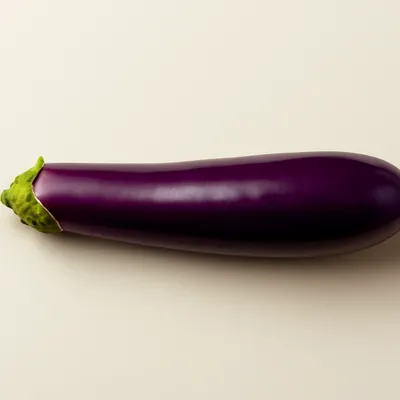



Pork belly and eggplant stew belongs to the Manchu culinary heritage that underlies all of Dongbei cooking. Manchu hunters and forest communities in the northeast relied on a single suspended iron pot — the 吊锅, hung over a wood fire in camp — as their primary cooking vessel, producing a cuisine built almost entirely around slow simmering: whatever combination of meat and vegetables was available went into the pot and cooked long and low. Eggplant cultivation spread widely across the northeast alongside Han Chinese migration waves of the Qing dynasty and proved extraordinarily well-suited to the 吊锅 method: its spongy cell structure collapsed under sustained low heat and absorbed pork fat with an efficiency that no other vegetable could match, transforming into a silken, deeply-flavoured mass entirely different from its raw state. The dish appears across Heilongjiang, Jilin, and Liaoning as a year-round family staple — its canonical form of five-flower pork, large-cut purple eggplant, soy sauce, and ginger essentially unchanged across generations. It occupies a distinct place in the Dongbei repertoire: not a banquet dish, not a showcase of technique, but the quintessential home stew that every Dongbei family makes and every Dongbei migrant misses.
The pork belly pulls apart in yielding, soy-stained layers, fat rendered and silken; the eggplant has long since surrendered its structure, now a rich, oil-soaked cushion that collapses on the tongue — pork richness and vegetable sweetness merge into something dense, warming, and entirely complete.
The meeting of pork belly and eggplant in the braising pot is a study in complementary physical chemistry. Eggplant flesh is built around a loosely organised network of air cells (lacunae) separated by thin pectin-rich walls. Under sustained heat at 80–90°C, pectin demethylation and hydrolysis soften and collapse these cell walls, dramatically increasing the flesh's porosity. Simultaneously, pork belly adipose tissue renders its stored lipids — primarily oleic and palmitic acid triglycerides — as free fats into the braising liquid. These lipids penetrate the collapsed eggplant cell matrix, filling former air spaces while carrying fat-soluble flavour compounds from soy sauce melanoidins, star anise anethole, and ginger's spice esters, saturating the eggplant with concentrated pork-fat flavour. Concurrently, collagen from the pork belly's connective tissue hydrolyses into gelatin, thickening the braising liquid and binding both components in a rich, glossy sauce that serves as the dish's flavour matrix.
Variations
Adding potato cubes in the final 15 minutes produces 猪肉炖茄子土豆, the most popular extended version across Dongbei; a summer variant uses less soy sauce and adds fresh tomato and green pepper for brightness; some cooks first caramelise the pork in rock sugar before adding liquid, following the red-braise approach for richer colour and sweetness.
On the Palate
Where Pork Belly and Eggplant Stew sits in the Chinese flavor cloud
Ingredients
Serves 4


How it's made
7 steps · 15 min
- 110 min
Cut pork belly into 3cm thick slices; cut eggplant into large irregular chunks about 4cm across; slice ginger and cut scallion into sections.
- 25 min
Heat 1 tablespoon oil in a heavy pot over medium-high heat; add pork belly slices skin-side down and brown for 3 minutes until the skin begins to caramelise and fat starts to render; flip and brown the other side for 2 minutes.
Watch outBrown the pork belly skin-side down until it caramelizes and the fat starts to render — this rendered fat is what the eggplant later drinks up.
- 31 min
Add ginger, scallion, star anise, and dried chilies; stir briefly until fragrant, about 30 seconds.
- 43 min
Pour in light soy sauce and dark soy sauce; stir to coat the pork evenly; add hot water to just cover the meat; bring to a rolling boil.
- 525 min
Cover and braise over medium-low heat for 25 minutes until the pork is about 70% tender.
- 615 min
Add the eggplant chunks; stir to press the pieces into the liquid; continue braising covered for 15 minutes until the eggplant is completely soft and oil-soaked.
Watch outPress the eggplant down into the liquid and braise until fully soft and oil-soaked — half-cooked, it stays spongy and raw-tasting.
- 75 min
Uncover; raise heat to medium-high and reduce the sauce for 5 minutes, stirring gently, until thickened and deeply glossy; scatter scallion greens and serve directly from the pot with steamed rice.
Watch outReduce at the end until the sauce turns thick and glossy — this is what coats every piece instead of pooling watery at the bottom.
Archive tool suggestions — not reviewed
These legacy suggestions have not been evidence-reviewed and are not presented as required tools.


