An Anqing home-kitchen icon: handmade balls of sweet-potato starch — opaque and dense when raw — braised alongside pork belly until they turn deep amber and translucent, having absorbed every drop of rendered lard and soy-spiced braising liquid. The finished balls are at once chewy and silky, tasting entirely of concentrated pork richness with the starch's own gentle sweetness underneath.




Sweet-potato cultivation in the Yangtze River hill-country around Anqing (宿松、怀宁、潜山、太湖) dates to the late Ming Dynasty, when the crop spread from Fujian inland along trade routes. By the Qing period, Anqing households had developed a tradition of stone-milling sweet potatoes, washing the pulp in running water, and sun-drying the collected starch into white 'mountain powder' (山粉) blocks — so named because the crop thrived on the foothill slopes. The practice of cooking these starch balls with braised pork became a signature household tradition across the Huaining and Susong districts, where the dish served as the 'face dish' (体面菜) at New Year and wedding banquets: abundant, affordable, filling, and symbolically round (圆) for family wholeness and reunion. The Anqing city government and Anhui provincial travel authorities list 山粉圆子烧肉 as a recognized Anqing specialty (安庆产地宝、中安在线 2022). Every family has its own closely guarded ratio of starch to water.
The pork belly contributes melt-in-the-mouth ribbons of fat and tender meat. But the balls are the soul of the dish: the exterior is glassy and slightly tacky, giving under the tooth with a springy resistance before releasing — not gelatinous, not doughy, but something entirely its own. The flavor is the braise itself, concentrated and savory-sweet, with the starch providing a mild, ghost-of-sweetness backdrop that no potato or taro could replicate.
Sweet-potato starch is exceptionally rich in amylopectin (approximately 75–80% of total starch), which gives cooked products a cohesive, chewy, slightly elastic texture rather than the floury softness of amylose-dominated starches. Gelatinization begins at around 58–65 °C and is complete by 75 °C: the starch granules absorb water and swell irreversibly, transforming from opaque solids to translucent semi-gels. In the braising pot, this gelatinization coincides with fat absorption: as pork belly renders at 80–90 °C, the free triglycerides migrate into the swelling starch matrix, creating a fatty-starchy composite that stays chewy even after long cooking. The boiling water used to pre-cook the starch paste before shaping begins partial gelatinization, ensuring the balls hold together during the initial high-heat braise. Prolonged simmering at low temperature prevents full breakdown of the amylopectin network, preserving the characteristic springy texture.
Variations
In Susong county, some cooks add dried tofu skin (腐竹) to the braise, which absorbs braising liquid just as the starch balls do, creating a dual-textured pot. Vegetarian versions substitute the pork with meaty shiitake mushrooms and a splash of soy sauce for umami. A Huaining variation shapes the starch paste into flat discs rather than balls and braises them directly with sliced pork ribs. Leftover balls can be pan-fried the next day until golden and crispy — a texture transformation that locals consider an equally prized second meal.
On the Palate
Where Sweet-Potato-Starch Balls Braised with Pork sits in the Chinese flavor cloud
Ingredients
Serves 4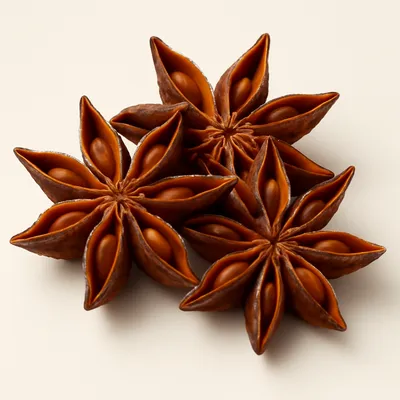



How it's made
7 steps · 30 min
- 120 min
Make the starch balls: pour sweet-potato starch into a bowl. Slowly pour in enough just-boiled water (about 60–65% of starch weight) while stirring vigorously with chopsticks until no dry powder remains and the paste is semi-translucent. Wet your hands with cold water; roll the paste into walnut-sized balls (about 3 cm diameter). Space on a lightly oiled plate.
Watch outPour just-boiled water into the starch while stirring hard until no dry powder is left and the paste turns semi-translucent — that scald is what lets you roll firm, chewy balls.
- 28 min
Cut pork belly into 4 cm chunks. Blanch in cold water brought to a boil for 3 minutes to remove blood and impurities; drain and pat dry.
- 37 min
In a wok or heavy pot, render the pork belly over medium-high heat until the fat side is golden and some lard has been released (about 5 minutes). Add ginger slices, star anise, and garlic; stir-fry until fragrant.
- 45 min
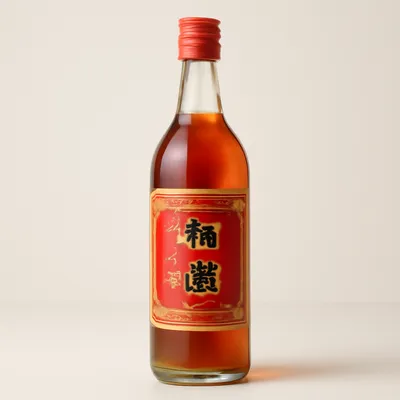
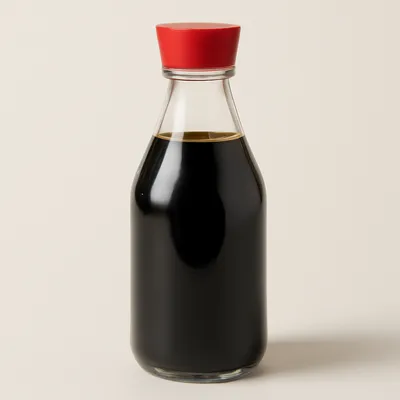
Add Shaoxing wine, dark soy sauce, light soy sauce, and rock sugar. Stir to coat the pork. Add enough water to just cover the meat. Bring to a boil.
- 560 min
Gently lower the starch balls into the braising liquid alongside the pork. Reduce heat to a gentle simmer (avoid rapid boiling, which breaks the balls). Cover and braise 50–60 minutes.
Watch outKeep the braise at a gentle simmer once the balls go in — a rapid boil knocks them apart; you want them lacquering, not tumbling.
- 610 min
Uncover; increase heat to medium-high. Stir gently, turning the balls to ensure even lacquering. Cook until the braising liquid reduces to a thick glaze and the balls are deeply amber and translucent throughout.
Watch outDone when the balls turn deep amber and translucent right through and the sauce reduces to a thick glaze.
- 75 min
Taste and adjust seasoning. Scatter sliced scallion over the top and serve directly from the pot.


