Pork belly slow-braised for hours in a sealed clay jar until the collagen-rich cuts fall tender and the cooking liquid sets into a luminous amber jelly — a winter staple among Tianjin's sixteen great dishes, served cold then steamed to order.




Tianjin clay-jar pork traces to the Qing dynasty adoption of the Shandong braising tradition recorded by Yuan Mei in his Suiyuan Shidan — which documented sealed-jar slow braising — then adapted into Tianjin's winter culinary repertoire. Over more than two centuries the city's version developed its distinctive bone-layered jar structure and pork-skin gel finish, eventually enshrined among the sixteen canonical dishes of Tianjin cuisine.
The dish arrives in a deep bowl, meat submerged in quivering amber jelly. The first spoonful brings a cool, silky pork-skin gel that dissolves almost immediately, followed by strands of braised belly that yield with barely a press, releasing a deep savory-sweet warmth. The fat has rendered fully into the broth rather than sitting heavy, leaving a clean, long-lasting aroma.
Sealing the clay jar traps steam and creates a gentle pressurized environment around 90–95°C, preventing moisture loss. The pork skin and connective tissue collagen hydrolyzes into gelatin after three to four hours: hydrogen bonds in the collagen triple helix break above 70°C, unraveling into random gelatin chains. On cooling below 35°C the gelatin re-crosslinks into a firm, translucent jelly. Sugar caramelization and Maillard reactions between reducing sugars and amino acids during the initial browning step generate the deep amber color and complex sweet-savory aroma. The sealed vessel also traps volatile aromatic compounds from star anise and cinnamon, driving them deep into the meat.
Variations
Some cooks add whole chestnuts or cubed firm tofu to the jar — both absorb the braising liquid with exceptional efficiency. A popular serving variation, clay-jar pork with napa cabbage, spoons the cooking jelly over blanched cabbage hearts. Modern kitchens occasionally substitute a pressure cooker to cut simmering time to 90 minutes, though purists maintain the ceramic jar's gradual even heat yields a superior jelly texture and deeper flavor.
On the Palate
Where Tianjin Clay-Jar Braised Pork sits in the Chinese flavor cloud
Ingredients
Serves 4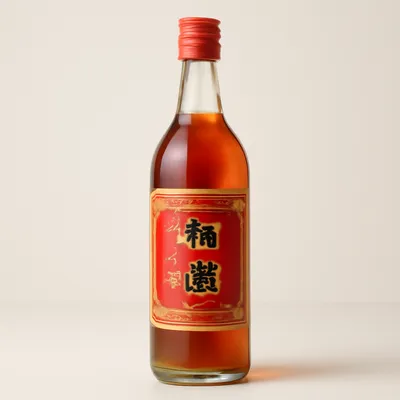


How it's made
7 steps · 20 min
- 110 min
Cut pork belly into large chunks (about 5 cm); blanch in boiling water for 5 minutes, skim foam, drain and pat dry
- 28 min
In a dry wok over medium heat, melt rock sugar, stirring until it turns deep amber and small bubbles form
Watch outMelt the rock sugar to a deep amber with small bubbles — that's the caramel color; take it darker and it turns acrid, pull it pale and the braise stays flat.
- 310 min
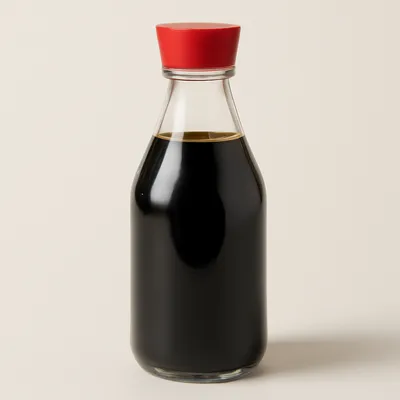
Add pork belly to the caramel; add dark soy sauce, light soy sauce, and rice wine; stir-fry over medium-high heat until meat is evenly coated
- 48 min
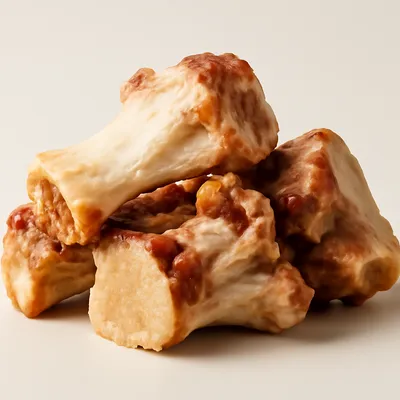
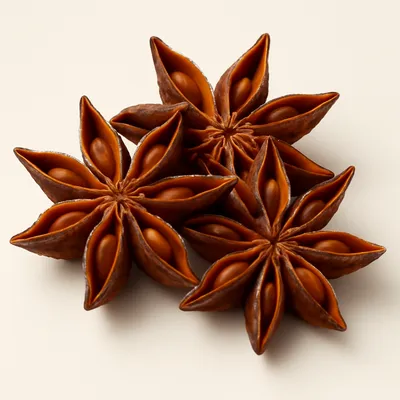
Lay pork knuckle bones flat on the bottom of a clay jar to form a rack; place seasoned pork belly on top, tuck pork skin pieces around, add star anise, cinnamon, and ginger slices
- 55 min
Pour in enough water to just cover the meat; seal the jar mouth tightly with a stiff dough rope or wetted cloth bound with twine
- 6210 min
Place sealed jar over high heat until steam escapes from the seal, then reduce to the lowest possible flame; simmer undisturbed for 3.5 hours
Watch outOnce steam escapes the seal, drop to the lowest flame and don't open it for 3.5 hours — the trapped steam is the whole method; peek and you lose the pressure and the meat toughens.
- 760 min
Open the jar; transfer contents to a deep bowl; allow to cool to room temperature, then refrigerate until fully set; unmold and slice, then steam portions to reheat before serving
Archive tool suggestions — not reviewed
These legacy suggestions have not been evidence-reviewed and are not presented as required tools.



