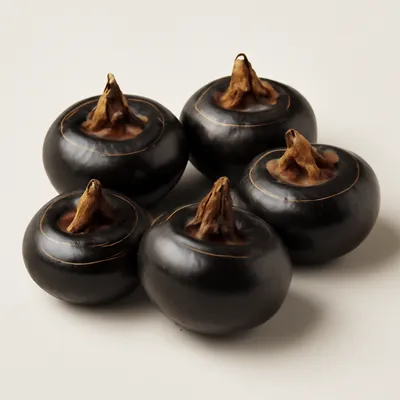
A Hui'an specialty from Quanzhou's Chongwu peninsula: fresh horse mackerel ground to a paste with sweet potato starch, five-spice, and water chestnuts, hand-rolled into thick cylinders, and steamed until springy. Sliced cold and then simmered in broth until the soup turns milky white, they are the centrepiece of every Hui'an banquet.




Chongwu ancient fortress was built in 1387 (Ming Hongwu 20th year) by Marquis of Jiangxia Zhou Dexing as a coastal defence against Japanese pirates. The most widely circulated origin story holds that soldiers stationed at the fort, unable to refrigerate their catches, minced fresh horse mackerel and mixed it with starch to produce shelf-stable rolls — essentially military rations. However, the Chongwu Zhi (崇武镇志) and a 2022 report in Dongnan Wang citing local records describe the dish's history as 'approximately 300 years,' pointing to an early Qing-dynasty origin rather than Ming; the Ming-era founding story may be post-hoc attribution. By the late Qing fish rolls had become the obligatory centrepiece of Hui'an banquets. Commercial mechanised production began after 1998; by 2004 annual output had reached 2,619 tonnes valued at 47.47 million yuan, rising to over 7,500 tonnes in recent years across more than 180 enterprises and family workshops. The product received a national Geographic Indication trademark in 2015.
Sliced thin and simmered in broth, each round pushes back against the teeth before yielding cleanly — springy, silky, and simultaneously firm. The flavour is a clean, deep sea-sweetness of fresh mackerel, warmed by five-spice, with the occasional faint crunch of water chestnut.
Horse mackerel flesh is rich in myosin; thorough salting and mechanical working (pounding or high-speed chopping) denatures and unfolds the myosin molecules, exposing hydrophobic regions and free thiol groups. During steaming these chains cross-link via disulfide bonds and hydrophobic interactions into a dense, elastic protein gel — the same surimi (鱼糜) mechanism underlying fish balls globally. Sweet potato starch granules swell during cooking to fill gaps in the gel matrix, boosting springiness and giving the finished roll its characteristic bounce.
Variations
Chongwu producers have expanded the mackerel-paste base into fish balls, fish porridge, and fish floss product lines. Inland Fujian versions substitute grass carp or silver carp for mackerel. The Xiamen adaptation adds egg white to produce a lighter, more delicate texture. Fish rolls are always served simmered in broth — never deep-fried.
On the Palate
Where Chongwu Fish Rolls sits in the Chinese flavor cloud
Ingredients
Serves 4
How it's made
7 steps · 26 min active + 38 min waiting
- 110 min
Fillet 800g fresh horse mackerel (or Spanish mackerel); remove all bones and skin; roughly chop the flesh.
- 25 min
Transfer to a food processor; add 1 tsp salt and process for 3 minutes until a cohesive, sticky paste forms.
Watch outProcess with the salt until it forms a cohesive, sticky paste — that tack is the myosin binding; a loose, grainy mix won't gel into a bouncy roll.
- 33 min
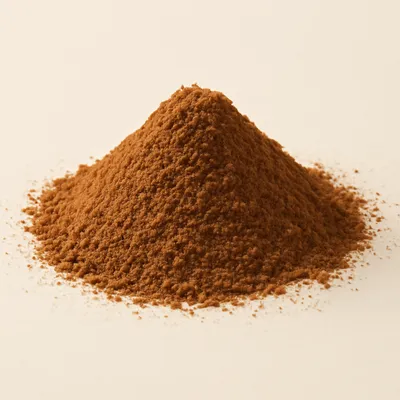
Add 80g sweet potato starch, 50g minced water chestnut, 1 tsp five-spice powder, 1 tsp minced ginger, and 1 tsp fish sauce; continue processing 2 minutes until fully elastic.
- 45 min
Wet your hands; scoop the paste and compact it by squeezing and rolling on a damp board into a cylinder about 15 cm long.
- 53 min
Wrap the cylinder tightly in plastic wrap, twisting the ends firmly to form a smooth, evenly thick roll.
- 620 min
Steam over high heat for 18–20 minutes until firm throughout; remove and cool to room temperature.
Watch outSteam until firm all the way through, then cool before slicing — cut it warm and the still-soft center smears instead of holding clean rounds.
- 718 min
Unwrap and slice into 1 cm rounds; simmer in light broth for 15 minutes until the soup turns milky white; season with salt and serve.
Archive tool suggestions — not reviewed
These legacy suggestions have not been evidence-reviewed and are not presented as required tools.


