A soft dough of mixed grains—buckwheat, bean flour, and wheat—pressed through a perforated wooden board directly into boiling water, producing short curved noodle pieces in seconds. One of Shanxi's most elemental farmhouse techniques: no rolling pin, no knife, just a pot and a board with holes. Dressed with a braised tomato-pork sauce and Shanxi vinegar.




Sieve-pressed noodles appear in Shanxi food culture under several names—抿曲儿, 抿节, 抿羹—depending on county. The Wikipedia article on Shanxi cuisine lists 抿羹 among the primary boiled-noodle varieties of the Jin-dialect region, confirming its standing as a long-established farmhouse staple. The technique requires only a wet-grain dough and a perforated board, making it accessible to households without specialized equipment. Historical county gazetteers of central and southern Shanxi document mixed-grain boiling as a routine daily practice, though no single named inventor or dated founding text exists for this particular form.
Soft, worm-shaped pieces with an earthy, slightly nutty grain note from the buckwheat and bean flour; the rough surface grips the tangy braised sauce well; simultaneously light and filling—a country bowl that doesn't weigh you down.
The blend of buckwheat and bean flour with wheat flour creates a dough with minimal gluten development—buckwheat and bean flours contain no gluten-forming proteins, so even with added wheat flour only a weak network forms. This keeps the dough soft enough to be squeezed through small holes under moderate hand pressure. Once the strands hit boiling water, the starch surface gelatinises instantly, forming a smooth outer shell that prevents further water absorption and keeps each piece from dissolving. The varied grain composition also raises the lysine content significantly compared to pure wheat noodles.
Variations
Vegan version replaces the pork-braised sauce with tomato-and-egg; some households substitute oat flour (莜面) for buckwheat, giving a nuttier, slightly firmer noodle; in summer the cooked pieces are rinsed under cold water and dressed with garlic oil, Shanxi vinegar, and chili for a cold version.
On the Palate
Where Sieve-Pressed Grain Noodles sits in the Chinese flavor cloud
Ingredients
Serves 4

How it's made
7 steps · 30 min
- 18 min
Combine buckwheat flour, bean flour, and wheat flour in equal parts; gradually add warm water while stirring with chopsticks until a shaggy mass forms, then knead 5 minutes into a soft, slightly tacky dough.
Watch outThe dough is right when it's soft and just barely tacky — too stiff and it won't press through the holes.
- 230 min
Cover the dough with a damp cloth and rest at room temperature for 30 minutes to allow the limited gluten to relax and the dough to become more pliable.
- 310 min
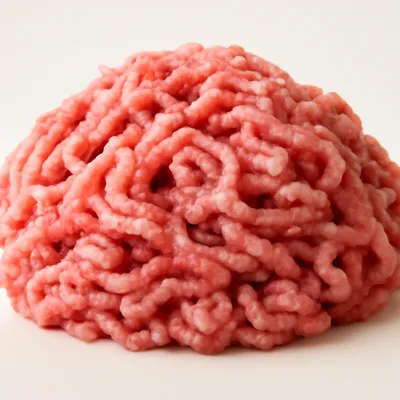
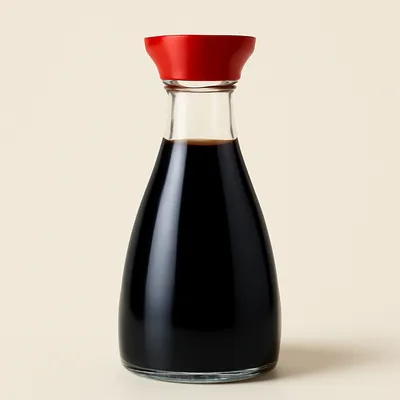
Prepare braised sauce: fry minced pork in oil until golden; add diced tomatoes and garlic; cook until tomatoes collapse; season with soy sauce, Shanxi vinegar, sugar, and salt; simmer 8 minutes into a glossy sauce.
- 43 min
Bring a large pot of lightly salted water to a vigorous boil.
- 55 min
Position the perforated pressing board (抿床) firmly over the rim of the pot. Working in batches, place a fistful of dough over the holes and press firmly with your palm or a flat scraper, so short noodle strands fall directly into the boiling water.
Watch outPress with steady palm weight so short strands drop straight into the boil — hesitate and they clump into one lump on the board.
- 63 min
Cook for 2–3 minutes until the noodle pieces float and are cooked through with no raw-dough center; scoop into individual bowls.
Watch outPull them the moment they float and the center has no raw-dough chalkiness — grain flours turn gummy if you overcook.
- 72 min
Ladle hot braised sauce generously over the noodles; serve with Shanxi aged vinegar and garlic paste at the table for individual seasoning.
Archive tool suggestions — not reviewed
These legacy suggestions have not been evidence-reviewed and are not presented as required tools.



