
A Jeju seaweed soup made with fresh sea-urchin roe (seongge) rather than the beef used on the mainland. Soaked wakame (miyeok) is briefly toasted in sesame oil, simmered in water to a clear, jade-green broth, and finished with raw urchin roe stirred in at the end and seasoned only with garlic and salt. The roe comes mostly from the purple sea urchin (boraseongge), gathered by Jeju's haenyeo women divers. The result is a light, briny soup, deep amber-gold from the roe, that is eaten as everyday food and served to guests at celebrations.

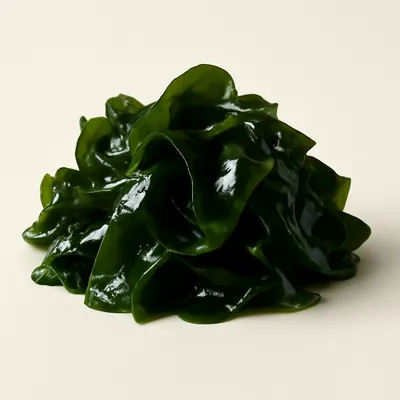



On Jeju, where beef was historically scarce, miyeokguk is made with the sea rather than with meat, and sea-urchin roe is the prized version. Sea-urchin shells turn up in the Seogwipo shell-middens, evidence that the roe has been eaten on the island since prehistoric foraging. The roe is harvested by the haenyeo, Jeju's breath-hold women divers, who free-dive the rocky shallows for the purple urchin; in Jeju dialect the urchin is gusal, so the soup is also called gusalguk. It is woven into the island's social customs — served to guests at weddings and at funerary rites across the Seogwipo area, where the host's regard for a guest was judged by how much roe went into the bowl. Seaweed soup itself carries a long Korean association with new mothers and birthdays, recorded as early as the 8th-century Tang encyclopedia Chuxueji, which notes that Koreans fed miyeok to women after childbirth.
The broth is thin and clear, faintly slick from the sesame oil, and tastes first of clean sea brine before a slow swell of umami arrives. The wakame is soft and silky, with a gentle ocean snap. The urchin roe, stirred in off the heat, half-dissolves into the soup and half stays in tender custardy lobes that melt on the tongue, sweet and rich against the salt. There is no meat heaviness and no fishiness — just clean, oceanic depth. If the roe is boiled hard it turns grainy and bitter and the soup muddies; it should go in last and barely cook.
Sea-urchin roe is unusually rich in free amino acids: glutamate gives it umami, glycine and alanine give it sweetness, and methionine lends its distinctive marine note, while its own inosinate amplifies the glutamate through umami synergy — which is why a soup of little more than seaweed and roe tastes so deep without stock, soy sauce, or meat. The roe is added off the heat and barely warmed because its proteins set and turn grainy and bitter if boiled, and overheating drives off the volatile compounds behind its delicate aroma. Toasting the wakame in sesame oil first hydrates and loosens the seaweed and coats it in fat, which carries fat-soluble flavor and keeps the strands from turning slimy. On Jeju the female urchin's darker roe, faintly bitter, is preferred for this soup, while the paler male roe is kept for porridge and side dishes.
Variations
The same roe goes into seongge-juk, a sea-urchin rice porridge, and seongge-bibimbap; the male urchin's milder roe is favored for these. Plain miyeokguk on the Korean mainland is most often built on beef brisket, while coastal cooks use mussels, clams, or dried pollock. Other Jeju seaweed soups follow the island's seafood logic — okdom-miyeokguk made with Jeju's tilefish, and seaweed soups with abalone, oyster, or top shell — all in place of the mainland's beef.
On the Palate
Where Seongge-miyeokguk sits in the Korean flavor cloud
Ingredients
Serves 4How it's made
7 steps · 15 min active + 20 min waiting
- 120 min
Soak the dried wakame in cold water for about 20 minutes until fully expanded, then drain and cut into bite-size lengths.
- 24 min
If using whole urchin, gently scoop the roe lobes free and rinse very briefly in lightly salted water, picking out any membrane or grit; keep the lobes intact.
- 33 min
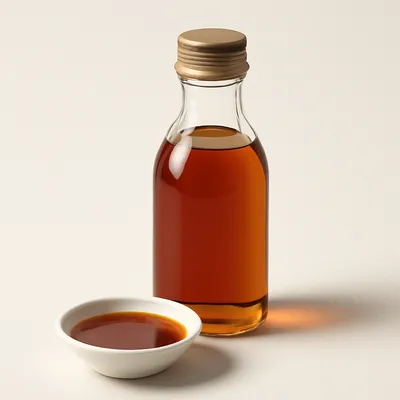
Heat sesame oil in a pot and toast the soaked wakame over medium heat for 2 to 3 minutes until glossy and fragrant.
- 410 min
Pour in water, bring to a boil, then lower to a simmer and cook the seaweed for about 10 minutes until silky and the broth turns jade-green.
Watch outSimmer the toasted wakame about ten minutes until silky and the broth turns jade-green — that's the seaweed giving its flavour to the water.
- 51 min
Stir in the minced garlic and season the broth with salt to a clean, briny balance.
- 61 min
Turn off the heat, then gently stir in most of the urchin roe and let it warm through in the residual heat without boiling.
Watch outStir in the roe off the heat and only warm it through — boil it and the roe sets grainy and turns bitter, and its aroma cooks away.
- 71 min
Ladle into bowls and top each with the reserved raw roe; serve hot.
Archive tool suggestions — not reviewed
These legacy suggestions have not been evidence-reviewed and are not presented as required tools.


