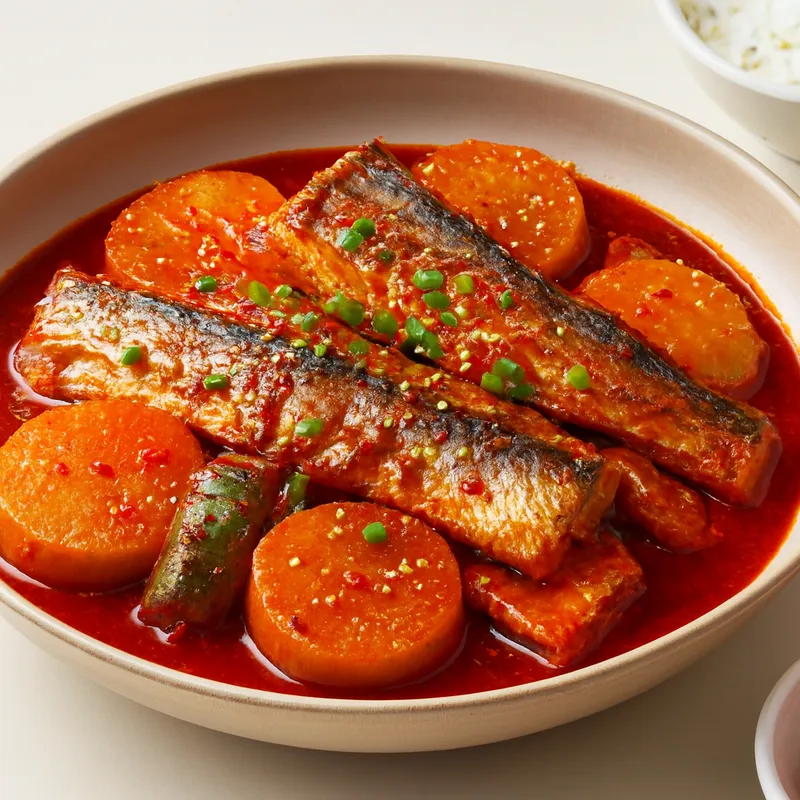
A Jeju noodle dish of medium-thick wheat noodles in a milky pork broth, topped with sliced boiled pork belly, scallion, and toasted sesame. The broth is built by boiling pork, then prolonging the simmer on the bones until it turns cloudy and rich. It is Jeju's most iconic noodle, sold along Jeju City's 'noodle street' (Guksu-geori), and is eaten as a one-bowl meal seasoned at the table with gochugaru, chopped scallion, and a spoon of the seasoning paste called dadaegi.




Gogi-guksu is a 20th-century Jeju dish, and its exact chronology is unrecorded. Wheat noodles were not widely eaten on Jeju before the 1910–1945 colonial period; the American wheat-flour aid that ran into the 1960s and the South Korean government's mixed-grain (honbunsik) campaign through the mid-1970s made dried wheat noodles common on the island. The dish became fixed in local custom after the 1973 Family Ritual Code (Garye-junchik), which urged serving noodles instead of rice at weddings and funerals: Jeju households already slaughtered a pig for such events and served its meat and broth, so cooks ladled the pork broth over boiled noodles. According to the Encyclopedia of Korean Culture, on Jeju the word for 'meat' by default means pork, not beef. The dish gained nationwide fame from the late 1990s, with demand rising during the 1997 Asian financial crisis, after which more noodle shops opened on Jeju City's noodle street.
The broth is opaque and milky, savory and faintly sweet from long-rendered pork, with a clean finish rather than a greasy one. Noodles are medium-thick and slippery, with a soft chew that holds. The boiled pork belly is tender and gently fatty, sliced thin so it warms through in the hot broth. Scallion and sesame lift it; a stir of dadaegi paste and gochugaru turns the bowl warm and red. Served piping hot. If the broth tastes thin and grey rather than white and round, the bones were not simmered long enough.
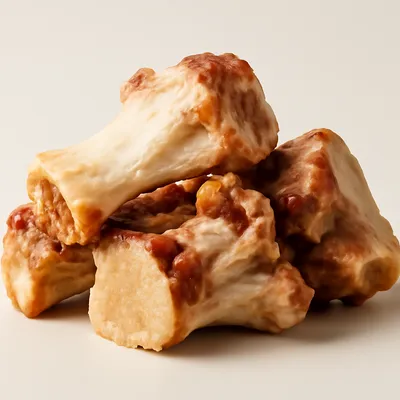
The milky broth is an emulsion: a hard, rolling boil of pork bones (rather than a bare simmer) breaks rendered fat into tiny droplets and drives collagen from the bone and skin into gelatin, which keeps the fat suspended and gives the soup its white color and body — the same physics as seolleongtang and Japanese tonkotsu. Boiling the meat first builds the savory base; continuing on the bones for hours extracts the gelatin. Blanching the bones and skimming the scum first keeps the broth clean rather than muddy. The pork belly is removed once just tender and rested before slicing, so the slices stay intact instead of shredding.
Variations
The Jeju standard tops the bowl with sliced boiled pork; some shops add a few cuts of pig-intestine sausage. Bibim-guksu is the spicy sauced (no-broth) cousin tossed in gochujang. Jeju also serves the same pork broth as gukbap over rice, and as momguk with gulfweed. Off-island shops sometimes lean on a lighter anchovy-pork blend, but the Jeju version is defined by the long-rendered all-pork broth.
On the Palate
Where Gogi-guksu sits in the Korean flavor cloud
Ingredients
Serves 4


How it's made
8 steps · 30 min
- 15 min
Blanch the pork bones in boiling water for 5 minutes, drain, and rinse off the dark scum.
Watch outBlanch the bones 5 minutes and rinse off the dark scum before the real boil — this cleans out the blood so the finished broth turns milky white, not muddy.
- 2180 min
Cover the bones with fresh water and boil hard for at least 3 hours, skimming, until the broth turns milky white.
Watch outBoil the bones hard, not at a gentle simmer, for at least 3 hours until the broth turns milky white — the rolling boil is what breaks the fat into droplets and emulsifies the soup white.
- 340 min
Add the pork belly and boil until just tender, about 40 minutes; lift out, rest, and slice thinly.
Watch outLift the pork belly out the moment it's just tender and rest before slicing — leave it boiling and it turns dry and tough.
- 45 min
Season the broth with sea salt and a little garlic; keep it at a rolling simmer.
- 55 min
Make the dadaegi seasoning by mixing gochugaru, minced garlic, sesame oil, and a ladle of hot broth.
- 68 min
Boil the wheat noodles until just tender, drain, and rinse briefly, then divide into bowls.
- 72 min
Ladle the hot milky broth over the noodles and top with sliced pork.
- 82 min
Finish with chopped scallion and toasted sesame; serve the dadaegi alongside to stir in to taste.
Archive tool suggestions — not reviewed
These legacy suggestions have not been evidence-reviewed and are not presented as required tools.