Taiji taro paste is a classic sweet of Fuzhou cuisine, built on the local betel-nut taro steamed soft, mashed fine, and folded with sugar and rendered lard until glossy and silky. It is plated in a yin-yang figure, the pale taro paste set against a darker half of sweet red-bean paste, and finished with a thin film of hot lard poured over the top. That film of fat seals in the heat so no steam rises: the dish looks placid and cool, yet stays scalding underneath, and an unwary first spoonful burns the mouth. The taste is warm, dense, and gently sweet, with the round nuttiness of taro carried by lard.
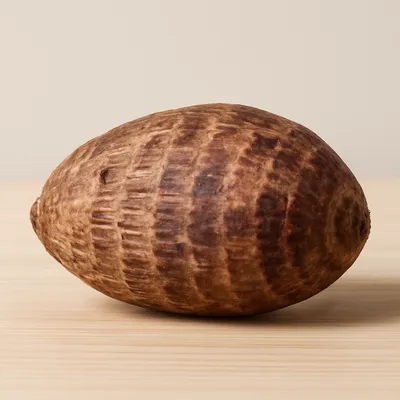
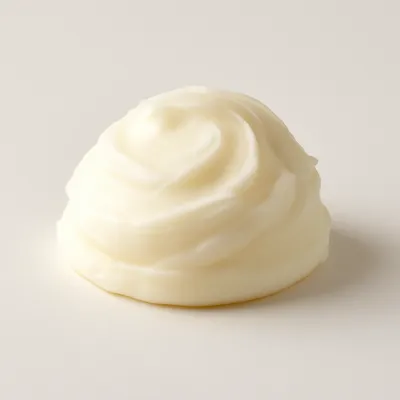


Taro paste is an old sweet of Fuzhou, and the Taiji rendering is among the most famous dishes of Fujian cuisine. The classic version leans on the prized betel-nut taro of the Fuding and Beiling hills, prized for its dense, fragrant, faintly purple-veined flesh. The dish is bound to a well-known folk tale rather than to firm record: it is said that in 1839, when Lin Zexu was sent to Guangzhou as imperial commissioner to suppress the opium trade, foreign consuls served him a cold Western banquet of ice cream to make him look foolish; in reply he set out this taro paste, which showed no steam and looked cool, and the consuls scalded their mouths on the first spoonful. The story is widely retold but is legend, not verified history; what is documented is the dish's long standing as a banquet sweet of the Fuzhou table.
It arrives looking like a cool, still cake — no steam, no shimmer — which is exactly the trap. The first spoonful is dangerously hot, so it is eaten slowly, in small scoops from the edge. Once it cools to the tongue, the texture is satin-smooth and dense, sweet but not cloying, with the warm chestnut-like nuttiness of taro and a clean richness from the lard. The red-bean half adds a softer, earthier sweetness beside the taro.
The signature trick is pure physics. Evaporation happens only at a liquid surface, and the visible white plume we read as steam is water vapour escaping and re-condensing in cooler air. Lard is immiscible with water and lighter than it, so a poured layer floats and forms an unbroken film over the hot paste; that film blocks water molecules from leaving the surface, so almost no vapour escapes and there is no steam to see — the dish reads as cool. The same sealed film suppresses evaporative heat loss, so the paste underneath stays scalding far longer than a bare surface would. Disturb the film with a spoon and trapped high-energy water molecules break free at once, and steam suddenly rises. The body of the dish is built by steaming the taro until fully soft, then mashing and working it hot with sugar and lard: the fat coats the starch granules and fills the paste, giving the silky, glossy, non-grainy body.
Variations
The two halves are most often taro paste against red-bean paste, but a golden pumpkin or sweet-potato paste is also used for the dark half, and some cooks set the yin-yang in a single taro field marked only by a contrasting swirl. The surface is dressed with red dates, candied winter melon, cooked lotus seeds, hawthorn, or sesame, arranged to read as the two dots of the Taiji. Butter or a neutral oil can stand in for lard in a meat-free or lighter version, though the classic flavour and the heat-trapping seal both lean on lard. Home cooks often steam the assembled paste a second time to set it before the final lard is poured.
On the Palate
Where Taiji Taro Paste sits in the Chinese flavor cloud
Ingredients
Serves 6
How it's made
8 steps · 25 min
- 142 min
Peel the betel-nut taro and cut into even chunks; steam over high heat about 40 minutes until completely soft and a chopstick passes through with no resistance.
Watch outSteam the taro until a chopstick slides through with no resistance and there's no hard core — under-steamed taro won't mash smooth and stays gritty.
- 28 min
While still hot, mash the taro thoroughly into a fine, lump-free paste; pressing through a sieve gives the smoothest body.
Watch outMash it while still piping hot into a lump-free paste — pushed through a sieve it comes out silkiest; let it cool and it won't smooth out.
- 38 min
Warm a wide pan over low heat, add a generous spoon of rendered lard and the sugar, and fold the taro paste in, stir-working it until glossy, smooth, and well combined.
Watch outFold the paste with lard and sugar over low heat until it turns glossy and smooth — that sheen means the fat has worked all the way through.
- 46 min
Spoon the taro paste into one half of a serving bowl; spoon sweet red-bean paste into the other half, smoothing the dividing line into the curved yin-yang shape.
- 53 min
Set one small dot of red-bean paste on the taro half and one dot of taro (or a candied garnish) on the bean half to complete the Taiji eyes.
- 64 min
Decorate the surface with red dates, candied winter melon, cooked lotus seeds, or hawthorn as desired.
- 712 min
Return the assembled bowl to the steamer for about 10 minutes to heat it through thoroughly and set the pattern.
- 83 min
Heat fresh lard until hot and pour a thin, even film over the entire surface to seal in the heat, then serve at once — and warn guests it is scalding.
Watch outPour a thin, even film of hot lard over the surface to seal in the heat — it hides the steam so the dish reads cool, but it's scalding, so warn your guests.
Archive tool suggestions — not reviewed
These legacy suggestions have not been evidence-reviewed and are not presented as required tools.


