
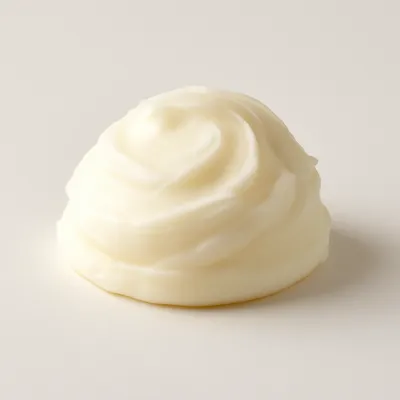
A Fuzhou banquet dessert. Floury taro, ideally Fujian's Fuding betel-nut taro (binglang yu), is steamed soft, riced and beaten smooth with lard and sugar into a glossy lavender-grey paste, then crowned with eight 'treasures': candied winter melon, lotus seeds, red dates, melon seeds, raisins, cherries and the like. A final film of rendered lard is poured over the top, sealing the surface so no steam escapes. The dish reaches the table looking cool and inert yet is fiercely hot underneath, the classic Fujian dessert that 'looks cold but scalds the mouth.' It is the traditional closing course of a Fuzhou banquet.
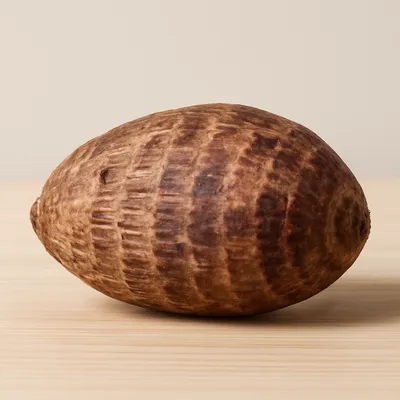


The dish belongs to the Fuzhou banquet tradition of eastern Fujian, where taro paste (yuni) has long been the customary final course; its exact inventor and date are unrecorded. A widely repeated popular story credits the imperial commissioner Lin Zexu, the Fuzhou native sent to Guangzhou to suppress the opium trade in the late 1830s: served chilled Western desserts by foreign consuls who hoped to embarrass him, he is said to have answered at a return banquet with a dish that looked cold but scalded the unsuspecting diner. The tale circulates in many versions with inconsistent dates and is not attested in contemporary records, so it is best regarded as folklore rather than documented history. What is documented is the local pedigree of the ingredient: Fuding betel-nut taro, prized for being large, loose-grained and fragrant, is the standard taro of Fujian taro paste, of which the decorated 'eight-treasure' and 'taiji' forms are the most esteemed.
The first surprise is heat: the surface shows no steam and the paste looks like a cool, dull-purple pudding, yet a spoonful is scalding enough to catch a careless eater off guard. The texture is dense and satiny, almost pourable-thick, the riced taro carrying so much lard that it slips rather than sticks on the tongue, sweet and faintly nutty. Against that smooth base the eight treasures give punctuation, the soft chew of lotus seed and red date, the crunch of melon seeds, the candied snap of winter melon. A good version stays glossy and loose to the last spoonful; let it stand too long, or skimp on the lard, and the paste stiffens, dulls and turns gummy as it cools.
Two things make the dish work, both rooted in taro starch and fat. Fuding betel-nut taro runs about 25 to 26 percent starch with relatively thick cell walls, so it cooks down floury rather than waxy and, once steamed soft (at least about 35 minutes, or it stays astringent from its higher tannin), rices into a fine, dry crumb that beats with sugar and lard into a smooth, glossy paste; the fat coats the gelatinised starch granules, lubricating them so the mash reads silky instead of pasty and stays loose as it cools. The trademark hidden heat comes from the final layer of rendered lard poured over the top: fat is a poor conductor and, as an unbroken film, it caps the surface, blocking evaporation so almost no steam escapes and little heat is lost. The paste beneath therefore looks inert while holding near-serving temperature, which is why an unwary first bite scalds.
Variations
The two esteemed forms are the eight-treasure version, topped with assorted candied fruit, lotus seed, red dates, melon seeds and the like, and the taiji (yin-yang) version, in which the taro paste is paired with a sweet red-bean paste and patterned into the taiji diagram, each lobe finished with a cherry. Household and restaurant recipes vary the enrichment, some folding in egg, some adding ground sesame, peanut or osmanthus for fragrance; modern lighter takes cut the lard or substitute butter or vegetable oil, at the cost of the heat-sealing effect. Plain undecorated taro paste (yuni) is the everyday base from which both banquet forms derive.
On the Palate
Where Eight-Treasure Taro Paste sits in the Chinese flavor cloud
Ingredients
Serves 6

How it's made
7 steps · 20 min
- 140 min
Peel about 800 g Fuding betel-nut taro (or other floury taro), cut into thick slices, and steam over high heat until completely soft, at least 35 minutes; undercooked taro tastes astringent and will not rice smoothly.
Watch outSteam the taro all the way soft, at least 35 minutes — undercooked taro tastes astringent and won't rice into a smooth crumb.
- 25 min
While still hot, press the taro through a ricer or mash and sieve it into a fine, lump-free crumb.
- 312 min
Render and warm the lard. Heat a wok over medium, add most of the lard and the sugar, then add the taro and stir-fry, breaking and folding continuously until the paste turns glossy, smooth and uniform.
Watch outStir-fry the mash with lard over the heat until it turns glossy and slippery — the fat coating the starch is what makes it read silky, not pasty.
- 44 min
Adjust with a little hot water or extra lard if it is too stiff; the paste should be thick but slippery, not dry. Transfer to a deep serving bowl and smooth the top.
- 55 min
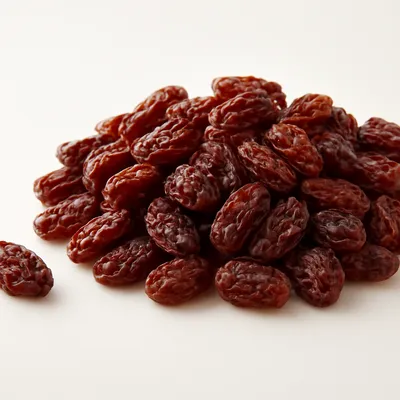
Arrange the eight treasures over the surface: candied winter melon, lotus seeds, red dates, melon seeds, raisins and cherries, set in a neat pattern.
- 62 min
Pour a thin, even layer of hot rendered lard over the whole surface to seal it; this film traps the heat so no steam shows.
Watch outPour the hot lard in a thin even film over the whole surface — that seal traps the heat so no steam shows and the paste stays scalding underneath.
- 72 min
Keep hot until service and bring it straight to the table; warn diners that, despite its cool look, the paste is scalding underneath.
Archive tool suggestions — not reviewed
These legacy suggestions have not been evidence-reviewed and are not presented as required tools.

