A celebrated Teochew banquet finale: steamed taro corm mashed to a silken paste with generous rendered lard and sugar, topped with red dates and melon seeds. The lard seals heat so effectively that the paste looks placid on the surface but scalds inside—an old Teochew hosts' test for unwary guests.
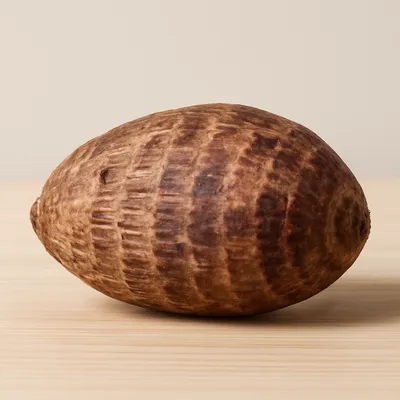
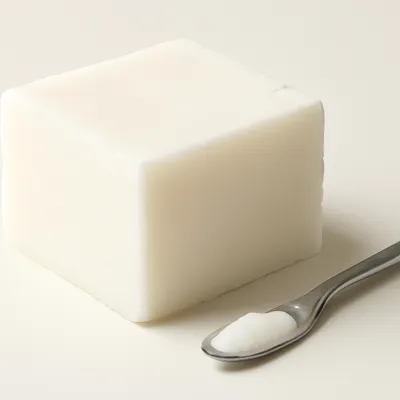


Taro paste is shared between Fujian's coastal cuisine and Chaozhou cooking, with Wikipedia recording that both eastern coastal Fujian and Guangdong's Chaozhou region maintain the tradition of making taro paste. Fuzhou serves it as the formal banquet finale, while the Teochew version is distinguished by a heavier hand with lard and vigorous stirring to achieve a glassy finish. The Teochew signature of serving it with a thin oil cap that traps heat—creating the classic cool-surface, scalding-interior effect—has become a point of culinary pride and a traditional test of diners' experience.
Cool and smooth on the lips, then scalding inside. The paste is dense and silken, lard-rich without being greasy, with restrained sweetness and a faint floral note from osmanthus. Red dates offer chewy, sweet punctuation in every few spoonfuls.
Taro corms contain 70–80% starch (amylose and amylopectin) plus calcium oxalate crystals that cause the characteristic itch when handling raw taro; steaming fully gelatinizes the starch and dissolves the crystals, rendering the corm safe and soft. Lard stirred in while the paste is still hot coats and separates individual gelatinized starch granules—analogous to how butter produces a smooth emulsion in French sauces—yielding the characteristic glassy, non-gluey texture. Lard's low thermal conductivity then traps heat inside the dense paste, producing the classic cool-surface, scalding-interior paradox.
Variations
Fuzhou versions incorporate grated ginger to counter taro's earthiness. Some families add coconut milk for extra fragrance. A two-tone festive presentation pairs taro paste with red bean paste side by side in the bowl. Modern tea-shop versions chill the paste and top it with crushed ice or tapioca pearls.
On the Palate
Where Teochew Lard-Stirred Taro Paste sits in the Chinese flavor cloud
Ingredients
Serves 4How it's made
6 steps · 20 min
- 130 min
Peel and cube the taro corm. Place in a steamer basket over rapidly boiling water and steam for 30 minutes until completely soft throughout.
Watch outSteam the taro until it's soft clean through — any firm center means ungelatinized starch that turns the paste gritty and gluey.
- 210 min
While still hot, press taro through a fine-mesh sieve or mash vigorously until completely smooth with no lumps.
- 310 min
Heat lard in a wok over the lowest heat until melted and fluid. Add the taro paste and begin stirring continuously with a wide spatula.
- 45 min
Add sugar in three additions, stirring after each until fully incorporated. Continue working the paste until it becomes glossy and pulls cleanly from the wok sides.
Watch outKeep stirring until the paste turns glossy and pulls cleanly off the wok sides — that clean release is when the lard has fully worked in.
- 52 min
Stir in dried osmanthus and a pinch of salt. Remove from heat. Drizzle a thin layer of lard over the surface to seal in heat.
Watch outFilm the surface with a thin layer of lard to seal — that skin traps the heat so the cool-looking paste stays scalding underneath.
- 63 min
Spoon into individual serving bowls. Top with pitted red dates, melon seeds, and optional candied cherries. Serve immediately.
Archive tool suggestions — not reviewed
These legacy suggestions have not been evidence-reviewed and are not presented as required tools.


