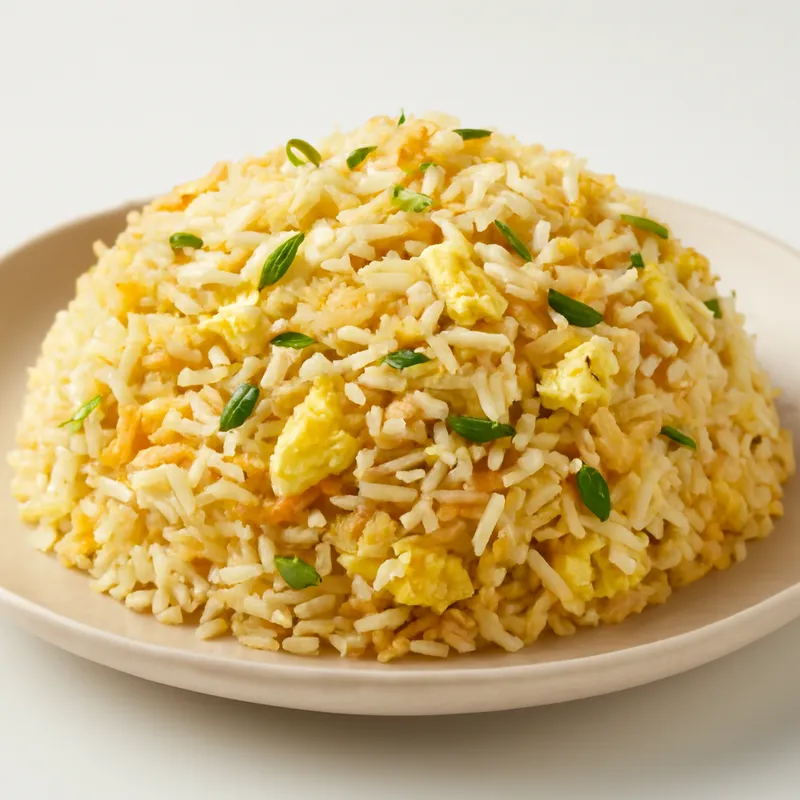
A festive Fuzhou banquet rice in which a whole roe-laden red mud crab crowns a bed of steamed glutinous rice studded with eight savory treasures. The crab — known in Fuzhou as 红鲟, the roe-rich female of the mud crab — is split and laid over rice tossed with diced ham, duck, pork tripe, duck gizzard, dried shrimp, bamboo shoot, peanut, and shiitake, then steamed so its orange roe and briny juices render down into every grain. The dish reads as one of the grandest courses on a Fuzhou wedding table or New Year's spread, savory and softly chewy rather than the sweet eight-treasure rice of the south. A ladle of seasoned superior stock spooned over at the end pulls the flavors together. It is plenty rather than restraint — a whole crab over treasure-laden rice.



The dish belongs to the Fuzhou branch of Min cuisine and is documented as a traditional banquet course of Changle, the coastal county at the mouth of the Min River where the mud crab is prized; brackish river-meets-sea water there is said to make the crab especially sweet. Red mud crab is so central to Fuzhou feasting that the local saying runs 'one plate of crab outranks the whole table,' and the crab-and-rice course appears on wedding banquets, birthday feasts, and the New Year's Eve table alike. The making of Langqi red-mud-crab eight-treasure rice was listed among the fifth batch of intangible-cultural-heritage items of Mawei District. The name 八宝 ('eight treasures') points to the eight savory garnishes folded through the rice rather than to any fixed sacred set; cooks vary them, but ham, duck, dried seafood, and mushroom recur. One Min chef links the crab to wedding tables through a homophone — crab (蟹) sounding like 'thanks' (谢) — though that reading is folk and unverified.
Lift the crab and the rice underneath has gone glossy and orange-flecked where the roe melted into it; each grain stays separate and elastic, not a sticky mass. The roe itself is dense and faintly sweet, almost custard-rich; the crab meat pulls out in clean briny-sweet threads. Through the rice you keep meeting the treasures — a salty bite of ham, a chew of duck gizzard, the snap of bamboo shoot, the toasty peanut, the woodsy shiitake — so no two spoonfuls taste quite the same. The poured stock keeps it moist and deeply savory. A weak version is merely sticky rice with crab on top; a good one tastes crab all the way down.
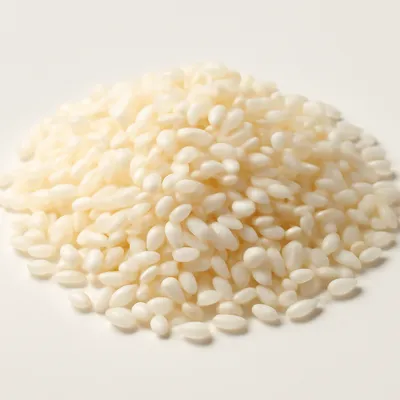
Glutinous rice is the foundation: it is nearly all amylopectin (often under one percent amylose), so it gelatinizes at a low temperature — roughly 57–67°C — and steams up soft, elastic, and slow to stale, holding its shape rather than collapsing into porridge. Soaked first, then steamed (not boiled), the grains swell while staying distinct and stay open to absorb liquid. Laying the split crab on top is deliberate: as it steams, the fat-rich roe and briny shell juices drip down and soak the rice from above. The eight treasures are an umami battery — glutamate from ham and dried scallop-style seafood, inosinate from the dried shrimp and the crab itself, guanylate from dried shiitake — and glutamate eaten with inosinate or guanylate tastes many times more savory than either alone, a synergy that seasons every grain. The final pour of seasoned superior stock both moistens the rice and layers more glutamate over the top.
Variations
The eight treasures are not fixed: lotus seed, chestnut, dried scallop, salted egg yolk, or chicken often stand in for the duck, tripe, or peanut, and lush versions add more dried scallop for depth. Some kitchens steam the rice and crab over or wrapped in lotus leaf so its fragrance perfumes the grains; some line the bowl and invert it onto the plate. A leaner Fuzhou cousin steams the crab over glutinous rice with fewer garnishes, while a popular Taiwan version, 红蟳米糕, builds the same idea on oil-rice (油饭) seasoned with fried shallot. The crab must be a roe-laden female; a lean 'vegetable crab' (菜鲟) with little roe is considered the wrong crab for the dish.
On the Palate
Where Eight-Treasure Mud-Crab Glutinous Rice sits in the Chinese flavor cloud
Ingredients
Serves 4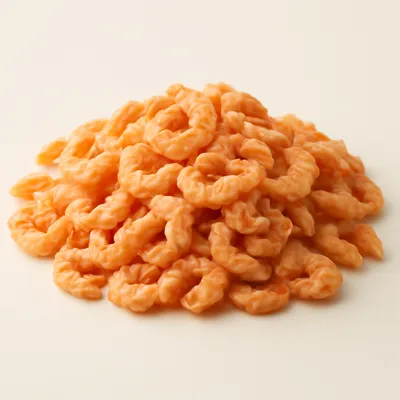



How it's made
9 steps · 2 hours 30 min
- 1120 min
Rinse the glutinous rice and soak it in cold water for at least two hours, ideally longer, then drain it well so the grains are plump but not waterlogged.
Watch outSoak the glutinous rice at least two hours, then drain well — plump but not waterlogged, or the grains steam up gummy instead of distinct.
- 225 min
Steam the soaked rice over high heat until just cooked through but still firm, and set it aside.
Watch outSteam the rice only to just-cooked with a firm core — it finishes later under the crab, and over-steamed rice collapses into porridge.
- 320 min
Steam or par-cook the eight treasures — Chinese ham, duck, pork tripe, duck gizzard, dried shrimp, bamboo shoot, peanut, and softened shiitake — then dice them small and even.
- 48 min
Toss the diced treasures through the warm glutinous rice with a little lard, white soy sauce, pepper, and a splash of Shaoxing wine until evenly seasoned.
- 512 min
Scrub the live roe-laden mud crab, dispatch and clean it, lift off the top shell, and chop the body into pieces with the roe kept intact.
- 68 min
Pack the seasoned eight-treasure rice into a heatproof bowl, arrange the crab pieces and roe on top, and tuck in scallion whites and ginger slices.
- 720 min
Steam over high heat for about twenty minutes, until the crab is bright orange-red and its roe and juices have run down into the rice; discard the scallion and ginger.
Watch outSteam until the crab shell turns bright orange-red and its roe and juices have run down into the rice — that dripping is the whole point of laying it on top.
- 88 min
Meanwhile bring superior stock to a boil and season it with a little dried-scallop liquor, white soy sauce, Shaoxing wine, and pepper.
- 93 min
Ladle the seasoned stock evenly over the steamed crab and rice and serve at once, crab-side up.
Archive tool suggestions — not reviewed
These legacy suggestions have not been evidence-reviewed and are not presented as required tools.