The crab's own shell becomes vessel and visual centerpiece: beneath a snowdrift of steamed egg-white foam lie shimmering amber crab roe and meat, dotted with rosy Jinhua ham. A single bite collapses the cloud into silky richness, releasing the deep, briny sweetness of autumn hairy crab. Both De Yue Lou and Songhe Lou serve it as a signature Suzhou banquet piece.
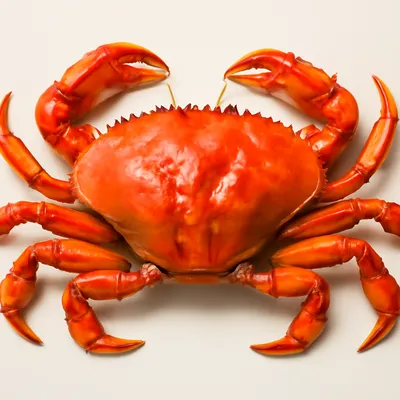


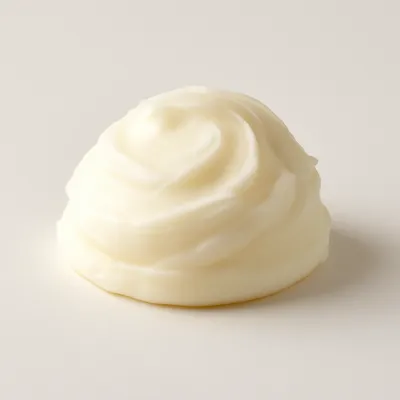
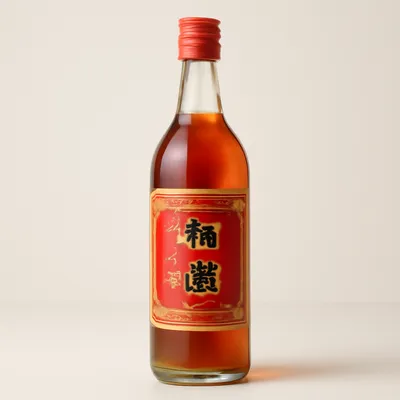
Snowflake Crab in Shell evolved from the older communal hibiscus-crab dish (芙蓉蟹), with Suzhou chefs adapting the format to individual-plated crab shells in keeping with the refined, visually precise aesthetic of Suzhou banquet cuisine. No historical source records an exact date of formalization; restaurant sources describe the dish as a creative development grounded in tradition rather than an item with a fixed invention point. Both De Yue Lou and Songhe Lou count it among their signature repertoire, and it remains a prestige item on formal Suzhou banquet menus today.
The snowy foam melts in an instant; beneath it, warm amber crab roe surges with briny autumn sweetness—Suzhou's most theatrical starter bite.
When egg whites are whipped, globulin and lysozyme unfold under mechanical shear and form a stabilizing protein film around each trapped air bubble. Steam heat at approximately 70 °C then denatures ovalbumin, locking the foam into a snowy, tender solid. Crab roe's free amino acids—glycine and alanine—combine with inosinate (IMP) in the roe to amplify umami synergistically; lard emulsifies crab fat for a rounded, cohesive richness on the palate.
Variations
In peak autumn season, freshly picked Yangcheng Lake hairy crab roe replaces farmed crab for a more intense flavor. Some versions substitute the whipped foam with steamed egg custard for a denser texture. A handful of modern restaurants plate the filling in small scallop shells or ceramic spoons for easier service at large banquets.
On the Palate
Where Snowflake Crab in Shell sits in the Chinese flavor cloud
Ingredients
Serves 4


How it's made
7 steps · 50 min active + 10 min waiting
- 15 min
Rinse 12 crab shells thoroughly and blanch in boiling water for 2 minutes; drain and pat dry, arranging shell-side up on a tray.
- 215 min
Steam the whole crabs over high heat for 12 minutes, then carefully extract all crab roe (蟹黄) and crab meat (蟹白), keeping them separate.
- 35 min
Heat lard in a wok over medium flame; fry minced ginger and scallion whites for 30 seconds, then add roe and meat with Shaoxing rice wine, salt, sugar, and a splash of chicken broth; stir-fry gently for 3 minutes, thicken lightly with cornstarch, and remove from heat.
- 43 min
Spoon the warm crab filling evenly into each shell, pressing it snugly without overfilling.
- 55 min
Whip 7 egg whites with a pinch of salt to stiff, glossy peaks—the foam should hold its shape when the bowl is inverted.
Watch outWhip the whites to stiff, glossy peaks that hold when the bowl is inverted — under-whipped foam weeps and won't set into the snowdrift.
- 66 min
Mound whipped egg-white foam over each filled shell to resemble a snowdrift; steam over gentle heat for 4–5 minutes until the foam just sets and turns opaque.
Watch outSteam the foam gently just until it sets and turns opaque, four to five minutes — high heat blows it into coarse holes.
- 72 min
Heat chicken broth to a boil, lightly thicken with cornstarch, stir in a little lard, and spoon the translucent glaze gently over the foam; dot with minced Jinhua ham and serve immediately.
Archive tool suggestions — not reviewed
These legacy suggestions have not been evidence-reviewed and are not presented as required tools.


