
Glutinous rice molded around a red-bean-paste core, topped with eight kinds of dried fruit and nuts in a starburst, steamed and inverted onto the plate.


Eight Treasures Rice is most strongly associated with Jiangnan (Shanghai and the lower Yangtze), where it is the canonical sweet course at wedding and Lunar New Year tables; Shanghai is widely regarded as making the most refined version. It is served across China, including in Shandong banquet kitchens. The number eight (bā 八) in Chinese is homophonous with prosperity (fā 发), and the eight named treasures stand in for wishes for the household. The half-dome shape with starburst top is the diagnostic Shandong form — Jiangnan versions tend to be flatter and use more candied fruit, less paste.
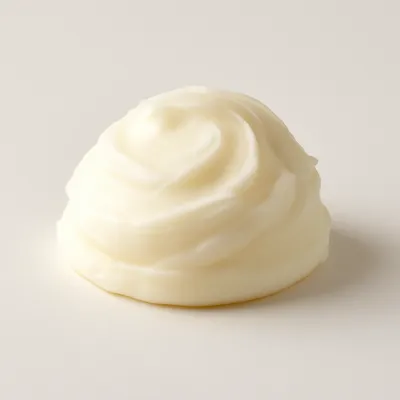
Shandong banquet sweet — eight (bā) homophonous with prosperity (fā). The lard isn't optional: pork fat crystallizes on cooling so the inverted dome holds shape, butter or neutral oil collapses it.
The drama is the inversion — the bowl lifts and a glossy half-dome reveals its starburst of jeweled fruit on top. A spoon goes through three layers: candied fruit in glassy syrup, soft sticky rice fragrant with lard, then a hidden seam of sweet bean paste at the core. Warm, lightly sweet, never cloying. The osmanthus syrup over the top is what carries this from dessert into banquet finale.
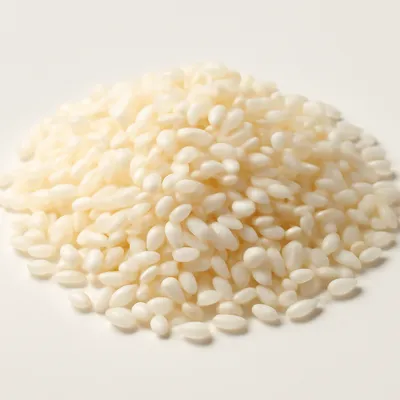
The dome's structure comes mainly from using short-grain (round) glutinous rice, which is stickier and binds into a cohesive mass; lard mixed into the hot rice coats each grain so the rice stays glossy and supple and doesn't dry out or clump on cooling. Substitute butter and you get richer flavor but a softer hold; substitute neutral oil and the dome slumps within a minute on the plate. The bowl's heavy lard coat also acts as a release agent — without it, the starburst tears on inversion.
Variations
Shandong half-dome with starburst of fruit on top is the diagnostic; Jiangnan versions run flatter with more candied fruit, less paste; Ningbo households use red bean paste, Suzhou uses lotus seed paste.
On the Palate
Where Eight Treasures Rice sits in the Chinese flavor cloud
Ingredients
Serves 6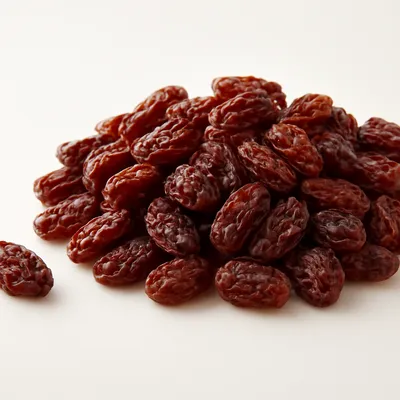


How it's made
5 steps · 30 min
- 15 min
Soak 300g glutinous rice in cold water 4 hours. Drain. Steam over high heat 25 minutes until the grains are translucent and tender but still discrete.
Watch outEnsure the water is boiling before steaming to prevent undercooked rice.
- 25 min
While hot, fold in 40g lard and 50g sugar — the lard glues the grains and makes the rice glossy. The sugar dissolves into the steam-warm rice without going gritty.
Watch outFold the lard in while the rice is steam-hot — on cooled rice it just sits greasy instead of coating each grain glossy.
- 38 min
Brush a 700ml round bowl heavily with lard. Arrange the eight treasures face-down on the bottom in a starburst: a red date in the center, then radiating spokes of lotus seed, candied winter melon, raisin, walnut, gingko nut, longan, candied cherry.
Watch outGrease the bowl heavily, right into the seams — a thin coat and the fruit starburst tears when you invert it.
- 45 min
Press a 1cm layer of rice over the fruit. Spoon 150g sweetened red bean paste into the middle, leaving a 1cm border. Cover with remaining rice and press flat.
Watch outEnsure the red bean paste is evenly distributed to avoid uneven cooking.
- 55 min
Steam over high heat 40 minutes. Let rest 5 minutes — the rice firms up and won't slump on inversion. Invert onto a plate. Pour over a hot syrup of 50ml water, 30g sugar, and a pinch of osmanthus.
Watch outRest it 5 minutes off the steam before inverting — flip it too soon and the dome slumps flat on the plate.


