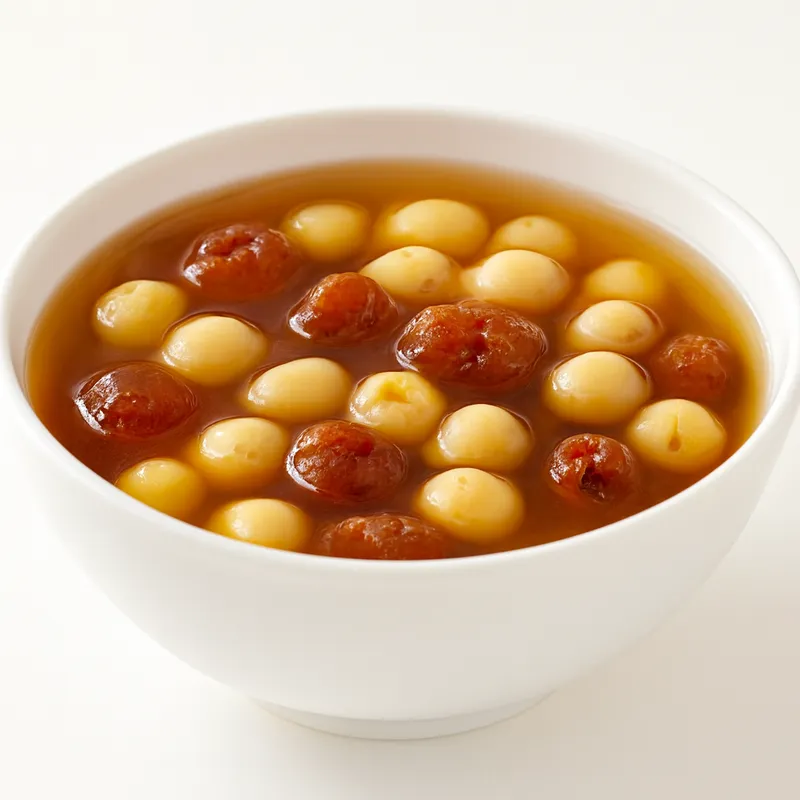
Sanhe Ni is a traditional Chengdu sweet snack built on three dry-toasted, stone-ground ingredients — glutinous rice, black sesame, and walnut — slow-fried in lard with sugar until they form a jet-black, glossy paste. The finished dish is silky-soft and yielding, fragrant with layered toasted-nut aroma, sweet but restrained. It is celebrated for a 'triple non-stick' quality: it does not cling to teeth, spoon, or bowl when properly made. Once a staple of Chengdu's seasonal sweet-food stalls — cold rice jelly in summer, Sanhe Ni in winter — it has grown quietly rarer as the city modernises, surviving today in a handful of old-style teahouses along Wenshufang and Jinli.



Sanhe Ni traces its recorded history to the early Republican era in Chengdu. The most widely cited account holds that around 1926, a Chengdu native named Huang Shushan and his partner Zhou Daxing began selling it together from a joint stall near the Jiuyanqiao bridge; Huang subsequently ran the business alone for over thirty years. The dish later became identified with the city's celebrated Guyuehu sweet shop, and Chengdu residents came to call it 'Guyuehu Sanhe Ni' by popular usage. In December 1990, the Xueyuan sweet shop's version was officially designated a 'Chengdu Famous Snack' by the Chengdu municipal government, entering the city's formal register of traditional culinary heritage.
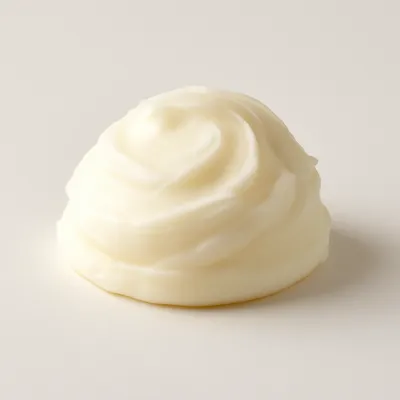
It arrives in a shallow bowl, jet-black and levelled smooth, breathing a faint toasted-nut warmth. The texture is yielding and soft — a paste that gives under the tongue without resistance, never sticky. Walnut and sesame fragrances come in successive waves; lard's quiet richness threads beneath the sweetness without announcing itself. The sugar is restrained enough to let the toasted notes stay clearly audible. Once cold, the fat solidifies and the paste stiffens, losing most of its appeal — eat it while it still breathes warmth.
The technique turns on thorough individual dry-toasting. Each ingredient must reach full Maillard development before grinding; the aromatic compounds formed during roasting are precisely what give Sanhe Ni its layered nuttiness rather than a flat sweet paste. After toasting, the ingredients are milled very fine — fineness is not cosmetic but determines mouthfeel, and coarse grinding produces a gritty result. Lard, chosen over plant oils for its higher melting point and fuller saturated-fat body, coats every starch particle as the mixture is stirred continuously over low heat. This even oil coating expels residual moisture and creates the 'triple non-stick' property: fat-wrapped starch has no hydrophilic surface left to grip a tooth or a bowl.
Variations
The core ingredient combination shifts slightly across shops: the most common formula pairs glutinous rice with black sesame and walnut, though some versions replace walnut with soybean, or add black beans and black-grain rice flour for deeper colour and aroma. Traditional recipes occasionally include dried tangerine peel and winter-melon strip for a subtle floral note. Contemporary Chengdu sweet shops sometimes enrich the blend with crushed peanuts, pine nuts, or cashews, but traditionalists insist on the three canonical ingredients that name the dish.
On the Palate
Where Sanhe Ni sits in the Chinese flavor cloud
Ingredients
Serves 4How it's made
7 steps · 40 min
- 11440 min
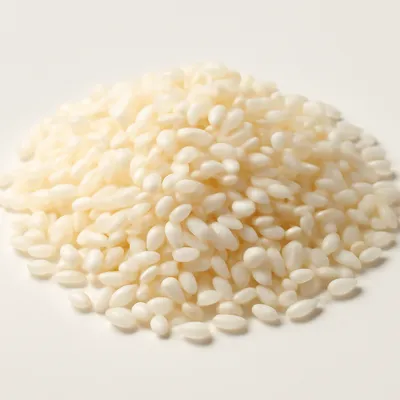
Soak glutinous rice in cold water for at least 24 hours; drain thoroughly and spread on a clean tray to air-dry until the surface is no longer wet.
- 215 min
In a dry wok over medium-low heat, toast the drained glutinous rice without oil, stirring constantly, until uniformly golden-brown and fragrant, about 10–12 minutes; transfer to a plate and cool. Repeat separately with black sesame (toast until seeds begin to pop and release fragrance, about 4 minutes) and walnut kernels (toast until lightly golden and aromatic, about 5 minutes). Keep each cool and separate.
Watch outToast each one just to fragrant golden — the sesame popping and the rice going even gold; let any of them scorch and the whole paste turns bitter.
- 310 min
Grind each toasted ingredient to a fine powder using a stone mill or blender; combine all three powders in a bowl and sift together until evenly blended. Lightly crush peanuts and reserve separately.
- 48 min
Add a small amount of water — just enough to moisten the combined powder — to a wok over low heat; tip in the powder and stir continuously with a spatula, breaking up any lumps, until the mixture forms a thick, smooth, lump-free paste.
- 55 min
Add lard one tablespoon at a time, stirring vigorously between additions until each addition is fully absorbed and the paste turns glossy and unctuous.
Watch outAdd lard a spoon at a time, working each in fully before the next — the paste should turn glossy and slick, not greasy or split.
- 65 min
Add sugar and continue to stir-fry over low heat for about 5 minutes, until the paste is fragrant, smooth, and pulls cleanly away from the wok walls without sticking.
Watch outIt's done the moment the paste pulls cleanly off the wok walls without sticking — that's the sign the oil and starch have fully bound.
- 71 min
Spoon into small bowls, smooth the surface, and serve immediately while warm.