
Aiwowo is a classic old-Beijing snack and one of the city's celebrated "thirteen famous snacks" (十三绝), made from steamed glutinous rice. Cooked sticky rice is pounded smooth, pressed flat, wrapped around a sweet filling, and rolled into a white ball about the size of a walnut; the outside is dusted in cooked rice flour so it stays a snowy, non-sticky white, and the top is dabbed with a dot of red hawthorn jelly. The fillings vary by shop and season — commonly minced walnut, sesame, melon seeds, sugar, and candied hawthorn or plum, sometimes sweet bean paste. It is eaten cold, soft and chewy, and is sold year-round in Beijing's Muslim-style snack shops.


Aiwowo belongs to the old snack repertoire of Beijing and is counted among the "thirteen famous old-Beijing snacks." Its lineage is noted in 《酌中志》, the late-Ming notebook by the palace eunuch Liu Ruoyu (刘若愚) compiled in the Chongzhen era, which records in paraphrase that glutinous rice folded around sesame as a cold cake, balled and filled, makes a wowo — the old 'buluojia' (不落夹). This ties the snack to a dumpling-like sweet eaten in earlier dynasties. The origin of the name 艾 is uncertain and several folk explanations circulate: one holds it was 御艾窝窝, a sweet favored by the Ming court that lost its honorific 御 when it spread to the public; another, undocumented, links it to a Uyghur consort of the Qianlong court. The exact inventor and date are unrecorded; what is documented is the 《酌中志》 reference and its place in the Muslim-style snack trade of the capital.
Each ball is snow-white and matte from its coat of cooked rice flour, soft enough to dent under a chopstick but not slumping. The skin is cool and tender-chewy, pulling slightly as you bite; inside, the sweet filling is sandy and fragrant — walnut and sesame oils, the grain of sugar, a sour-sweet lift from candied hawthorn. Done well, the rice skin is even and silky and the filling is dry and crumbly, never weeping syrup; done badly, the skin is gummy or cracked, or the rice was under-pounded and tastes grainy and raw rather than smoothly chewy.
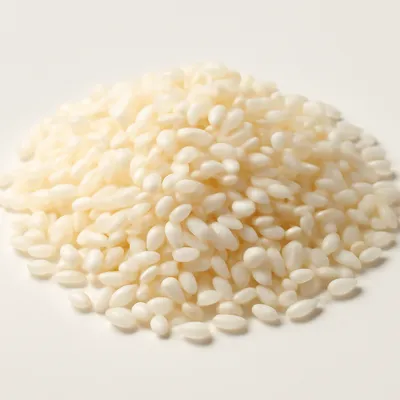
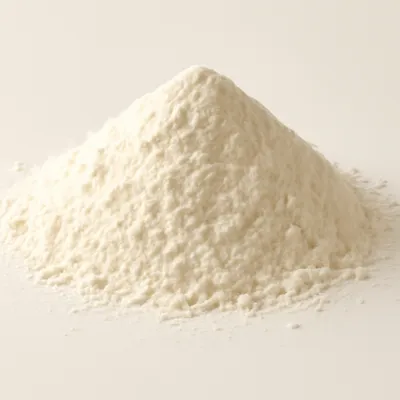
The chewy skin comes from glutinous rice, whose starch is almost entirely amylopectin — the highly branched starch that, once steamed and gelatinized, traps water and stays soft and elastic instead of setting hard the way the straight-chain amylose in ordinary rice does. The rice must be soaked, steamed through, and then pounded or mashed while hot so the swollen, sticky granules bind into one cohesive, stretchy mass; under-working leaves it grainy. The outer dusting is cooked (pre-gelatinized) rice flour, not raw flour: it absorbs surface moisture so the balls do not stick to each other or the hand, and because it is already cooked it tastes clean rather than chalky. Eating the snack cold matters — warm glutinous rice is loose and slack, while cooling firms the amylopectin network into the springy, sliceable chew the snack is known for, just short of the staling that would make it hard.
Variations
Fillings are the main axis of variation: classic mixes of walnut, sesame, melon seeds, and sugar; versions built on candied hawthorn (山楂) and candied plum or green plum (青梅); sweet red bean paste (豆沙); osmanthus-scented sugar; or a smooth yam (山药) paste. Some shops tint or scent the rice; some skip the hawthorn dot on top. It sits beside the other steamed glutinous-rice snacks of the Beijing canon — 驴打滚 (rolled in toasted soy flour) and 豌豆黄 — and the red-dotted white ball is a fixture of the city's "thirteen famous snacks" platter.
On the Palate
Where Aiwowo Glutinous Rice Balls sits in the Chinese flavor cloud
Ingredients
Serves 6

How it's made
7 steps · 35 min active + 35 min waiting
- 130 min
Soak glutinous rice for several hours, then steam it through until fully cooked and translucent, about 30 minutes.
Watch outSteam the rice until it turns from chalky-white to translucent all the way through — any opaque cores mean it isn't cooked and the mass won't pound smooth.
- 28 min
While still hot, pound or mash the cooked rice until it forms a smooth, cohesive, sticky mass with no whole grains left.
Watch outPound while it's still hot and keep going until you can't feel a single whole grain — cool it down and it stops binding into that stretchy mass.
- 36 min
Separately dry-toast or steam a little rice flour until cooked, then cool it; this is the non-stick coating.
Watch outThe dusting flour must be cooked first (dry-toasted just to a faint aroma, no color) — raw flour tastes pasty and won't stop the balls sticking.
- 48 min
Make the filling: combine minced walnut, toasted sesame, melon seeds, sugar, and chopped candied hawthorn or plum into a dry, crumbly paste.
- 56 min
Dust your hands and board with the cooked rice flour; pinch off a piece of rice dough, flatten it into a small round, and spoon the filling into the center.
- 66 min
Gather the edges over the filling and roll into a smooth ball, then coat all over in the cooked rice flour so it stays white and dry.
- 73 min
Arrange the balls on a plate and dab a small dot of red hawthorn jelly on top of each; serve cool.
Archive tool suggestions — not reviewed
These legacy suggestions have not been evidence-reviewed and are not presented as required tools.


