
A Shanxi street snack of buckwheat or wheat starch jelly, steamed and set in a bowl, then turned out and sliced or scraped into strips and dressed cold with aged Shanxi vinegar, mashed garlic and chili oil. A thin batter is whisked from soft to runny, steamed until it gels, then cooled until it firms into a springy, sliceable cake. The Liulin (Lüliang) style uses buckwheat and is eaten by scraping the bowl with a thin steel blade; the Pingyao style uses wheat and is often pan-fried after. Names vary by county — wantuo, wantuan, wantu, wanto.




Wantuo is a folk snack of central Shanxi and northern Shaanxi, recorded under a tangle of homophone characters — wantuo, wantuan, wantu, wanto. Three counties are most famous for it: Pingyao (Jinzhong) and the buckwheat versions of Liulin (Lüliang) and Baode (Xinzhou). Its true beginnings cannot be firmly dated and survive mainly through local legend. Liulin lore traces buckwheat wantuan to the Western Jin general Shi Le, said to have garrisoned near Liulin amid grain shortage, milled buckwheat into gruel that set into a block when cold, and had his soldiers cut it into strips — a tale passed down rather than documented. Pingyao tradition credits a Qing chef named Dong Xuan in the Guangxu era, and claims that when the Empress Dowager Cixi passed through Pingyao fleeing west in 1900 she praised it and granted a reward, after which its fame spread; this too is local legend. What is well attested is the living craft: Liulin and Baode keep the gray-brown buckwheat cake scraped from the bowl with a steel blade, while Pingyao makes a pale wheat cake eaten cold-dressed or pan-fried.
Cool and trembling out of the bowl, the cake holds its shape yet quivers when cut, smooth and slick on the tongue with a firm, springy chew. Buckwheat versions are gray-brown, faintly earthy and grainy; wheat versions are pale and cleaner-tasting. The cold dressing is the whole point: sour Shanxi aged vinegar, raw mashed garlic with its sharp pungency, and fragrant chili oil that locals say can never be left out. Each strip arrives soaked in sauce — sour, garlicky, spicy-warm all at once — slippery and bouncy between the teeth.
Wantuo is set starch. Buckwheat or wheat flour is whisked into a thin batter and steamed; the heat gelatinizes the starch — granules swell, absorb water and burst, and the freed starch chains thicken the slurry into a hot paste. The transformation happens on cooling. As the paste drops to room temperature the loose, swollen starch re-associates and partially recrystallizes — retrogradation, or staling — and the amylose's straight chains set first, knitting a firm, elastic, sliceable gel within hours; this short-term retrogradation is exactly why the cake turns from runny batter into a cake you can cut, and why it must cool fully before it is turned out. Buckwheat and wheat differ because buckwheat flour carries no gluten and more of its own pigments and bran, giving a softer, grainier, gray-brown gel, while wheat sets paler and a touch more cohesive. The cold dressing leans on Shanxi aged vinegar, whose acetic acid sharpens the bland starch, with raw garlic's allicin and the chili oil's capsaicin layered over it. Pingyao's pan-fry pushes it further: sliced cake seared in lard browns at the edges through the Maillard reaction, picking up a crusty, savory depth the cold version never has.
Variations
Two named regional styles lead. Liulin wantuan (Lüliang) is buckwheat, gray-brown and earthy, eaten cold by scraping the bowl into diamonds or crescents with a small blade — the best is ground from a steel saw-blade — drenched in chili oil with aged vinegar and garlic. Pingyao wantuo is wheat, pale and clean, and is eaten two ways: cold-dressed with vinegar, garlic, sesame paste, chili and star-anise water, or hot-fried (chao wantuo) in lard with scallion and garlic, often with shredded potato or bean sprouts and a brown menzi-style sauce. Baode (Xinzhou) keeps a buckwheat version close to Liulin's. Cooks balance the batter's water from stiff to runny for the right set, and the chili oil, garlic and aged vinegar are the constants nobody skips.
On the Palate
Where Wantuo sits in the Chinese flavor cloud
Ingredients
Serves 4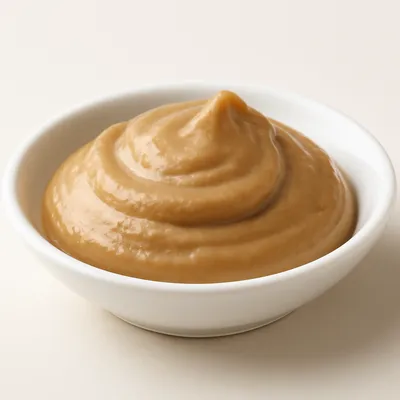

How it's made
7 steps · 30 min
- 18 min
Whisk buckwheat (or wheat) flour with a little salt, adding water in stages — first stiff, kneading out lumps, then thinning to a smooth, pourable batter.
- 24 min
Pass the batter through a sieve to remove lumps, then pour a thin layer into shallow bowls or small plates.
- 314 min
Steam over high heat about 12-15 minutes, until the batter sets from milky to translucent and a skin forms on top.
Watch outSteam until the batter turns from milky to translucent and a skin forms on top — that clarity is the starch fully gelatinizing, which it must do before it can set on cooling.
- 4110 min
Lift the bowls out and let them cool fully to room temperature, 1.5-2 hours, until the cake firms into a springy, sliceable jelly that turns cleanly out of the bowl.
Watch outLet it cool fully to room temperature, 1.5 to 2 hours, until it firms into a springy, sliceable jelly — this cooling-set is what turns runny batter into a cake you can cut and turn out.
- 56 min
Make the dressing: mash garlic with a pinch of salt, stir in aged Shanxi vinegar, and warm chili oil; loosen sesame paste with a little water if using.
- 65 min
Slice or scrape the set cake into strips or diamonds (scrape it straight from the bowl with a thin blade for the Liulin style).
- 78 min
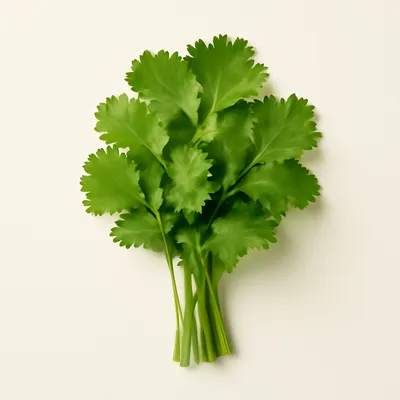
Toss the strips with the vinegar-garlic-chili dressing and scatter cilantro; serve cold. For the Pingyao style, instead sear the strips in lard with scallion and garlic until edged with brown.
Archive tool suggestions — not reviewed
These legacy suggestions have not been evidence-reviewed and are not presented as required tools.


